
Wat Yai Chai Mongkhon: Visiting Ayutthaya's Climbable Chedi Temple

Allow about 45 to 60 minutes at Wat Yai Chai Mongkhon, and come for one reason above the others: you can climb its great chedi. That puts it in a small group of Ayutthaya monuments where you do more than look up at brick from a path.
The second reason is that this is a working monastery, not an empty ruin. Monks live on site and the temple is in daily use, so the visit feels different from the silent stupas inside the historical park. This guide covers where the temple sits, how to reach it from Bangkok and from Ayutthaya island, what to see, how long to allow, and how to check hours and tickets before you go.
A living monastery, not another empty ruin
Most of Ayutthaya's headline sights are archaeology: foundations, prangs and headless Buddhas behind a rope. Wat Yai Chai Mongkhon is the opposite experience in one important way, because it remains an active monastery with monks in residence and the temple in daily use. Expect worshippers, offerings and the ordinary business of a Thai temple alongside the historic brickwork.
That dual identity is the reason to put it on your list even if you are templed out after Wat Mahathat and Wat Phra Si Sanphet. You get the scale of the old capital and the atmosphere of a place that never stopped functioning. Treat the living parts of the compound as you would any neighborhood temple, and the ruins as you would a museum.
Where it is: southeast of the island, in Phai Ling
Wat Yai Chai Mongkhon lies southeast of Ayutthaya island rather than inside the walled grid of ruins. It sits in Phai Ling, in Phra Nakhon Si Ayutthaya district, on the same side of the river as the road and rail approaches from Bangkok.
Practically, that means it is not a walk from the main cluster around Wat Phra Si Sanphet and Wat Mahathat, so plan it as one stop on a loop instead of a stroll between ruins. If you are building a day from the Planning Ayutthaya Sightseeing Around the River and the Ruins pillar, place Wat Yai Chai Mongkhon at the start or end of the circuit rather than doubling back across the island.
Getting there from Bangkok and from the island
From Bangkok, most visitors reach Ayutthaya by car, minivan or train and then cover the temples locally. Trains put you on the city side of the river; from there you need wheels to reach Phai Ling. Ask your driver for Wat Yai Chai Mongkhon by name, since Ayutthaya has several temples with similar-sounding royal names.
On the ground, the usual options are a tuk-tuk, a songthaew or a Grab car, arranged for a half-day or full-day temple run rather than a single hop. Agree the price and the stops before you set off, because meters are not standard for these arrangements. Independent travelers should confirm current fares with their driver or in the app, as rates change and are not fixed by any published tariff.
If you are deciding how to structure the day, look at the broader list of things to do in Ayutthaya and group the southeast sights together. A loop that takes in this temple plus Wat Chaiwatthanaram on the west bank makes better use of a hired car than zigzagging back to the center after each stop.
The great chedi: King Naresuan and the climb
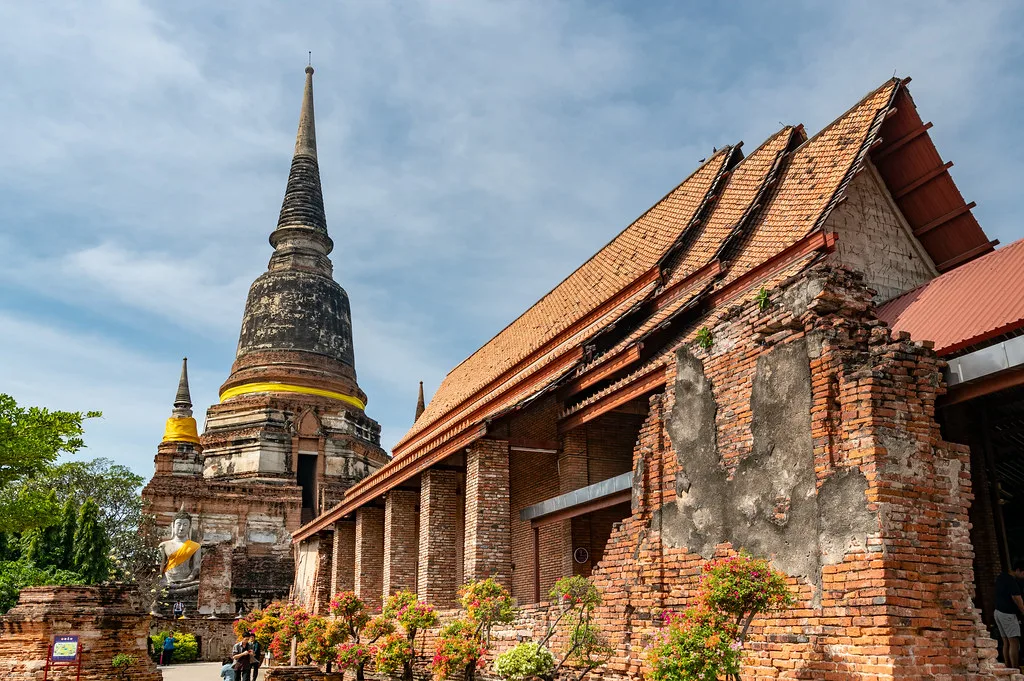
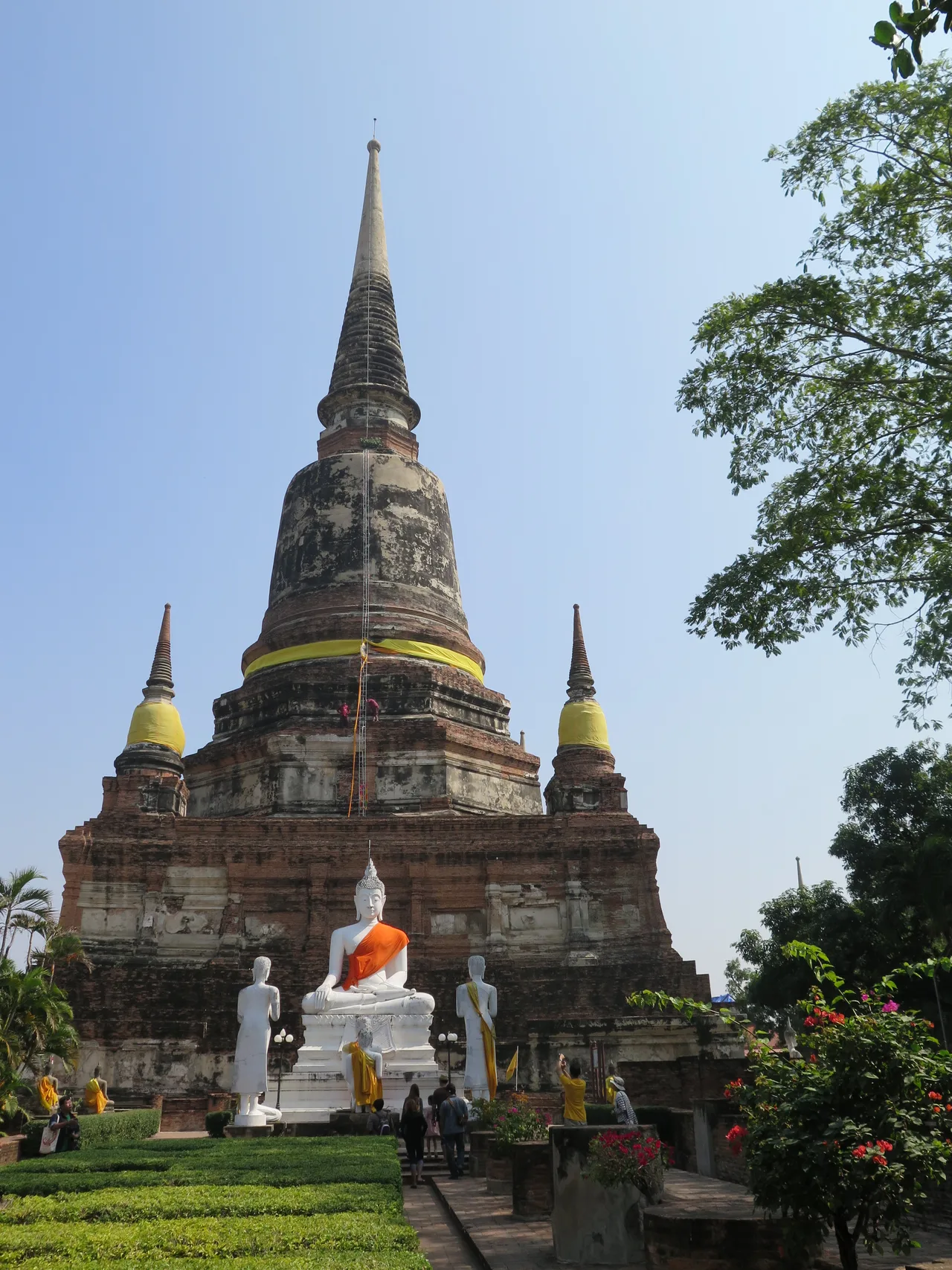
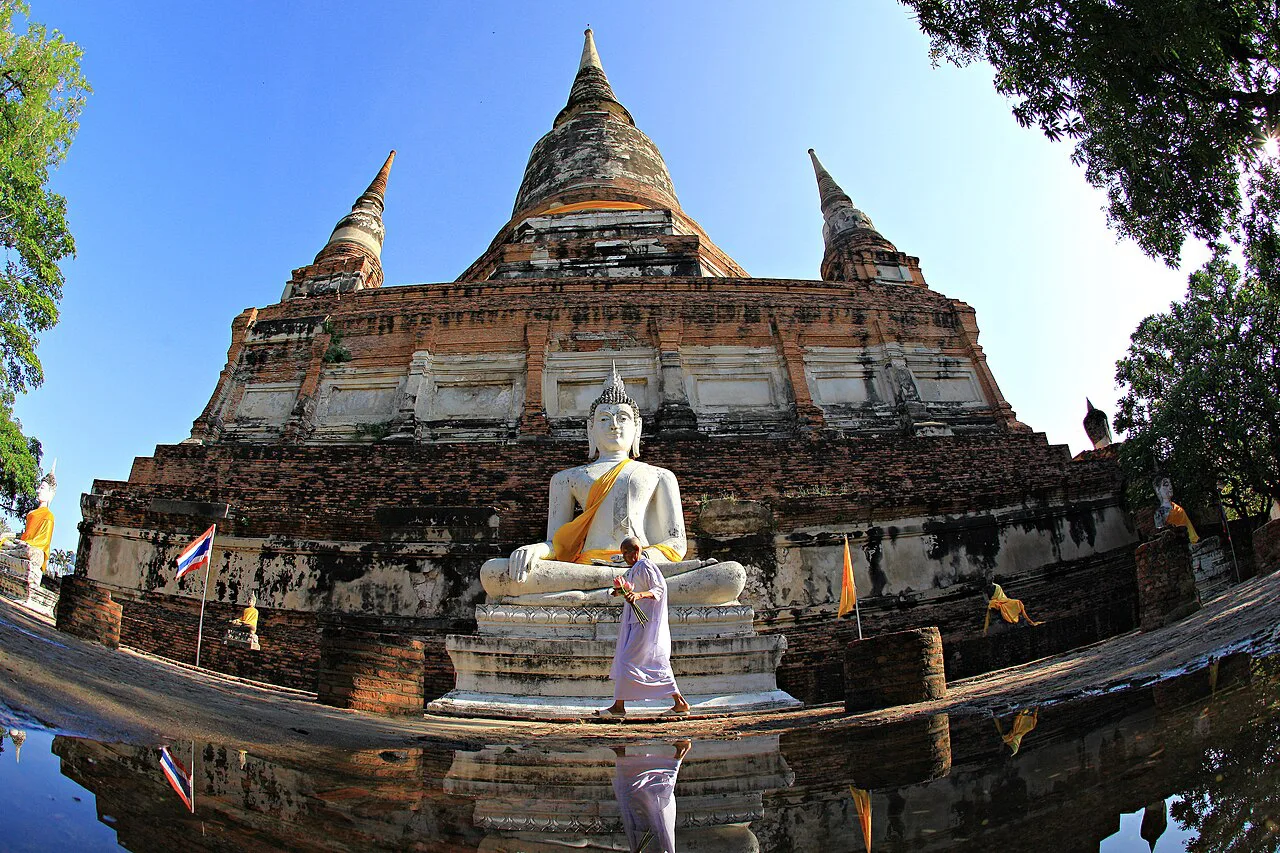
The centerpiece is a massive bell-shaped chedi traditionally linked to King Naresuan and his victory in single combat on elephant-back in 1592. Sources disagree on the temple's founding: one guide credits King U-thong and a 14th-century date, while others treat the chedi as the defining monument, so the chedi is the reliable thing to anchor your visit around.
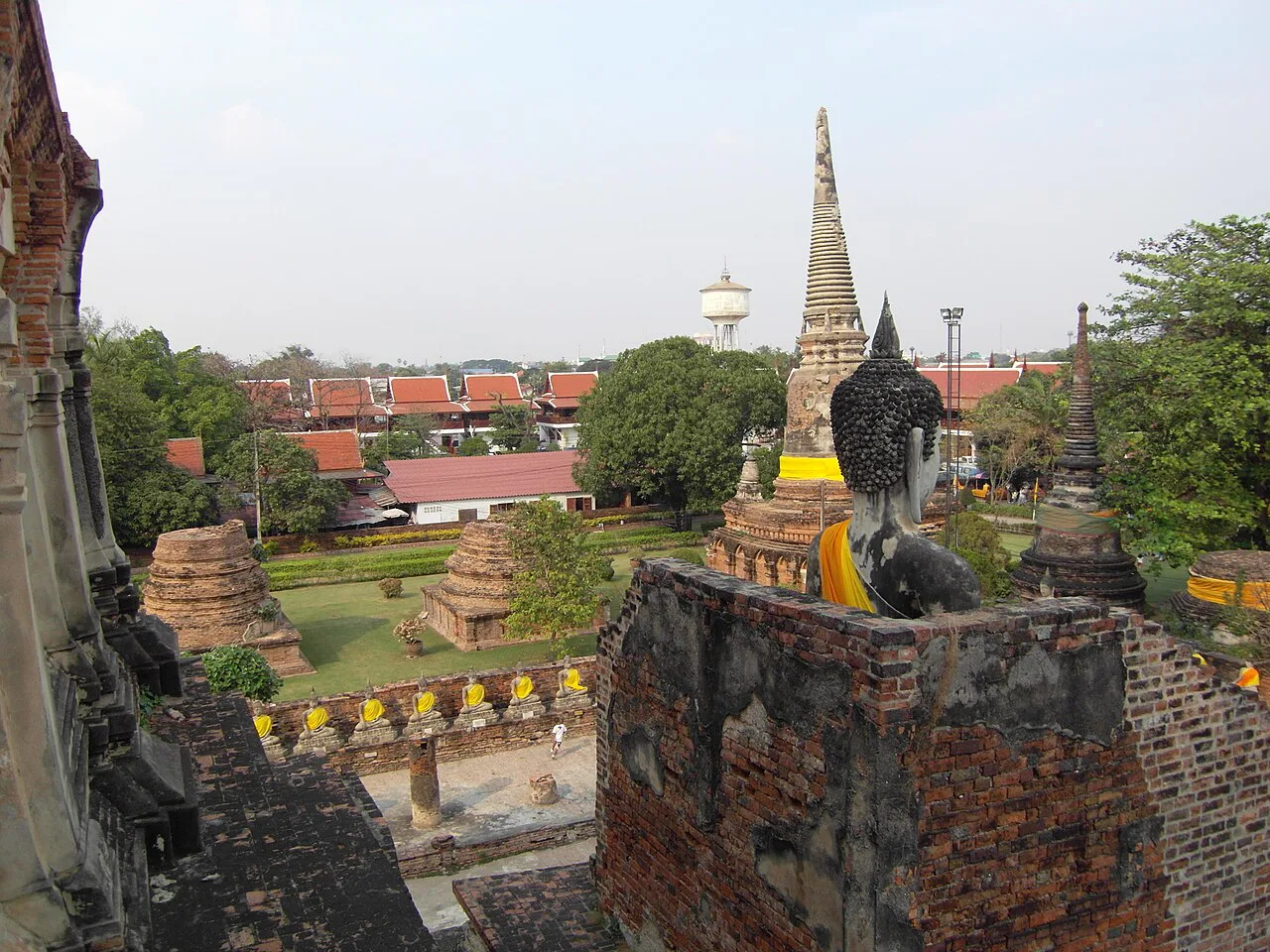
The climb is the payoff: the chedi can be ascended for a view over the surrounding country and the flat plain around the old capital. It is not a long ascent, but the upper levels are exposed, so go early if you can and carry water.
Budget ten to fifteen minutes for the climb and the view, more if you want photographs from the upper terrace. The stairs are the one part of the visit where footwear matters, so leave flip-flops in the car if you have a choice. If the steps look wet or crowded, wait a few minutes rather than squeezing past other visitors on the way up.
The cloister: rows of Buddhas in saffron cloth
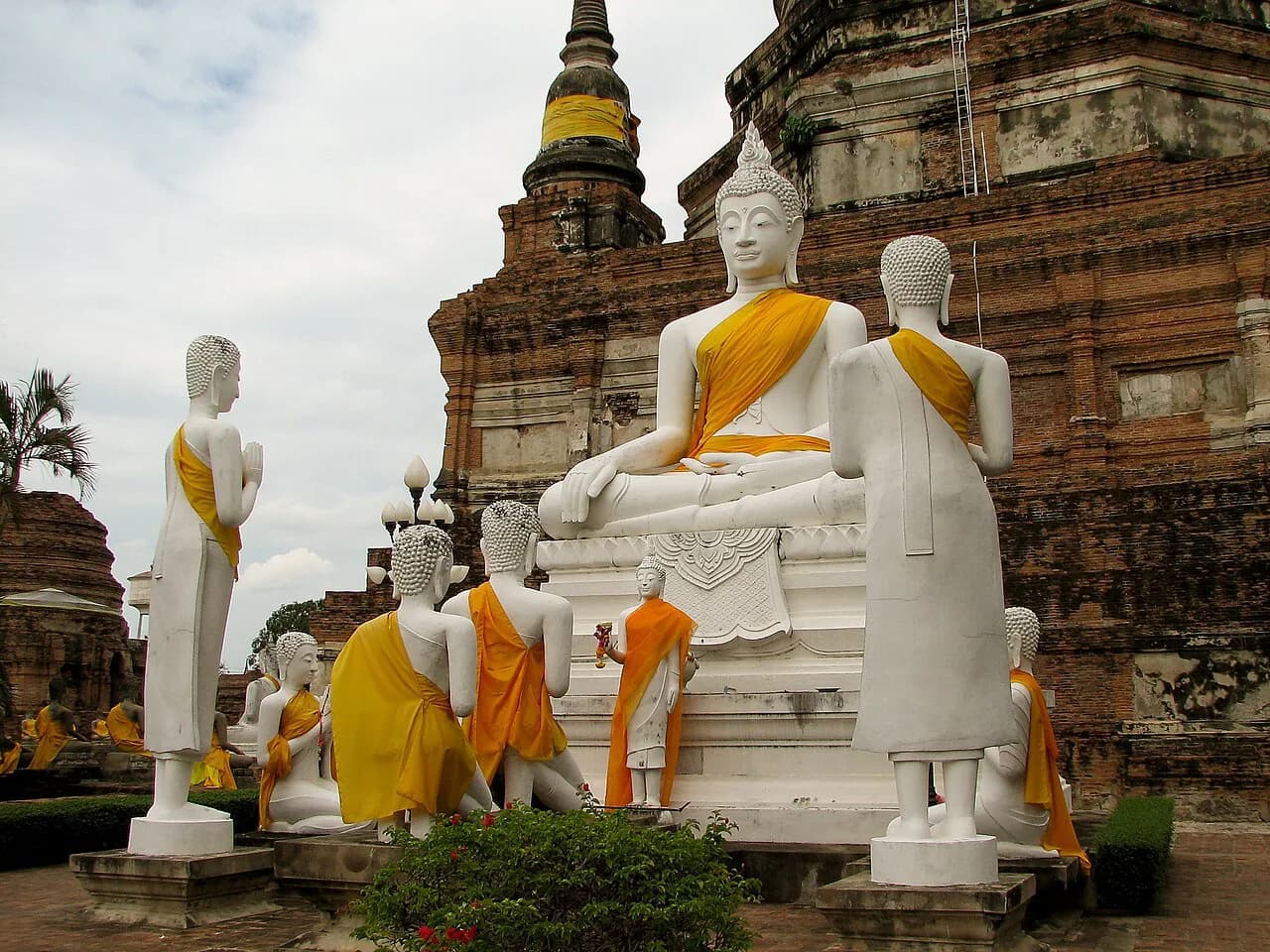
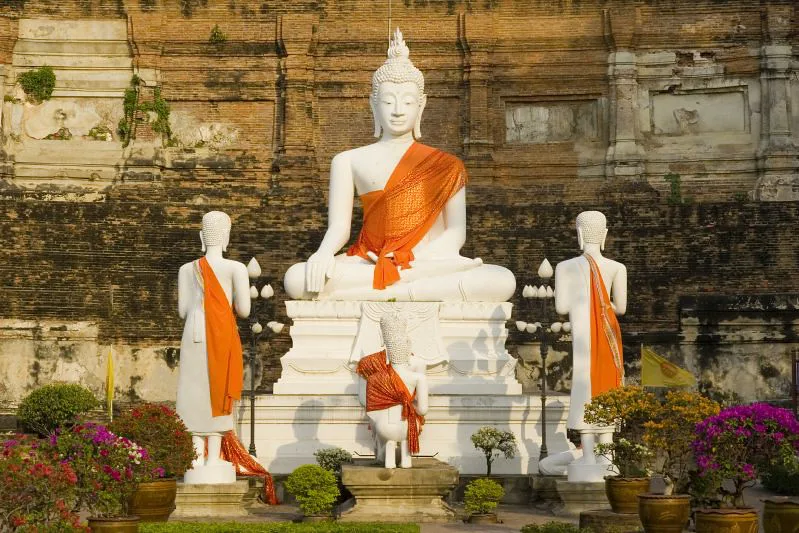
A cloister rings the chedi, and its inner wall is lined with rows of seated Buddha images, each draped in saffron cloth. The repetition is the photograph most visitors come away with, and it is best in low morning or late afternoon light when the shadow lines fall across the niches.
Walk the cloister slowly rather than treating it as a corridor to the stairs. Many of the images are actively venerated, with offerings at their feet, so keep your voice down and step around anyone kneeling. Allow ten minutes for one full circuit, longer if you are shooting.
The reclining Buddha in the grounds
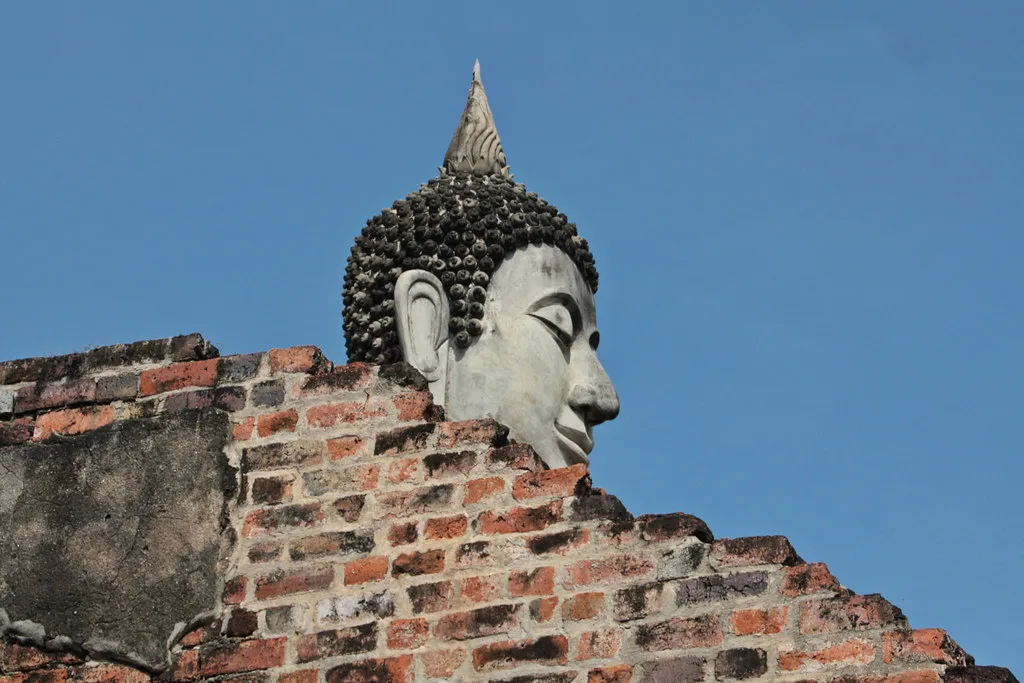
A large reclining Buddha lies in the grounds, a separate stop from the chedi, and easy to miss if you head straight for the chedi, so check the compound layout on arrival and visit it on the way in or out.
If you have seen the enormous reclining Buddha at Wat Lokayasutharam, this one is a quieter, more enclosed experience rather than a bigger spectacle. Ten minutes is enough unless you want to sit for a while. Photograph from the foot end of the image, not from behind the head, and follow whatever barriers the temple has set up.
Travelers with limited time sometimes pick one reclining Buddha and skip the other. Wat Lokayasutharam, out in the open near Pratu Chai, is the more famous of the two, while this one comes as part of the Wat Yai Chai Mongkhon visit. If you are already here, there is no reason to skip it.
How long to allow, and when to come
Plan on 45 to 60 minutes for the chedi, the cloister and the reclining Buddha together — a traveler-derived estimate rather than an official figure, but a reasonable working number. That is enough for the climb, a circuit of the Buddhas and a short stop at the reclining image. Add time if you are photographing seriously or want to sit in the shade between stops.
Because the site is exposed, the middle of the day is the least comfortable window, and tour groups tend to arrive in convoy by mid-morning. Front-loading the visit before 10 AM buys cooler stairs and emptier cloisters, though it means leaving Bangkok early. Late afternoon is the other reasonable window, since the light on the chedi improves as the sun drops.

Opening hours and entry: what to confirm at the gate
Published opening times for Wat Yai Chai Mongkhon vary between listings, with some sources showing an 8 AM to 5 PM window. Treat that as a planning guide rather than a guarantee, since temple hours can shift for services and holidays. Confirm the day's hours with your driver or at the gate before you commit a slot in the itinerary.
On tickets, be careful with the numbers you read online. Travel guides commonly quote roughly 20 THB for Thais, and foreign visitors are usually asked for a different, higher amount at the booth. Check the sign at the entrance on the day and pay in baht; do not assume an online figure is what you will be asked for.
The same caution applies to opening hours quoted on travel blogs and social posts. For a current listing, the Tourism Authority of Thailand's attraction page is the place to start, and a phone call or a question at your hotel desk is a fast cross-check. If you are combining this stop with the walled park, check those hours separately, since the historical park and this monastery are run differently.

Etiquette that matters more at a working temple
Covered shoulders and knees are the baseline here, and the standard matters more than at the uninhabited ruins because monks live and work on site. A light shirt or scarf over a tank top and trousers or a sarong instead of shorts will get you through the gate without fuss. Keep quiet during services and do not walk between a worshipper and an image they are facing.
Photography is generally fine in the open areas, but not every hall or image should be framed with people in it. Ask before photographing monks or anyone praying, and never climb on the Buddha images or the chedi brickwork for a shot. If a resident asks you to move on or stop, do so immediately.
Nearby temples to pair with the visit
Wat Chaiwatthanaram, on the west bank of the Chao Phraya, is the natural partner if you have a car, since the two together cover both a living temple and a dramatic Khmer-style ruin. See Wat Chaiwatthanaram, Ayutthaya: What to See and How Long It Takes for the ruin's own layout and timing; it is the more photogenic of the pair at sunset, so a common order is Wat Yai Chai Mongkhon first, then across the river as the light softens.
Back on the island, the central cluster is easy to cover on foot or in a short tuk-tuk hop. Wat Mahathat, with its Buddha head in the tree roots, is the best-known stop — see Wat Mahathat, Ayutthaya: The Buddha Head, Ruins and Visit Basics — and Wat Phra Si Sanphet, with its three bell-shaped stupas, is the other must-see. Wat Ratchaburana sits between them and is often quieter.
If the reclining Buddha here leaves you wanting the larger, open-air version, Wat Lokayasutharam is a short detour near the island's center. Wat Phanan Choeng, with its huge seated Luang Pho To, is another working temple that pairs well with Phai Ling on a southeast loop. Both are worth mapping before you set off so the day runs in one direction.
Is the chedi climb worth the detour?
Yes, if you have a car or a hired driver for the day. The climb is short, the view is full of countryside, and the saffron-draped cloister is one of the more distinctive images in Ayutthaya. The active monastery setting also gives you a working temple to balance the ruins.
Skip it if your only day in Ayutthaya is walkable and short, since the trip out to Phai Ling eats into time better spent inside the walled park. Either way, confirm hours and the posted foreigner rate at the gate on the day, and carry small notes in baht. Build the stop into a southeast loop with a west-bank ruin, and you will not waste the drive.