
Wat Thammikarat: Ayutthaya's Working Temple Among the Ruins

Wat Thammikarat deserves about 30 to 45 minutes of your Ayutthaya day, and it earns them for a reason most ruins on the island cannot match: it is a ruined temple and a working one at the same time. You get a collapsed brick viharn and a weathered chedi to walk around, then an active worship hall with a reclining Buddha and a courtyard packed with rooster statues. This guide covers where the Wat sits on the city island, how to reach it from Bangkok or the train station, what to look at, and how to slot it into a loop with the central monuments.
Where Wat Thammikarat sits on Ayutthaya's city island
Wat Thammikarat is on the city island, the grid of ruins and roads that holds most of what visitors come to Ayutthaya for, east of the old royal palace grounds and close to the canal edge. That position matters for planning: it is not a separate excursion, but a short hop from the central cluster, so it fits naturally between the big-name sites rather than as a detour. Treat the city island as a local geographic term for the historic core, not a beach-and-ferry island.
One detail worth knowing before you go is that the temple may predate the city itself. A widely repeated local-history claim, posted in Ayutthaya interest groups, holds that the Wat existed before King U-Thong founded Ayutthaya; no official source in front of us settles it, so treat it as the story the site carries rather than a confirmed date. If origins interest you, read the interpretive panels at the larger central ruins, which lay out the area's accepted timeline.
Landmark references help: the temple sits near the Grand Palace site, so you can pair it with Wat Phra Si Sanphet and the royal precinct, and then continue to the central ruins. Wat Mahathat, Ayutthaya is a short ride away and the natural next stop on a clockwise loop.

Getting there from Bangkok, the train station and around the island
Most visitors reach Ayutthaya from Bangkok by train, minivan or private car, then cover the island by bicycle, tuk-tuk or a hired driver. From Ayutthaya railway station, the historical core is across the river, so you will need a short tuk-tuk or ferry-plus-walk combination, and you can sort out transport once you see what is running that day. Operators do not publish stable fares for these short hops, so confirm the price before you set off rather than after.
Once you are on the island, bicycles are the most flexible option for a cluster like this, and many rental shops near the ruins rent by the day. If you would rather not pedal in the heat, a tuk-tuk driver can take you between Wat Thammikarat, the Grand Palace grounds and Wat Mahathat in a single loop. Either way, keep your stops short: the ruins are close together, and the time you save is better spent at the sites that reward a slow look.

What you actually see: the ruined viharn, the chedi and the living temple
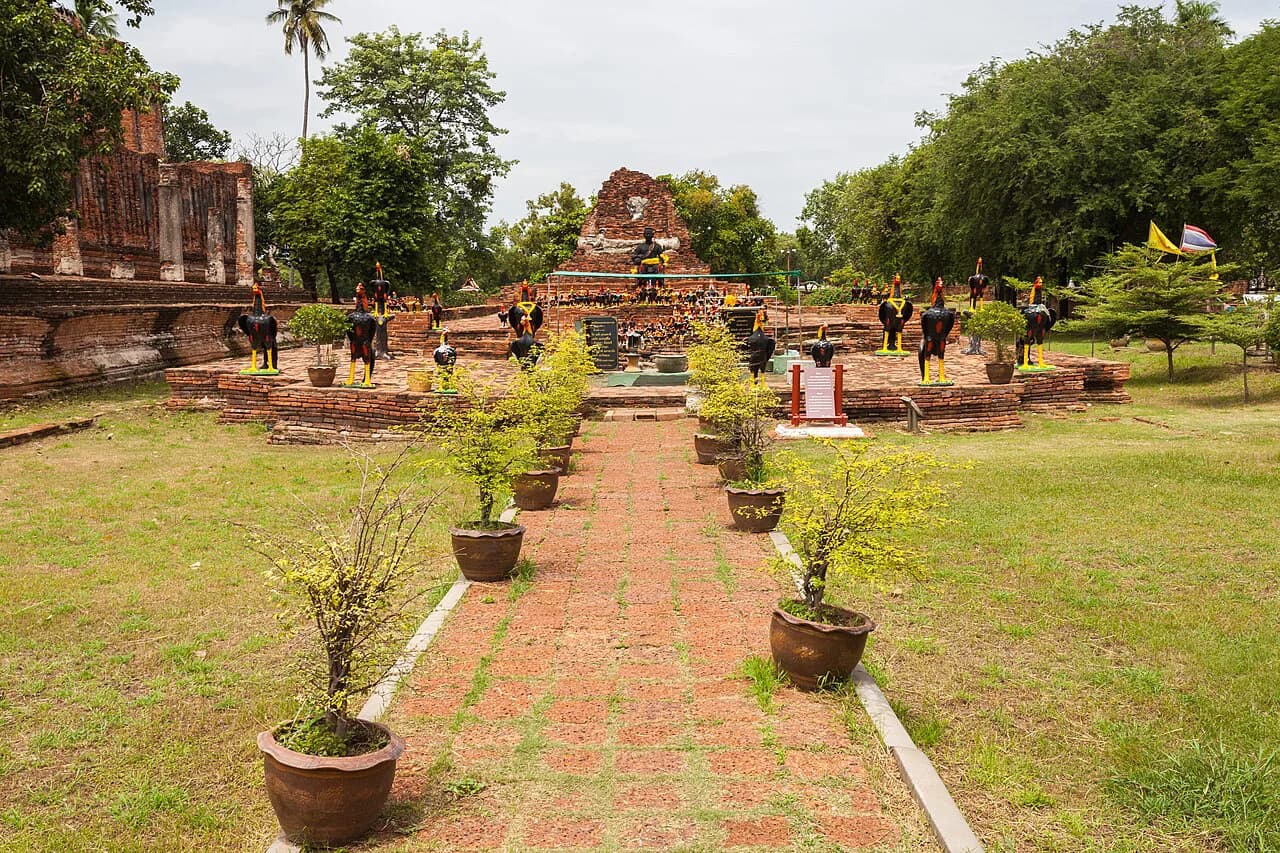
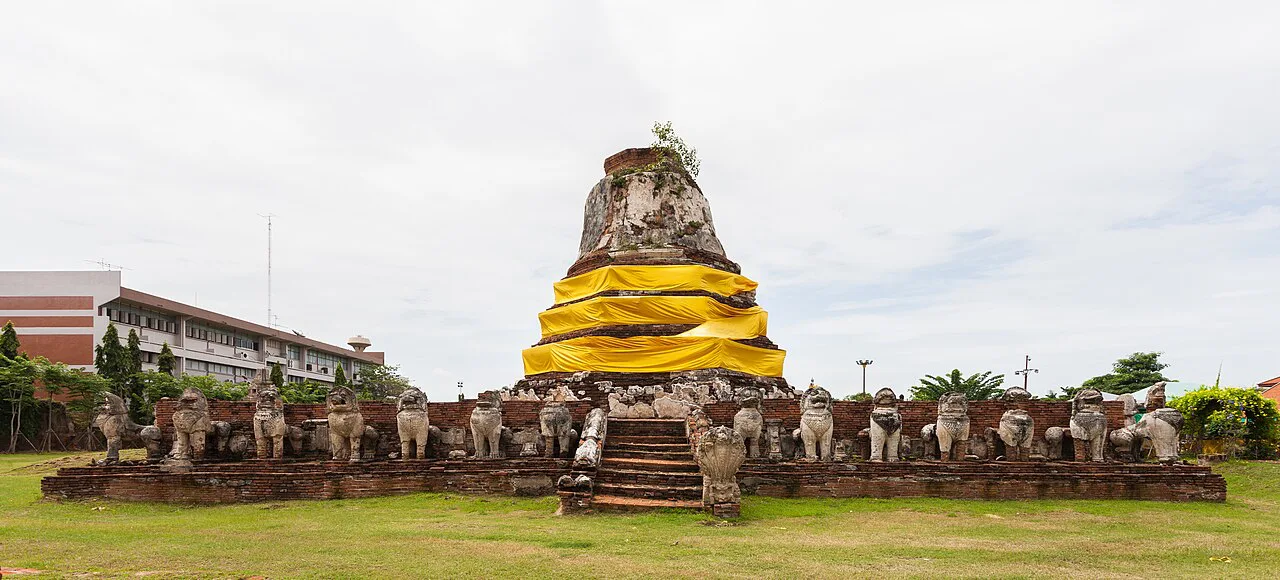
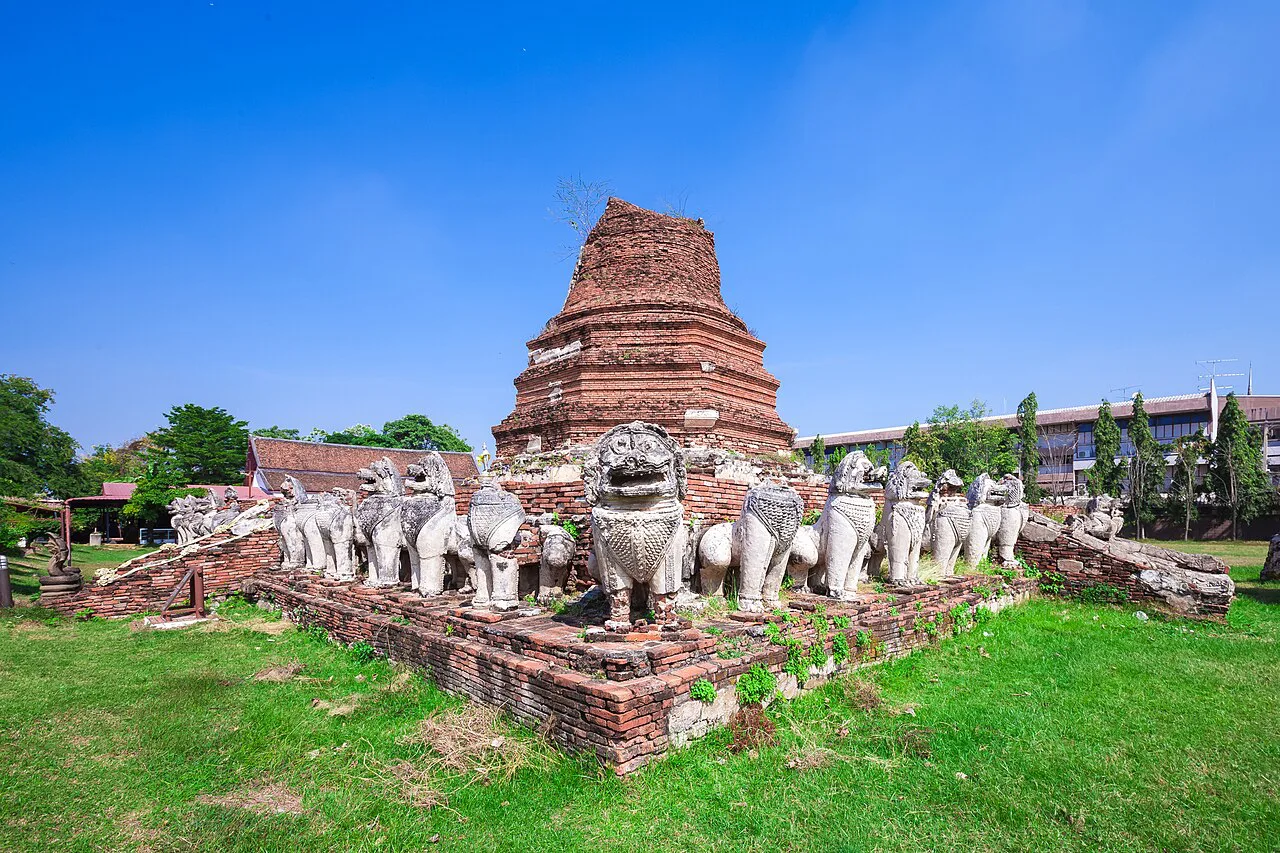
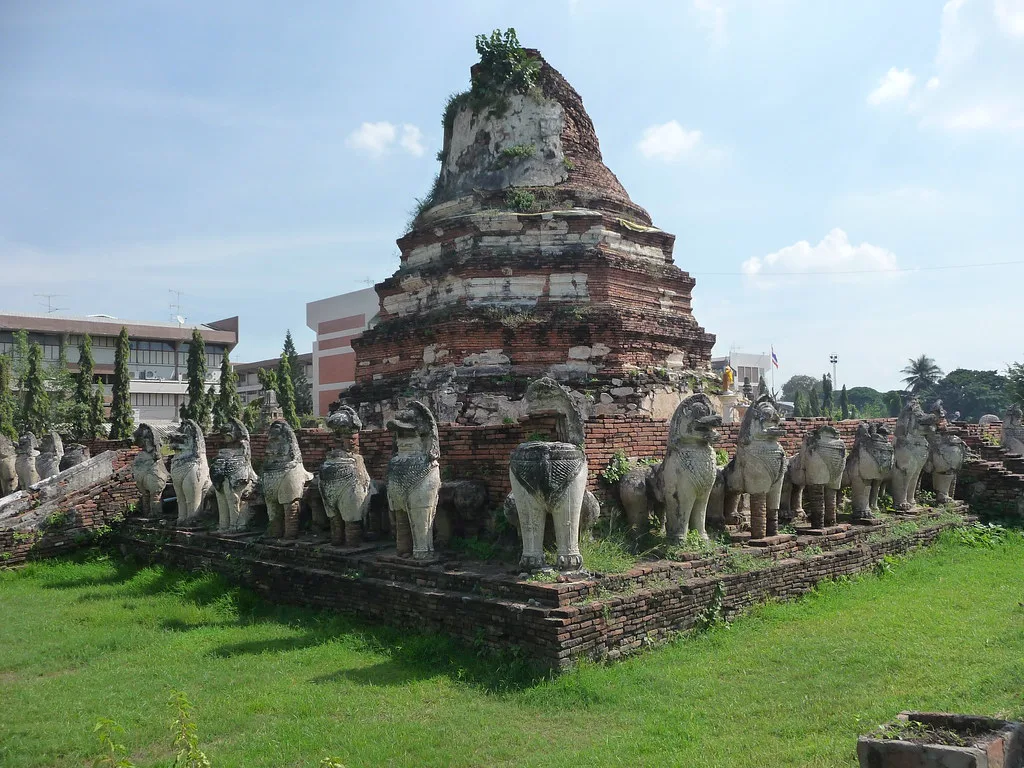
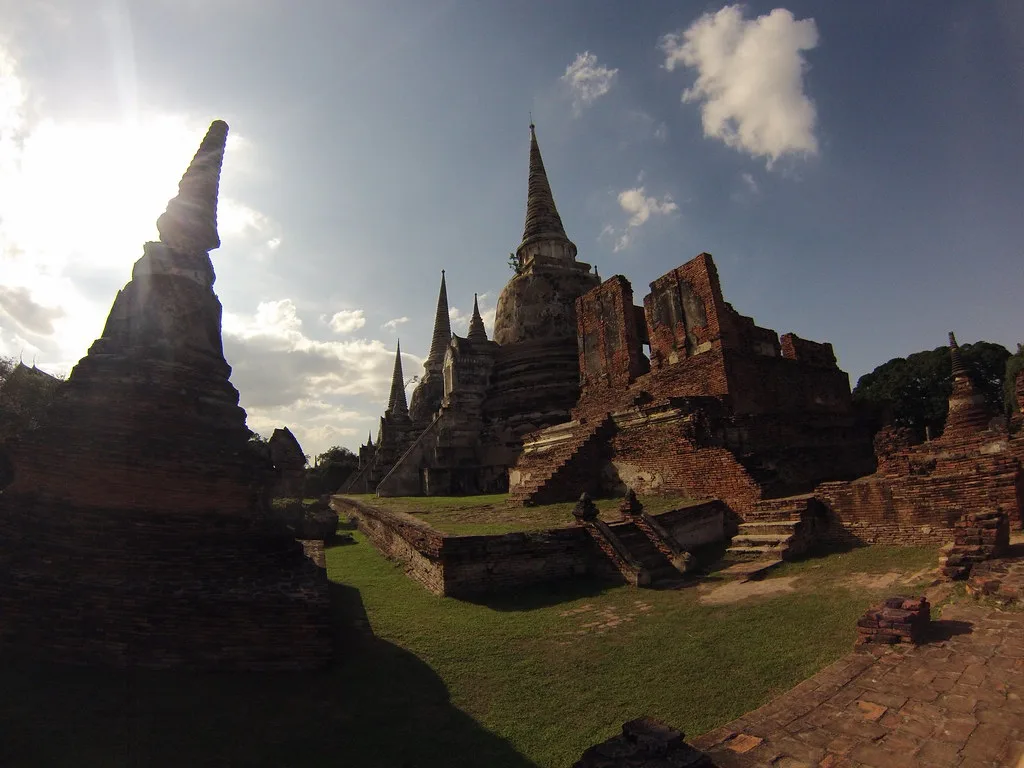
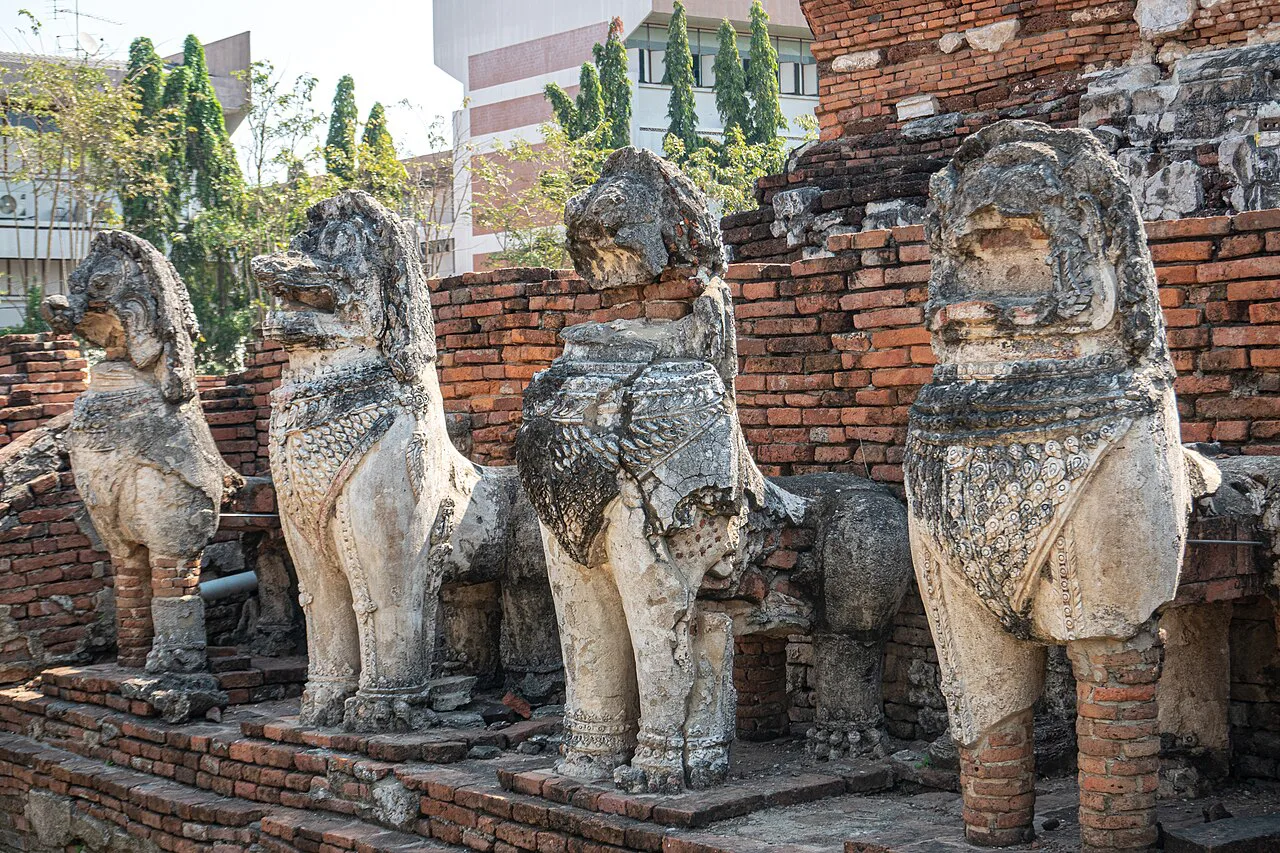
The first thing most people notice is the ruined viharn, a roofless brick shell whose walls and pillars still stand, and travel accounts often compare the red brick to an old factory rather than a temple. Look for the rows of column bases and the stone lion figures that decorate the historical park, details that show how the hall was laid out. The brick chedi nearby completes the ruin half of the site, and both are open to walk around at your own pace.
What surprises many first-timers is the second half: the temple is still in active use, with a worship hall and monks on site, so you are walking through a place of devotion, not a museum. That changes how you behave as much as what you see. Keep your voice low in the active areas, avoid stepping into restricted zones, and ask before photographing people at prayer. The ruins may be open to wandering, but the living temple deserves the courtesy you would give any working shrine.
Why there are so many rooster statues
The courtyard is crowded with rooster statues, and visitor reports describe them as the site's most distinctive feature after the reclining Buddha. They are the detail people photograph and remember, and they dominate the space around the active temple. Treat them with care: look closely, but do not move, climb on or rearrange them.
Because the roosters come from individual worshippers, the collection keeps changing, and no official source publishes a count or an explanation board. If the story behind them matters to you, ask a guide or a temple attendant rather than assuming a single meaning. What the visitor accounts consistently show is that the roosters are the reason this Wat sticks in people's minds.
The reclining Buddha and the active worship areas
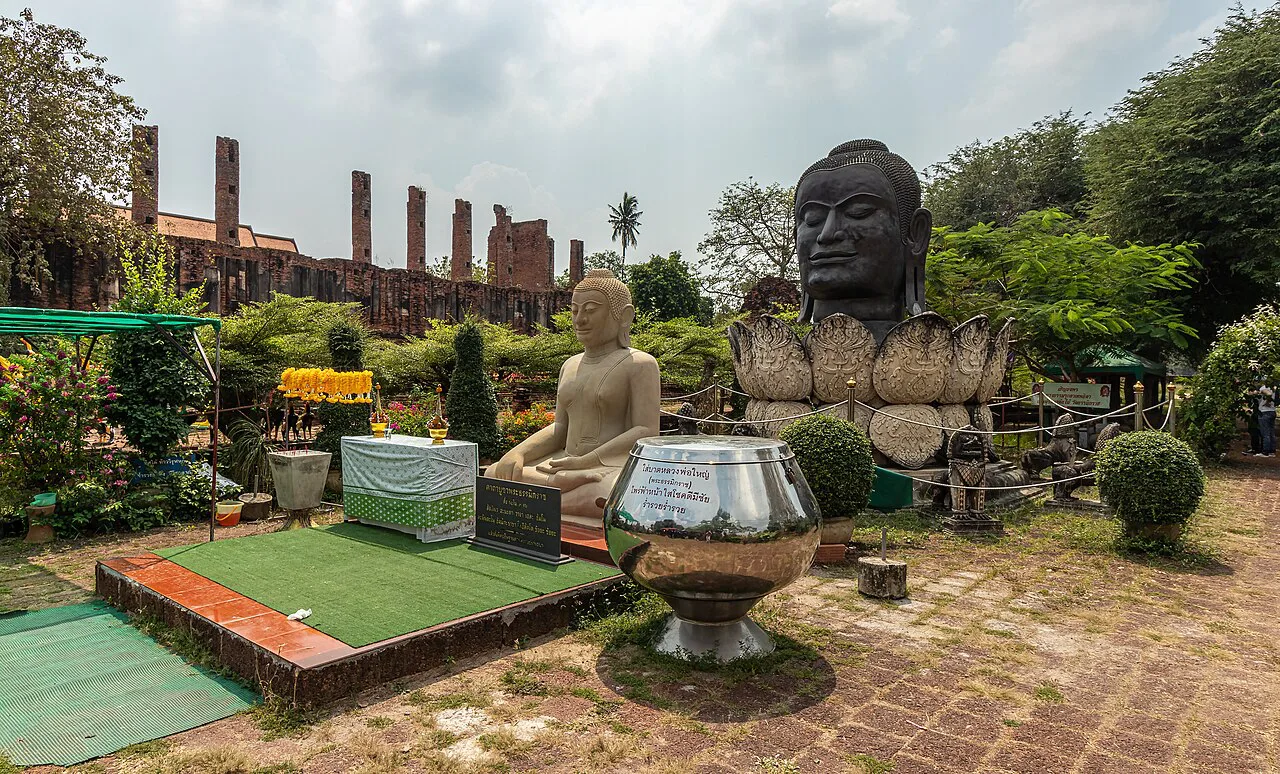
The reclining Buddha sits in the active part of the temple, and reviewers single it out as a highlight alongside the rooster courtyard. Look for the proportions and the setting rather than rushing past: this is one of the few places in Ayutthaya where you can see a Buddha image in a hall that is still being used. Keep your head lower than the image when you are close, and do not turn your back on it for photos.
The split between ruin and working temple is the practical reason to visit Wat Thammikarat rather than another brick field. You can photograph the ruins freely, but the active hall is different: watch what Thais around you are doing, follow their lead, and keep out of the way of anyone praying. That small bit of attention is what separates a good visit from an awkward one.
How long to allow, and whether it fits a loop with the Grand Palace
Budget 30 to 45 minutes for Wat Thammikarat itself, plus travel time between stops. It works best as the second or third stop on a central-island loop: start with the Grand Palace precinct, add Wat Thammikarat while you are nearby, then continue to Wat Mahathat. Doing it in that order keeps you from backtracking across the island in the heat of the day.
If you are building a fuller day, Wat Chaiwatthanaram, Ayutthaya is the classic sunset stop on the west bank, so save it for late afternoon and plan the central ruins for the morning. Wat Phra Si Sanphet and Wat Ratchaburana round out a loop that covers the major central monuments without much extra riding. The key is to group the sites by location and go early, because the exposed brick and stone give little shade.

Hours and tickets: what to confirm before you go
No official operator source in front of us confirms Wat Thammikarat's current opening hours, ticket price or closing days, so do not build your day around an assumed schedule. Check with the temple directly, or with the Ayutthaya Historical Park office, on the day before you travel. The same goes for any combination pass: some travelers report the historical park ticket covers certain sites, but coverage can change, so ask at the ticket window rather than relying on a blog post.
If you are coming from Bangkok for the day, factor in a buffer: trains and minivans can run late, and the ruins close earlier than you might expect. Bring small notes for tuk-tuk fares and temple donations, since change is not guaranteed at every stop. And if you plan to visit several ruins, pick up a map at the first ticket window; the signage between sites is uneven.

Nearby options if you have more time on the island
If you have a spare hour, the Chao Sam Phraya National Museum, near Wat Mahathat, houses the bronzes and artifacts removed from the ruins, and it makes a cool indoor break in the middle of the day. The Ayutthaya Historical Study Centre, in the Pratu Chai sub-district along Rochana Road, adds context on how the city was laid out and lived in. Both are useful before or after a ruin loop rather than during it.
Elsewhere on the island, Wat Lokayasutharam, west of the center, is known for its large reclining Buddha and is a natural extension if you are already covering the western ruins. Wat Yai Chai Mongkhon, east of the city, adds a large chedi and a different atmosphere. Save them for a second loop or a longer day, because each adds travel time.
Worth adding to your Ayutthaya loop?
Yes, if you want one stop that shows both the ruin and the living temple, and if you are already covering the central island. Wat Thammikarat will not fill a day on its own, but as a 30- to 45-minute stop between the Grand Palace grounds and Wat Mahathat, it adds the rooster courtyard and reclining Buddha that most visitors remember afterward. Skip it only if your day is already packed with bigger monuments.
Before you go, confirm hours and any entry fee with the temple or the historical park office, and plan your transport back from the island before the afternoon heat peaks. Go early, keep your visits short and grouped, and leave the sunset slot for Wat Chaiwatthanaram on the west bank.
Explore more Ayutthaya guides
Frequently Asked Questions
Did Wat Thammikarat exist before Ayutthaya was founded?
It is commonly said that the temple predates King U-Thong's founding of the city, but this is a traditional claim rather than a firmly dated fact. No official source settles the question, so treat it as the story the site carries and look for context at the historical park's interpretive displays.
Is Wat Thammikarat included in the Ayutthaya Historical Park ticket?
The temple's own entry arrangements and any combination-ticket coverage are not confirmed by an official source here. Ask at the ticket window or with the temple when you arrive, and do not assume a historical park pass covers it.
Do I need to book a guide to visit Wat Thammikarat?
No booking is required to walk the grounds, but a guide helps if you want the rooster offerings and the active worship areas explained properly. Tuk-tuk drivers at the island's main stops often offer to combine the temple with nearby ruins, so ask what a short guided loop includes before you agree.