
Wat Mahathat, Ayutthaya: What to See, How Long to Allow and How to Get There

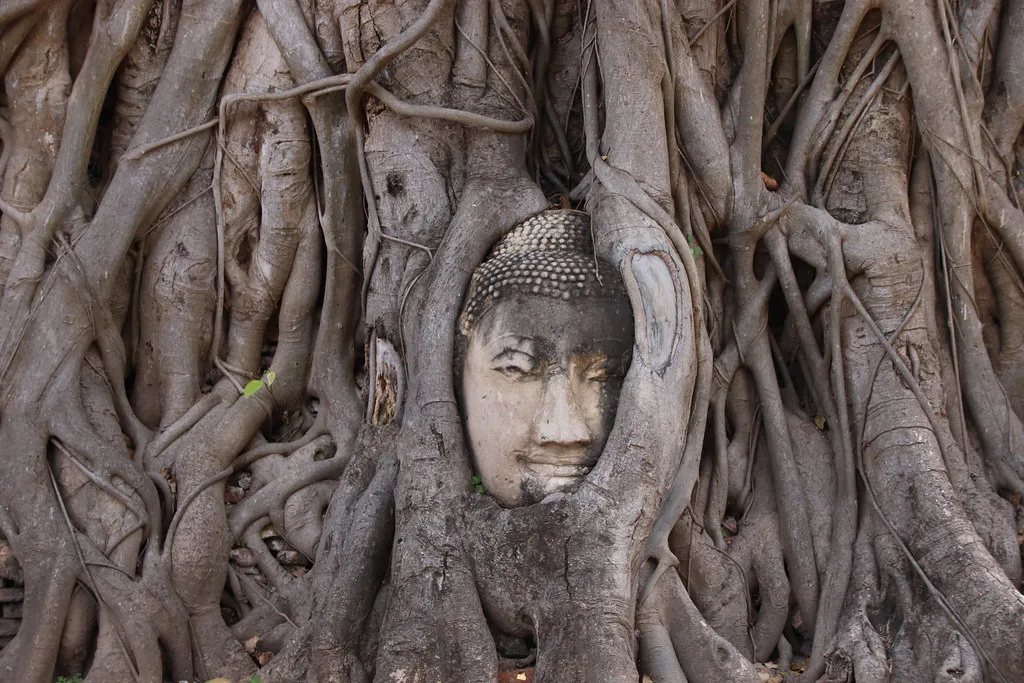
Wat Mahathat is worth 60 to 90 minutes, and it is the one Ayutthaya ruin most travelers put first. The draw is a single image — a sandstone Buddha head held in the roots of a Bodhi tree — but the surrounding royal monastery rewards a slower walk. This page covers where the temple sits on the city island, how to get there, what to look for inside and how to sequence it with nearby ruins.
What Wat Mahathat is, and why it is the name everyone knows
Wat Mahathat, or Wat Maha That, was a royal monastery near the palace and the seat of the Supreme Patriarch of the city-dwelling monastic sect until the Ayutthaya period ended. The temple's name means Monastery of the Great Relic, and the Fine Arts Department registered it as a national historic site in 1935; it now forms part of the Ayutthaya World Heritage Historical Park rather than standing as a separate World Heritage listing. It anchors the central cluster of ruins, alongside Wat Phra Si Sanphet and the Khmer-styled prangs of the old capital.
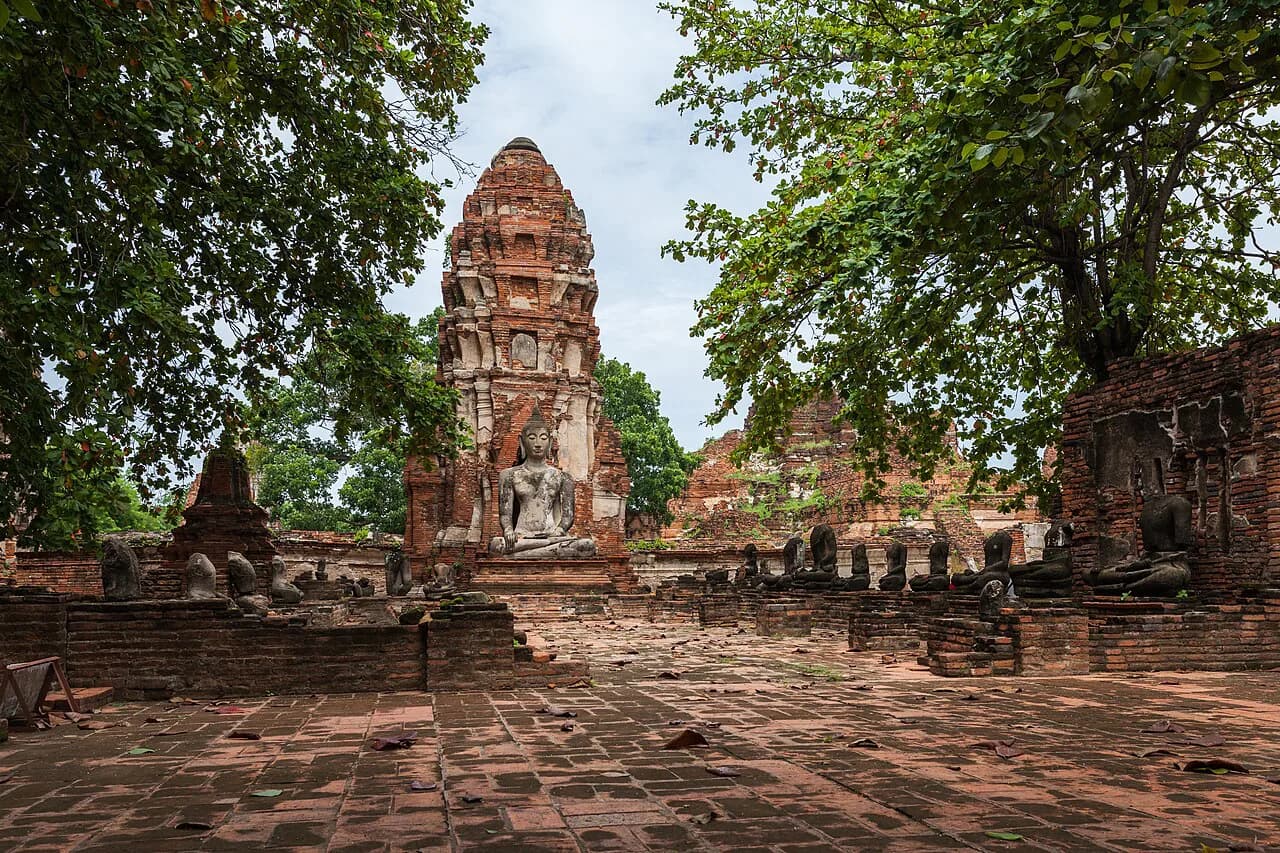
The founding date is debated. One chronicle places construction in 1374 under King Borommaracha I, while other versions credit King Ramesuan, so treat it as a 14th-century foundation with room for scholarly disagreement. The central prang collapsed long ago and its height appears in the sources as conflicting figures, so skip any tour pitch that quotes a precise measurement. What survives is a sprawling field of brick foundations, chedis and headless Buddha images rather than a single intact monument.
Condé Nast Traveler describes it as easily the most impressive of Ayutthaya's attractions, and that reputation is why the entrance gets busy mid-morning. If you want the Buddha head without a crowd behind you, arrive near opening rather than joining a Bangkok day tour that lands around lunchtime. Independent travelers can walk the whole complex on their own in about an hour, which makes it an efficient stop rather than a half-day commitment.
Where the temple sits on the city island
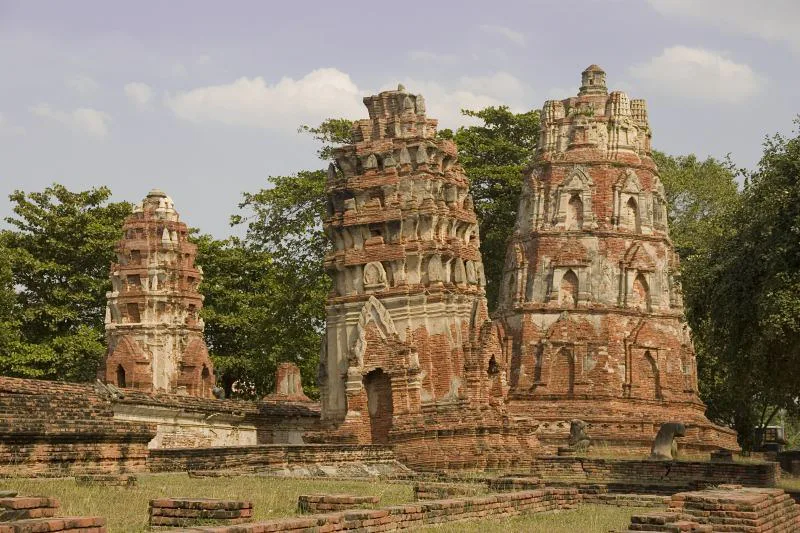
Wat Mahathat stands in Tha Wasukri sub-district on Ayutthaya's city island, at the corner of Chikun Road and Naresuan Road and at the northeast edge of Phra Ram Park. In the Ayutthaya Kingdom's prime, the monastery sat on the west bank of Khlong Pratu Khao Pluak, a canal since filled in, and probably faced water on several sides. That geography matters today: the ruins are scattered across open ground with little shade between the main structures.
The practical upshot is that most of the central-island ruins sit within walking distance of one another, and Wat Mahathat makes a natural starting point. Wat Ratchaburana sits nearby on the same central stretch, so the two can be seen in one stop, and other ruins of Phra Ram Park are a short walk away. It is worth checking locally for the Chao Sam Phraya national museum if you want context on what was excavated from these sites.
How to get to Wat Mahathat
Most visitors reach Ayutthaya by train from Bangkok, then continue onto the island by songthaew, tuk-tuk or a Grab car. Fares, departure times and platform details change, so check the State Railway of Thailand's current timetable and buy at the counter rather than trusting an old blog schedule. From the station area, a short ride takes you to the ruins; agree the price before you get in, or use the app so the fare is set in advance.
Car and van day trips from Bangkok are the other common route, and private tours often bundle several temples into one long day. If you hire a guide, the entrance touts who cluster near the gate are not the ones to book with; arrange a licensed guide through a professional tour company instead. For an independent visit, a hired bicycle or a driver who waits between stops gives you more control over how long you linger at each ruin.
What to see inside the courtyards
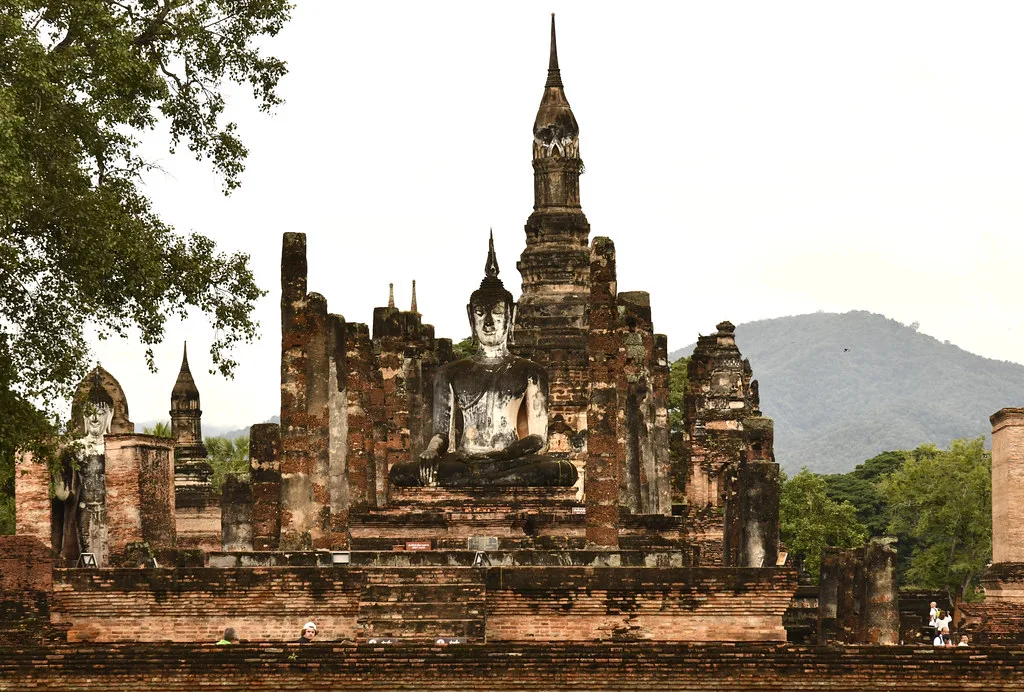
The centerpiece is the collapsed Khmer-style central prang, a brick mass that once enshrined a Buddha relic and is the reason the temple carried its name. Around it, the complex spreads through several courtyards filled with chedis, assembly-hall foundations and headless Buddha statues. Look for fragmentary mural painting on surviving walls rather than expecting intact decoration — weather and looting over centuries have taken most of it.
Two details reward attention. First, the scale of the site: Wat Mahathat was a royal monastery that hosted royal ceremonies and processions, and what looks like random brickwork is the footprint of that layout. Second, the sheer number of headless images — one commonly repeated account attributes the destruction to the Burmese sack and burning of Ayutthaya in 1767, and much of the damage you see is dated to that period. Walking the perimeter walls gives a better sense of the monastery's size than the central cluster alone.
The Buddha head in the Bodhi tree roots
The famous sandstone Buddha head is wrapped in the roots of a Bodhi tree, and it is the image that appears on every Ayutthaya postcard. How it got there is not settled: one popular account holds that looters left it beside the tree because it was too heavy to carry. Whatever the truth, the head is now part of the tree rather than a standalone sculpture, which is why it is viewed and photographed rather than touched.
This single spot draws most of the visitors in the complex, so the viewing point is the busiest part of the site and can be crowded when tour groups arrive. Staff usually ask people to crouch below the level of the Buddha's head; follow the signage at the rope line rather than leaning over it. The rest of the site is typically far calmer, so see the head first, then circle the courtyards in peace.
How much time to allow
Budget 60 to 90 minutes if you want to see the Buddha head, walk the main courtyards and read a few of the interpretive panels. An hour is enough for a focused visit, but photographers and anyone studying the architecture should plan longer. The site is open ground with limited shade, so heat is the main reason most people wrap up faster than expected.
In a half day, pair Wat Mahathat with Wat Ratchaburana nearby and the ruins around Phra Ram Park, which keeps you inside the central area without long transfers. With a full day, add Wat Chaiwatthanaram on the west bank of the river, or Wat Yai Chai Mongkhon on the eastern edge of Phra Nakhon Si Ayutthaya. Wat Lokayasutharam and Wat Thammikarat are also on the island if you want fewer crowds, while Wat Na Phra Men is a separate temple to the north.

Tickets and hours: what to confirm before you go
Condé Nast Traveler lists an entry fee of 50 baht for Wat Mahathat. Treat that as a guide rather than a fixed quote: confirm the current amount at the ticket window or through the Tourism Authority of Thailand before you travel. No source here confirms opening hours or days, and the same applies to any combined ticket covering several ruins, so check locally rather than assuming a multi-temple pass.

What to pair with Wat Mahathat on the same day
Wat Ratchaburana is close by, so step across after Wat Mahathat for a second prang and its crypt, said to have once held relics and regalia. On the same island, check locally for the Ayutthaya Historical Study Centre, which gives context on the old city's layout and trade. If you want Wat Phanan Choeng and its Luang Pho To image, allow a separate ride east.
Should Wat Mahathat be your first Ayutthaya stop?
Yes, if you have one day and one image in mind: start here early, see the Buddha head before the tour buses, then walk the courtyards at your own pace. It suits independent travelers with an hour or two to spare and anyone combining several central-island ruins on foot or by bicycle. Check the current fee and hours at the gate rather than relying on outdated listings, then move on to Wat Ratchaburana and work through the central park.
Explore more Ayutthaya guides
Frequently Asked Questions
What is Wat Mahathat famous for?
For the sandstone Buddha head held in the roots of a Bodhi tree, photographed by most visitors to Ayutthaya. The temple itself was a major royal monastery with a Khmer-style central prang, and its ruins spread across several courtyards.
Why is the Buddha head missing in Ayutthaya?
It is not missing — the head sits in the roots of a Bodhi tree at Wat Mahathat. How it came to rest there is uncertain; a common account says looters abandoned it because it was too heavy to carry away. That story is commonly repeated rather than documented, and many statues at the site lost their heads when the city was destroyed in the 18th century.
Can you see Wat Mahathat on a day trip from Bangkok?
Yes. The usual route is a train from Bangkok followed by a short songthaew, tuk-tuk or Grab ride onto the city island, or a private van tour. Check current train times and fares with the State Railway of Thailand, and plan on roughly an hour on site.