
Wat Phra Si Sanphet: How to Visit Ayutthaya's Three-Chedi Temple
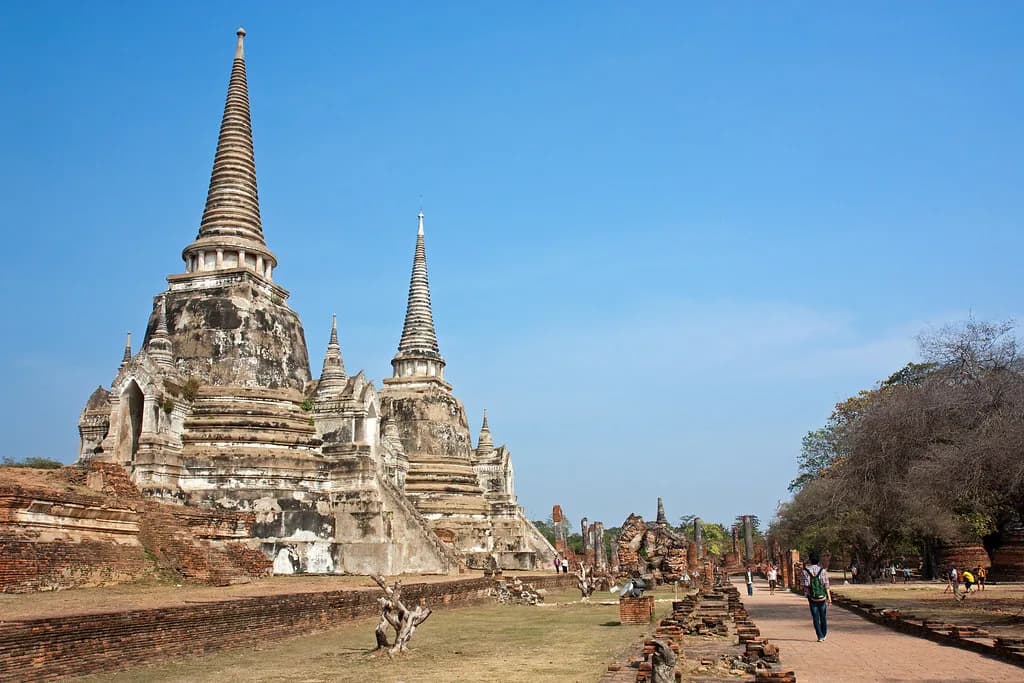
Wat Phra Si Sanphet is the ruins of Ayutthaya's most important royal temple, recognisable by three huge chedis standing in a line down the middle of the site. Allow 30 to 45 minutes inside; the complex is compact, but the story behind it makes it more than a photo stop. This page covers where the temple sits inside the city island, how to get there from Bangkok, what to look for among the ruins, and which neighbouring temples are close enough to combine on foot.
A royal temple with no monks
In the early years of the Ayutthaya Kingdom, the capital's grand royal palace stood on this spot. After the palace moved a few hundred metres north, King Boroma-Tri-Loka-Nat had a temple founded on the old palace ground in 1448, directly beside the new royal residence. That origin explains the layout: this was the kingdom's most important temple, used for the grandest royal ceremonies, and it doubled as the royal family's private chapel.
Unlike most religious centres in the city, no monks lived inside the complex, which is why you are looking at ceremonial halls and stupas rather than a working monastery layout. The temple kept that status until the kingdom ended in the late 18th century, and it was considered the most beautiful complex in Ayutthaya. Its design later served as inspiration for Wat Phra Kaew, the Temple of the Emerald Buddha, inside Bangkok's Grand Palace.
Where it sits inside Ayutthaya Historical Park
The temple stands on Ayutthaya's city island, in Pratu Chai sub-district, inside the Historical Park and right next to the site of the old royal palace. Practically, that means you reach it on the same loop as the palace ruins and Wihan Phra Mongkhon Bophit rather than as a separate trip. If you are still choosing which ruins to prioritise, the broader guide to Ayutthaya Attractions: 12 Visitor Guides sets this temple alongside the others on the island.
The three chedis up close
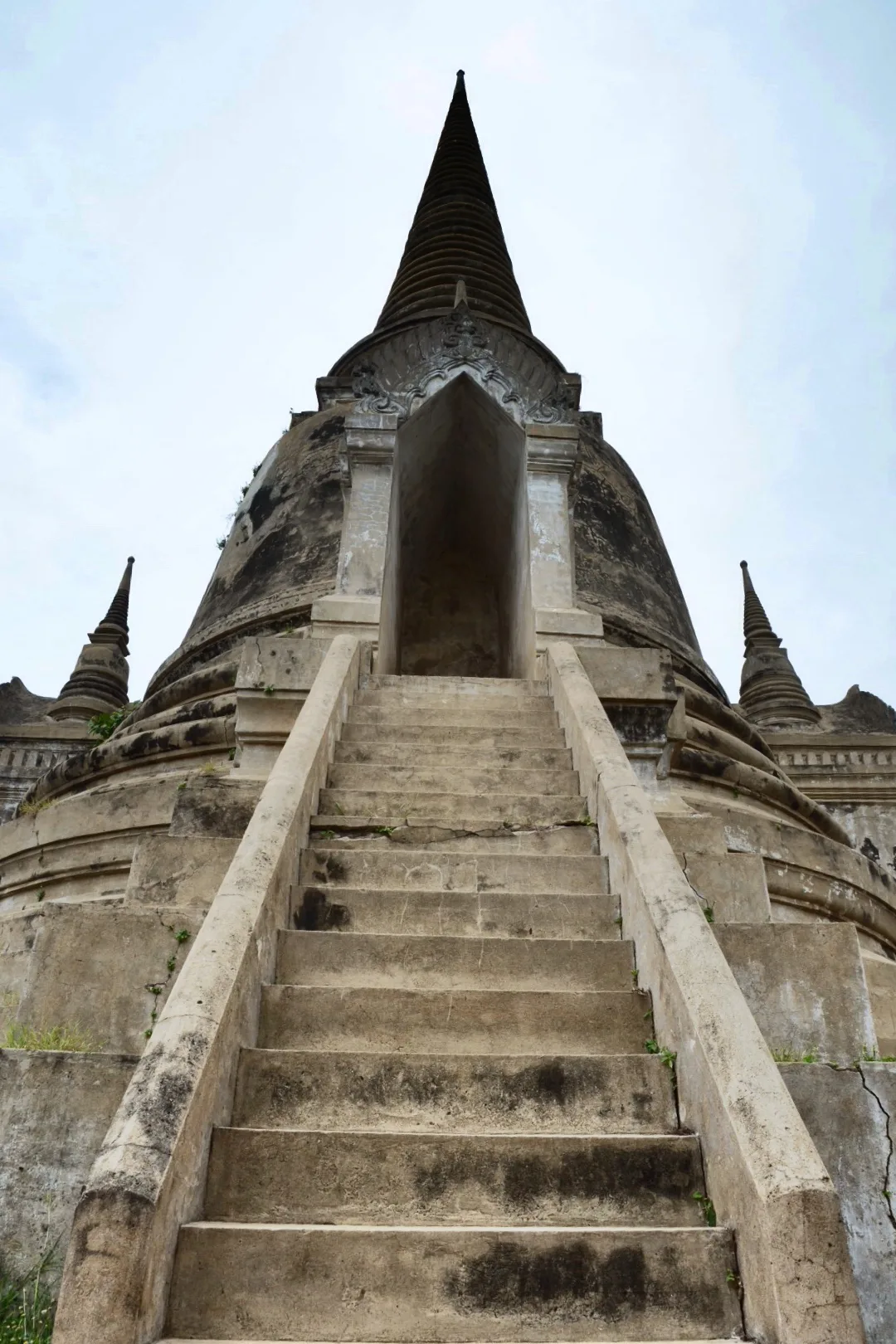
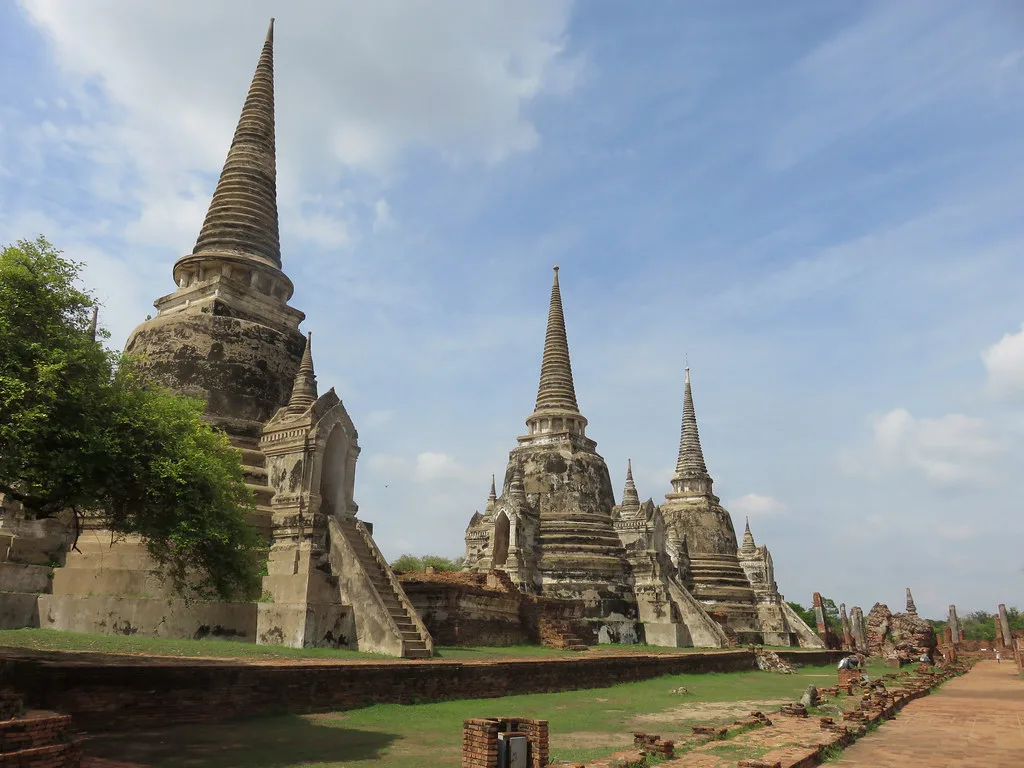
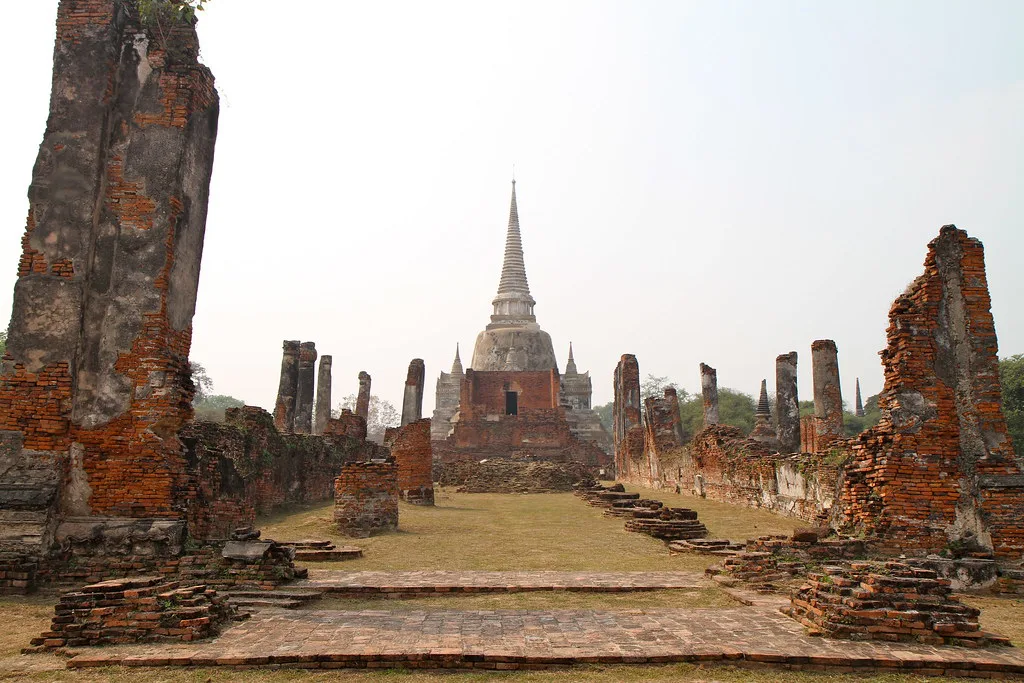
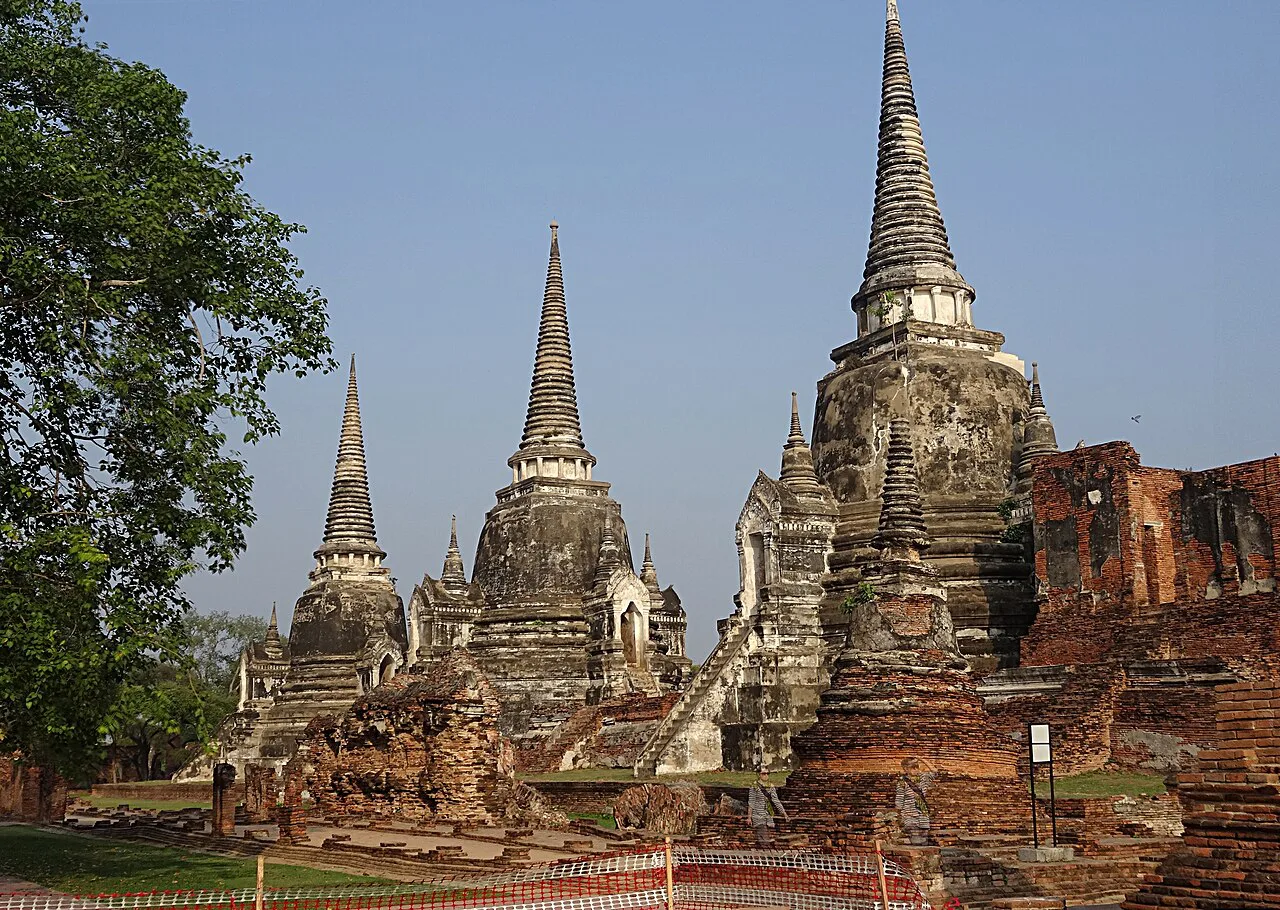
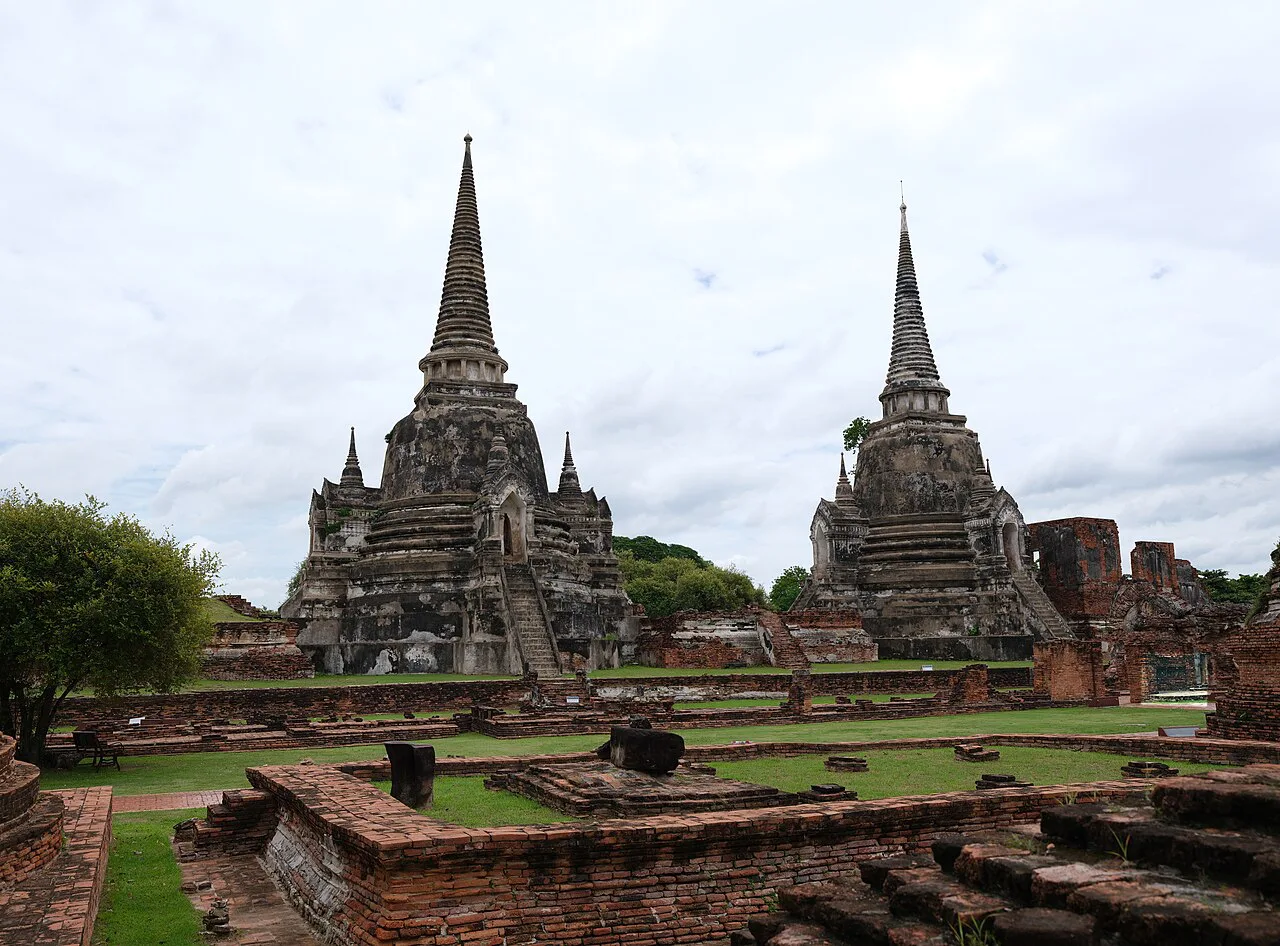
The defining feature is the row of three enormous Ceylonese-style chedis, or stupas, arranged down the centre of the complex. Two were built by King Ramathibodi II in 1491 to enshrine the ashes of his father and his older brother; the third was added in 1530 by King Boromaraja IV for the ashes of King Ramathibodi II. Each chedi therefore holds the ashes of an Ayutthaya king, which is why the trio reads as a royal monument rather than a decorative set.
What you see is a split picture. The three stupas survive in good condition, but most of the buildings that stood around them are largely unrestored, so you are looking at brick foundations and low walls rather than complete halls. Sources describe flanking buildings that once held standing Buddha images and a cross-shaped structure behind the stupas for four more large statues; knowing that helps you read the empty platforms as missing architecture rather than as plain ground.
The monastery was sacked and burned when the Burmese army took the city, which is why the chedis stand amid ruin rather than inside a working temple. Oriental Architecture's photo profile of Wat Phra Si Sanphet is a useful reference for what the remaining structures look like before you arrive, so you can tell the restored stupas apart from the unrestored shells around them.
Getting there from Bangkok
From Bangkok, the usual approach is by train, bus or private car to Ayutthaya, then a local hop to the city island. Trains from Bangkok's stations serve Ayutthaya and buses run from the northern bus terminals, but schedules and fares change, so confirm departure times with the operator or at the station rather than relying on an old timetable. A private car or a booked day tour removes the transfers entirely and drops you at the temple entrance.
Once you are on the island, tuk-tuks, songthaews, bicycles and Grab all work for moving between ruins, and the temple is close enough to the palace site that many visitors simply walk from one to the next. If you are arriving by train, plan the last leg from the station into the Historical Park before you set out, since the station sits outside the old city moat.
How long to allow
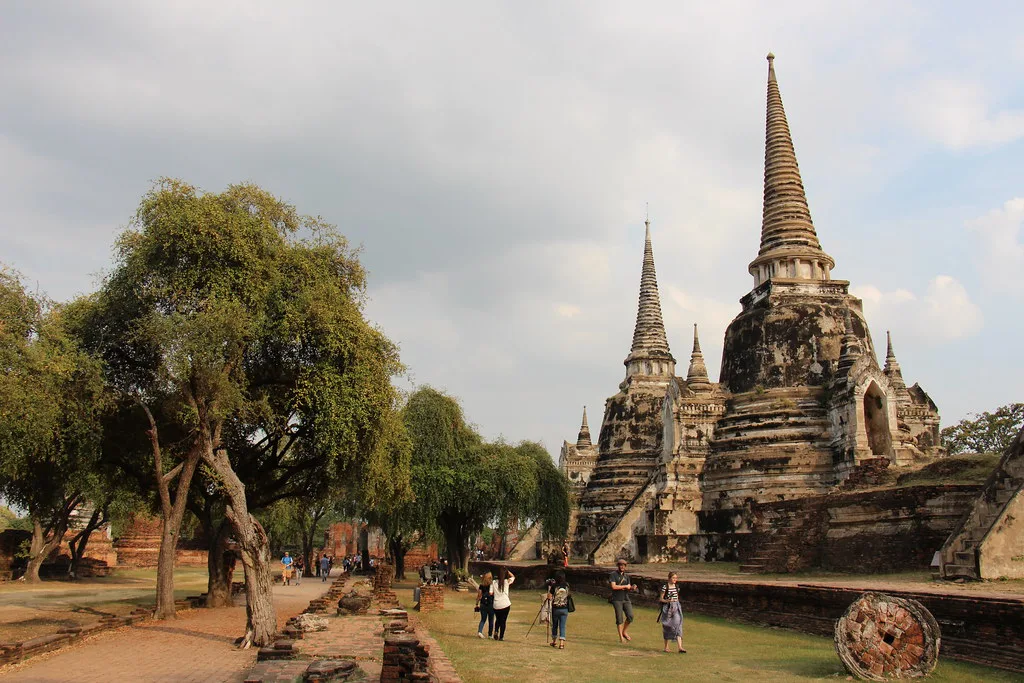
Budget 30 to 45 minutes for Wat Phra Si Sanphet itself, which is enough to walk the platform, circle the three chedis and read the site markers. The complex is small and open, so the time you spend is driven more by heat and photos than by distance. Combined with the adjacent palace ruins and Wihan Phra Mongkhon Bophit, this stretch comfortably fills a half day.
For a fuller day, treat the temple as one stop on a city-island loop with Wat Mahathat, Wat Ratchaburana and Wat Phra Ram, then add a riverside temple such as Wat Chaiwatthanaram if you still have energy. Travelers building a wider plan can cross-check timings against a list of things to do in Ayutthaya before locking the order of stops.
Tickets, opening hours and closures
The temple is a restored ruin inside Ayutthaya Historical Park, in Pratu Chai sub-district, and the park operates it as a ticketed heritage site. Current ticket prices, opening hours and any temporary closures are published by the park and by the Tourism Authority of Thailand rather than fixed here, so check the official listing before you travel, especially if you are visiting on a public holiday. Some visitors buy a combined pass covering several ruins, so compare options at the ticket window before paying for individual entries.

What is within walking distance
The old royal palace site and Wihan Phra Mongkhon Bophit sit immediately beside the temple, making them the obvious next stops. Wat Phra Ram is a short walk away, and Wat Mahathat, with its famous Buddha head in the tree roots, is a few minutes further on the same city-island circuit.
Slightly further out, Wat Ratchaburana and the Chao Sam Phraya National Museum reward anyone extending the loop, and Wat Chaiwatthanaram on the riverbank is best reached by a short ride rather than on foot. Wat Yai Chai Mongkhon lies beyond the city island and pairs well with a temple-hopping day if you have your own transport.

Heat, shade and timing your visit
The ruins are exposed, with very little shade across the platform, so the middle of the day is the least comfortable window for walking the site. Going early or late in the afternoon makes the three chedis easier to photograph and the brick surfaces less punishing to cross. Carry water and plan the shaded stops, such as Wihan Phra Mongkhon Bophit, between stretches out in the open.
Is Wat Phra Si Sanphet worth including?
Yes, if you are already on Ayutthaya's city island. The three chedis are the most photogenic royal monument in the park, the site takes under an hour, and it sits within walking distance of the palace ruins and several major temples. Skip it only if you are rushing a single-temple stop, in which case Wat Mahathat is the stronger one-off.
Build the day around an early or late slot, confirm tickets and hours with the park before you go, and treat the temple as one link in a city-island loop rather than a destination on its own. That way the heat, the transfers and the walking all work in your favour.
Explore more Ayutthaya guides
Frequently Asked Questions
How long does it take to see Wat Phra Si Sanphet?
Most visitors need 30 to 45 minutes to walk the platform, circle the three chedis and read the site markers. Because the complex is compact and exposed, the visit is shaped more by heat and photography than by distance, and pairing it with the adjacent palace ruins and Wihan Phra Mongkhon Bophit fills a half day comfortably.
How do I get to Wat Phra Si Sanphet from Bangkok?
Take a train or bus from Bangkok to Ayutthaya, then continue to the city island by tuk-tuk, songthaew, bicycle or Grab; a private car or day tour removes the transfers. Confirm current departure times and fares with the operator or at the station, since these change, and plan the last leg from the station into the Historical Park before you set out.
Are there monks at Wat Phra Si Sanphet?
No. The temple was founded in 1448 on the site of Ayutthaya's original royal palace and served as the royal family's private chapel and ceremonial temple, so no monks lived inside the complex. That is why the remains read as ceremonial halls and royal stupas rather than as a working monastery.