
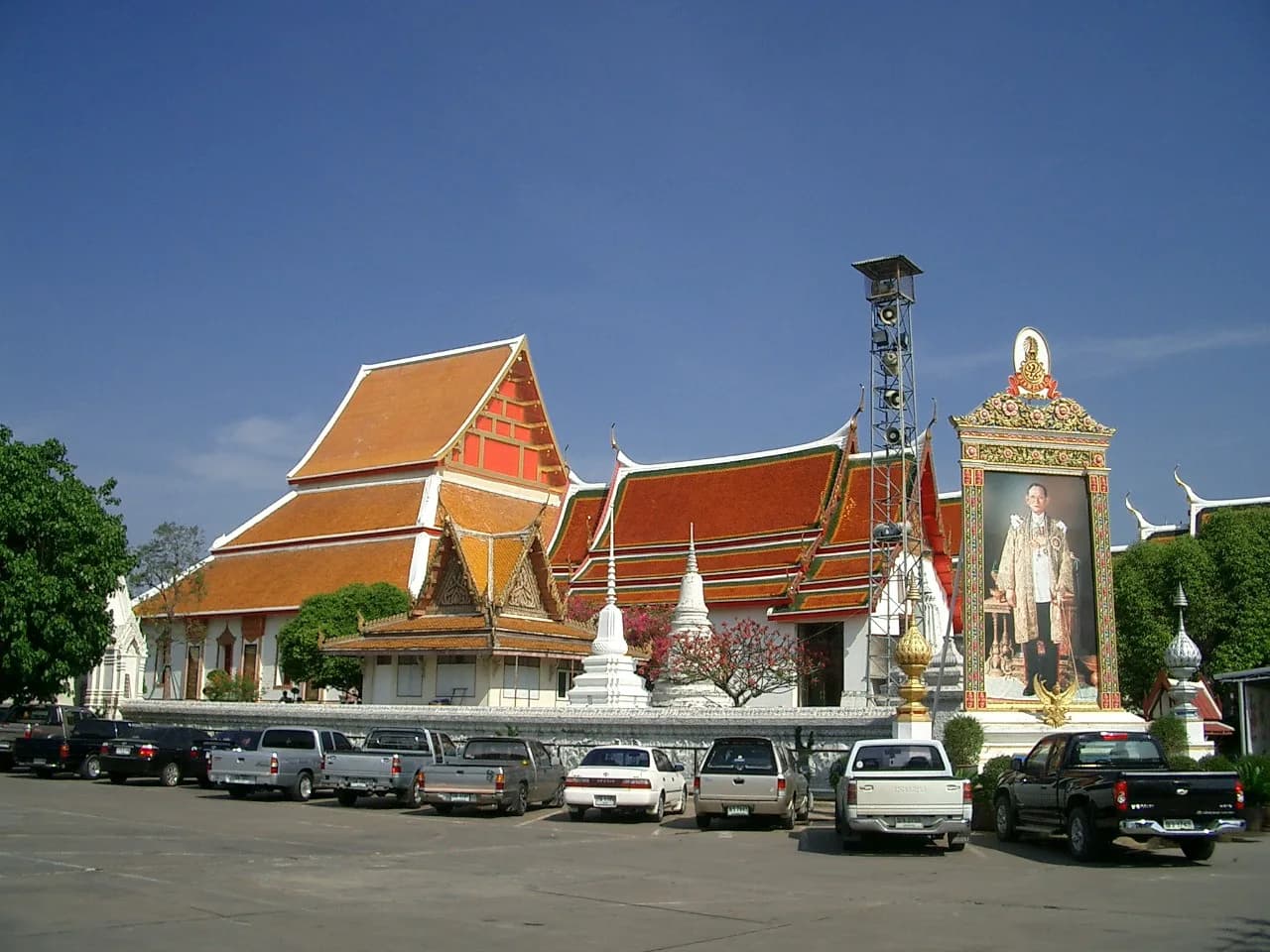
Wat Phanan Choeng: Ayutthaya's Riverside Temple and Its Giant Buddha

Give Wat Phanan Choeng about an hour, and go for the 19-meter seated Buddha rather than for ruins. It sits southeast of Ayutthaya island near the meeting of the Pasak and Chao Phraya rivers, so it reads as a busy, working temple instead of another brick shell in the park. This guide covers where it is, how to reach it from the island and from Bangkok, what to look for inside the main hall, and how to slot it into a day of temple-hopping.
What Wat Phanan Choeng actually is
This is an active place of worship, not a ruin. Temple histories place its founding in 1324, before Ayutthaya itself was established, yet the buildings you walk through today look largely modern because they have been rebuilt and renovated over the centuries. Thai and Chinese worshippers come to make offerings and ask for luck, so expect incense, chanting and people kneeling in prayer around you as you sightsee.
That living character is the main trade-off. You will not get the photogenic emptiness of a ruined prang, and the courtyards can fill with merit-makers and tour groups. In exchange you see a temple doing what temples do, which is a different and arguably more memorable experience than another set of brick foundations. If you want quiet ruins, put this one later in the day and lead with the park.
Where it sits and how to reach it from the island
The temple stands southeast of Ayutthaya island at the confluence of the Pasak River and the Chao Phraya River, on the east bank. The street address reference is Moo 2, Khlong Suan Plu, in Phra Nakhon Si Ayutthaya district. Because it lies off the island, it is not part of a simple walking loop around the central ruins, and you will need a short ride to reach it.
The most pleasant approach is the cross-river ferry, which one temple-history source describes as a short hop costing just a few baht from the pier serving Wat Phanan Choeng. You can roll a bicycle on board, though boarding takes a little care. Treat the fare as small change and confirm it at the pier rather than budgeting a precise amount.
If you are staying on the island, a tuk-tuk or a Grab ride is the straightforward fallback, and drivers know the temple by name. From Bangkok, the usual pattern is train or bus to Ayutthaya first, then that last short leg by road or ferry. Published timetables shift, so check the State Railway of Thailand site and your bus operator on the day rather than trusting an old schedule.
Luang Pho To, the giant seated Buddha
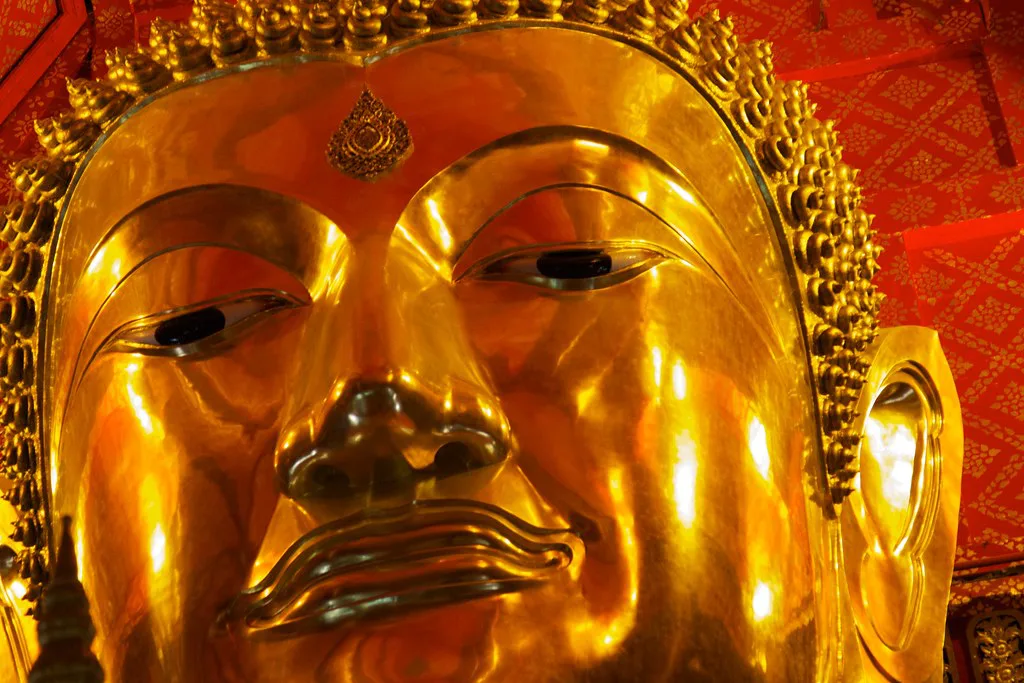
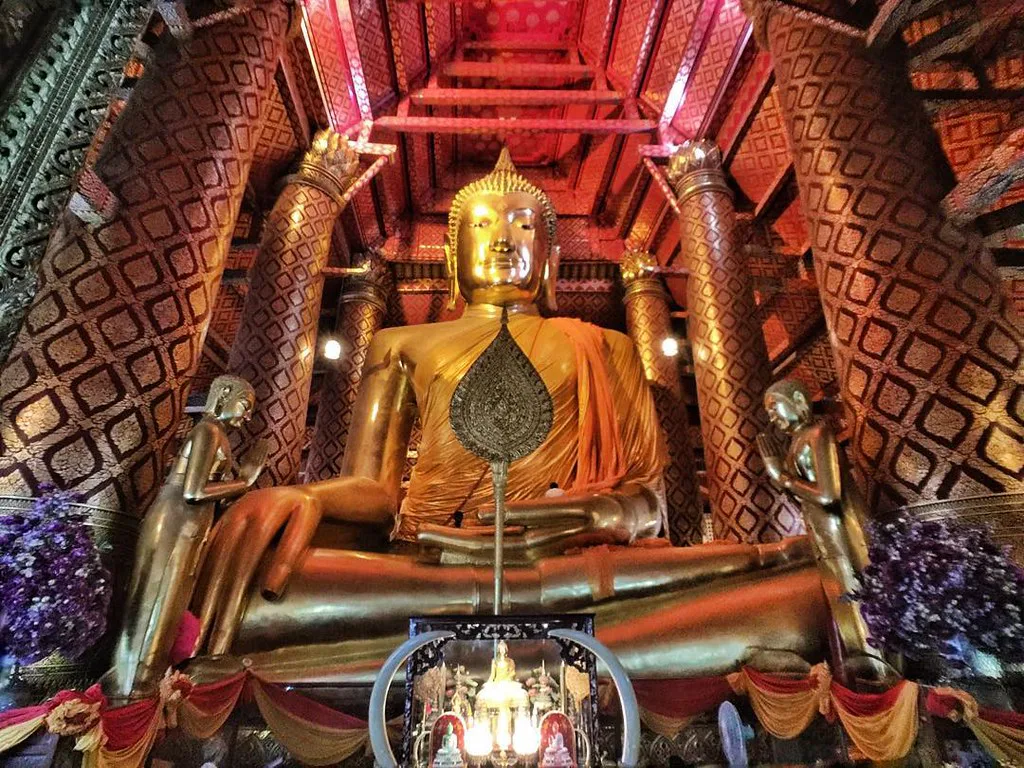
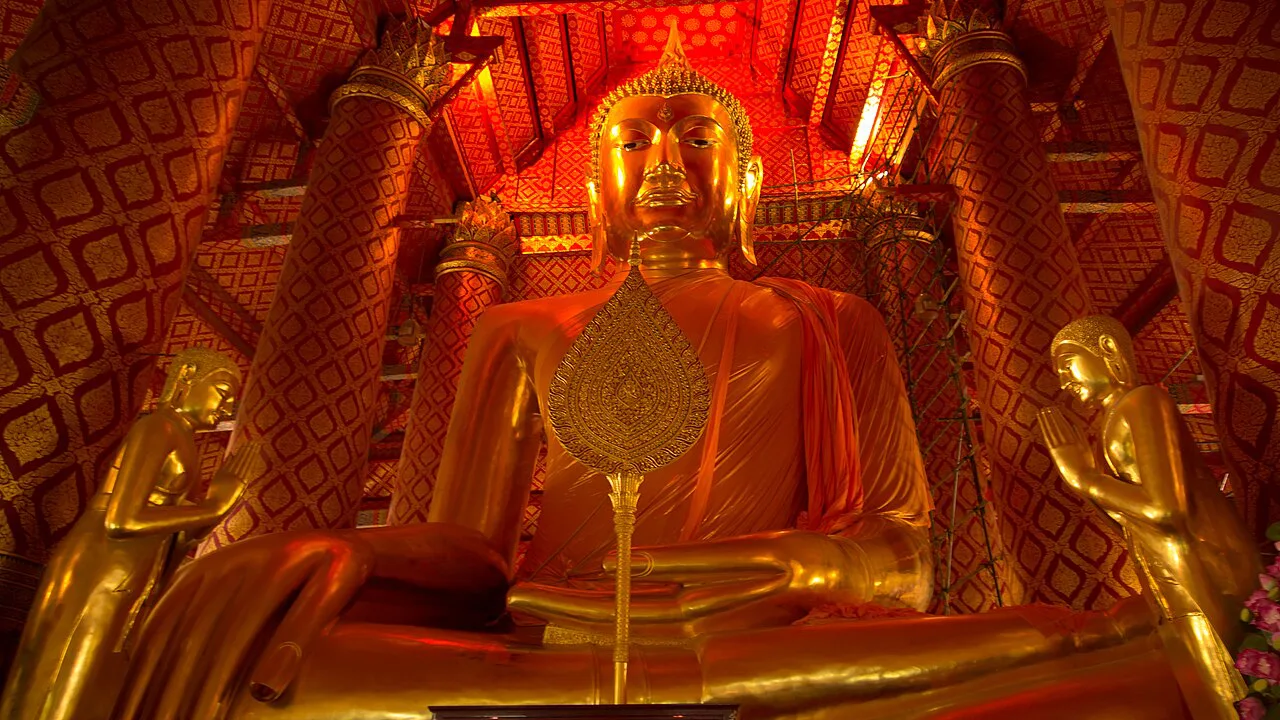
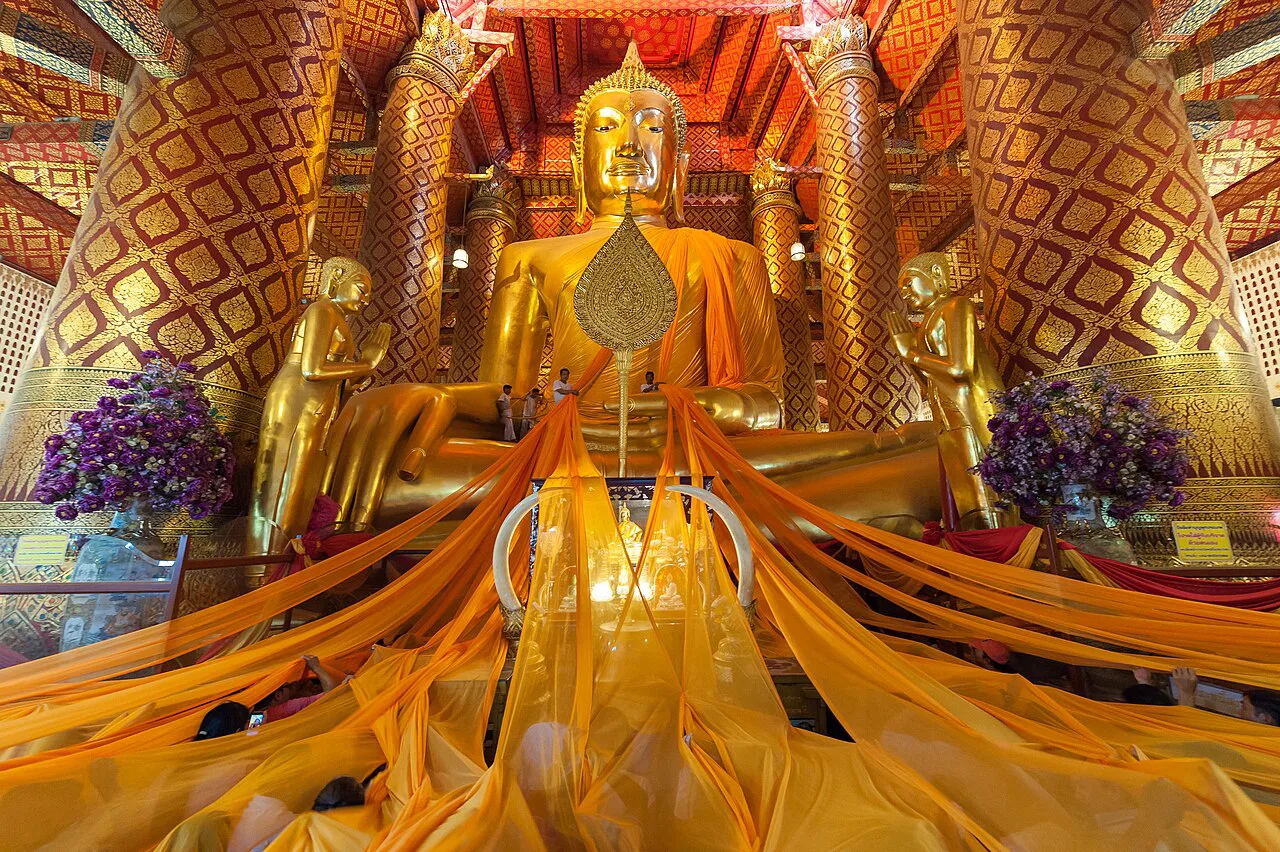
The reason to come is Phra Chao Phananchoeng, also called Luang Pho To, an enormously popular gilded image in the Subduing Mara posture. Sources give its measurements as 14.25 meters from knee to knee and 19 meters tall including the ornament above the head, built of brick and mortar with a surface now covered in gold. Knowing those numbers helps: this is not a modest hall Buddha but a figure that fills its own tall building.
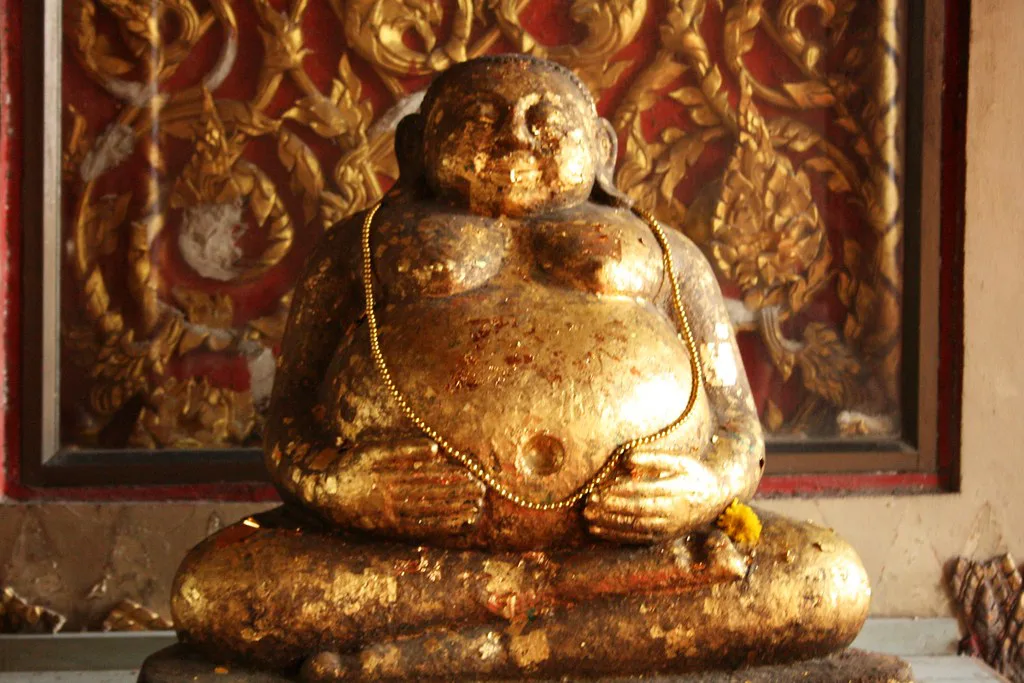
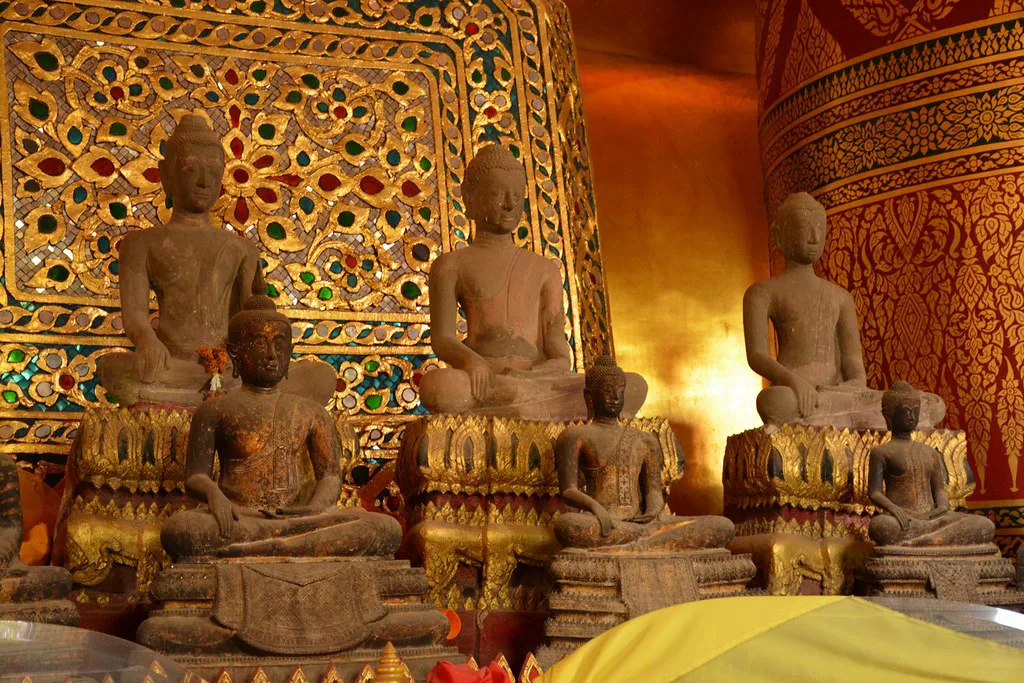
Walk the surrounding halls slowly rather than rushing to the main image. Smaller Buddha figures line the route, and some are described as surviving from the Sukhothai era, which gives the visit a layer beyond the single famous statue. The precise construction date of the main image is not known, and it is reported to have been repaired in the time of King Naresuan and again under the Chakri dynasty.
Why it feels different: worship, robes and the Chinese layer
Expect to see the giant image being cared for. Visitors have witnessed ceremonies in which the robes draped over the Buddha are changed, a ritual that signals this is a functioning temple with a congregation. Photography is usually fine, but keep your distance from anyone praying and avoid blocking the front of the image during offerings.
Before you enter the main building, look for the Chinese characters and writing on the approach. Chinese worshippers call the image Sum Poh Kong, meaning good luck in boating, a nod to the temple's riverside setting and the seafaring communities that venerated it. That helps explain why the crowd here is mixed and why the atmosphere differs from a purely Thai temple.
There is a historical footnote worth knowing: Zheng He, the Ming dynasty envoy, is said to have visited in 1407. Nearby you can also find a Chinese shrine connected to the princess of legend, which pairs naturally with the main temple stop. Neither detail changes the practical visit much, but both make the Chinese inscriptions on site read as part of a longer story rather than decoration.
The legend of Princess Soi Dok Mak
Local tradition holds that the temple was built on the site where Princess Soi Dok Mak was cremated, a Chinese emperor's daughter who is said to have died when her betrothed failed to arrive in time. Treat this as legend rather than documented fact, but it explains why the site carries a Chinese shrine alongside the Thai temple. If the story interests you, allow a few extra minutes at the shrine before or after the main hall.

Opening hours, entry fees and ceremonies
There is an entrance fee to enter the temple, but published sources do not agree on an amount and the temple does not post a stable figure in the material available here. Check the current charge at the ticket point or with your hotel before you set out, and carry small notes in baht. Opening hours likewise should be confirmed locally rather than assumed from an old listing.
Ceremony days, particularly robe-changing events, draw big crowds and are not published on a fixed calendar you can plan around months ahead. A quick look at recent visitor posts, or a question at your guesthouse, will tell you whether something is scheduled during your stay.

How long you need, and how to pair it with the park
Budget 45 to 60 minutes for the temple itself, plus travel time each way. If you add the Chinese shrine and linger over the smaller Buddha figures in the side halls, stretch that to 90 minutes. Photography takes longer here than at the ruins because the hall is busy and you will be waiting for gaps in the crowd.
A natural pairing is with other temples in the same southwestern or riverside part of Ayutthaya rather than the central island cluster. Wat Chaiwatthanaram, with its Khmer-style prang, is the obvious companion stop and the pair makes a coherent half-day if you have transport. Wat Phutthai Sawan is also in this group and easier to add if you have your own transport.
If you are working through the classic ruins, keep Wat Mahathat, Ayutthaya for its famous Buddha head in the tree roots and plan it as a separate stop on the island. Trying to see both in one rushed hour defeats the point of either. Lay out the day so the living temple comes first or last, with the ruins in the middle.
What's nearby in Phra Nakhon Si Ayutthaya
Wat Yai Chai Mongkhon, with its tall chedi and rows of seated Buddhas, sits east of the island and can be combined with this temple in a single tuk-tuk loop. Wat Phra Si Sanphet, the royal temple inside the park, is the grandest set of ruins and rewards its own visit rather than a drive-by. Pick two or three nearby sites and give each real time.
For context before or after the ruins, the Chao Sam Phraya National Museum in town holds sculpture and artifacts from the Ayutthaya period, and pairs well with Wat Ratchaburana next door. Wat Ratchaburana's crypt and prang are among the more atmospheric stops on the island. If you want a broader plan beyond temples, browse the wider list of things to do in Ayutthaya.
Other island and riverside options include Wat Thammikarat, with its rooster-topped chedi, and Wat Lokayasutharam, home to a large reclining Buddha. Wat Phra Ram sits in the central park area and works as a short stop between larger sites. None of these replaces Wat Phanan Choeng, but they fill out a full day nicely.
Who should skip it, and who shouldn't
Skip Wat Phanan Choeng if you are short on time and want only the classic ruins; the central park delivers more per hour for that goal. It is also not the place for anyone hoping to photograph an empty brick monument. The modern buildings and worshipping crowds are part of the package, not a flaw to work around.
Do go if you want to see a temple in active use, if a 19-meter gilded Buddha appeals, or if you are interested in the Chinese trading communities that shaped Ayutthaya. It is also a sensible stop if you are already heading to the west-bank prangs. For the full menu of sites, the Ayutthaya Attractions: 12 Visitor Guides page lays out the options by area.
Should you add Wat Phanan Choeng to your Ayutthaya day?
Yes, if you can spare an hour and want one temple on your route that is alive rather than ruined. Combine it with Wat Chaiwatthanaram across the river and you have a half-day that balances working worship with the park's great prangs. If your schedule is tight, keep it as an optional swap for one secondary ruin.
Confirm the entry fee and hours at the temple gate, and check that no ceremony will complicate your timing. Go for the Buddha, not for the architecture, and you will leave satisfied.
Explore more Ayutthaya guides
Frequently Asked Questions
Why is the Buddha head missing in Ayutthaya?
That question belongs to Wat Mahathat, where a Buddha head sits entangled in tree roots, not to Wat Phanan Choeng. The main image here is complete and gilded, so if seeing the famous head is your priority, plan a separate stop at Wat Mahathat on the island.
Is Wat Phanan Choeng the biggest Buddha in Thailand?
No. Luang Pho To measures about 19 meters tall, which is huge but not the largest in the country. Larger seated and standing images exist elsewhere, so come for the atmosphere and the setting rather than a size record.