
Bridge Over the River Kwai: How to Visit Kanchanaburi's Death Railway Bridge

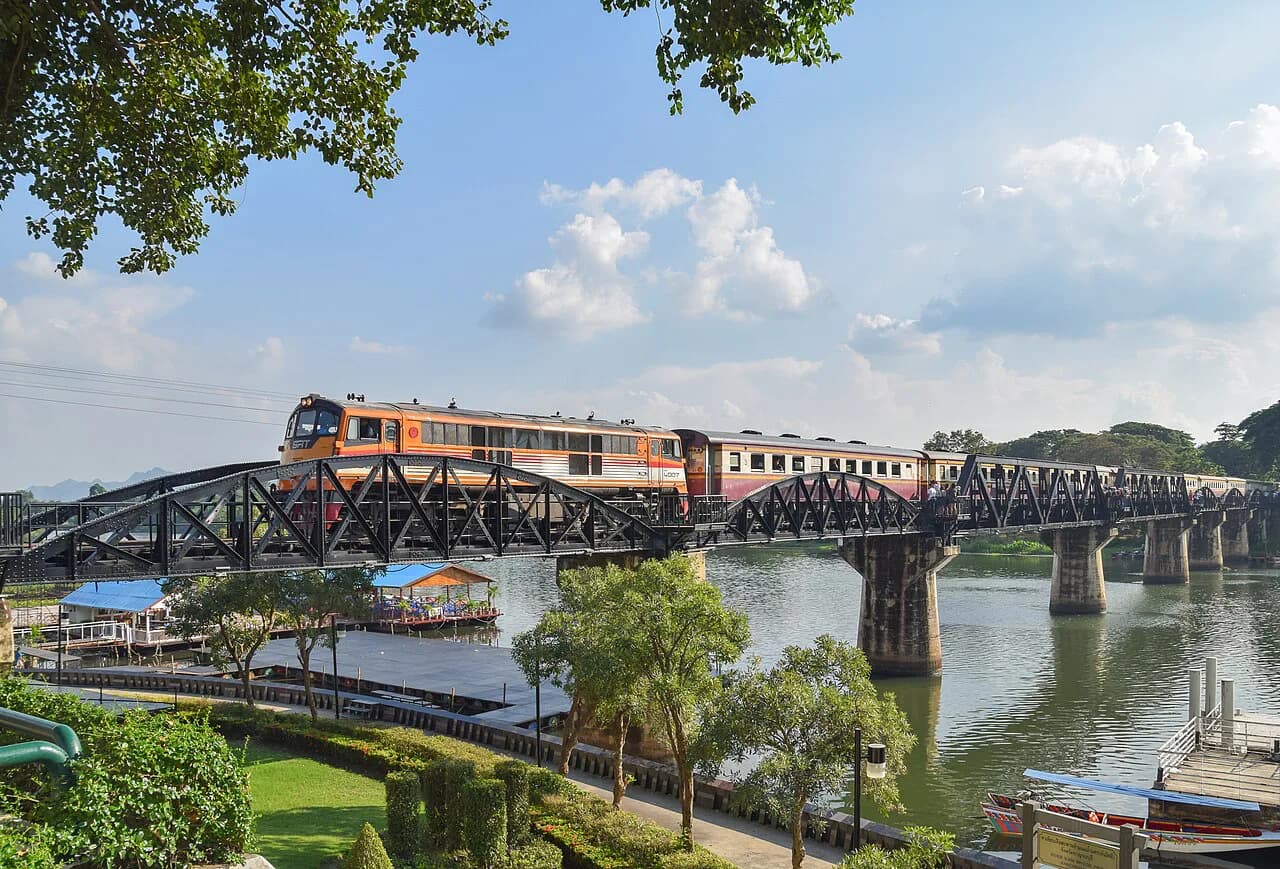
Plan on 20 to 30 minutes for the Bridge Over the River Kwai itself, or half a day if you add the far bank and Kanchanaburi town. The black steel span sits in Kanchanaburi town, roughly 130 kilometres west of Bangkok, and it is a rebuilt structure rather than an intact wartime relic, so you come for the railway story and the river setting. This guide covers where the bridge is, how to arrive from Bangkok and from town, how to walk it, when a train crossing is worth waiting for, and what sits within a few minutes on the other side.
What the Bridge Over the River Kwai Actually Is
The span crosses the Khwae Yai River, known in common use as the River Kwai, and it is a working piece of the old Death Railway line between Bangkok and Burma. It was built during the Second World War under Japanese control between 1942 and 1943, using prisoners of war and Asian labourers on a railway project that cost thousands of lives. Treat that history as the reason to come, not a backdrop to a photo stop.
What you see today is not the wartime structure: the original wooden bridge was destroyed during the war and rebuilt in 1943, so the crossing you walk is a reconstruction rather than the 1942 span. That matters when you read plaques or tour descriptions that imply you are standing on the original wartime crossing. The visit is about the railway and the people who built it, and the bridge is the marker that puts you on the spot.
Interpretation around the bridge is thin compared with a museum, so most travellers pair the crossing with a museum or cemetery in town to get the chronology straight. The bridge itself rewards a slow walk and a look at the track, the river and the opposite bank rather than a rushed photo from the road end. If you want the history before you arrive, read up first and use the bridge as the place where it lands.


Where the Bridge Sits in Kanchanaburi
The bridge is inside Kanchanaburi town on the Khwae Yai, at roughly 14.040735, 99.503582 if you are pinning it on a map app. It is close enough to the town-centre guesthouse strip that many visitors simply walk down to it, which makes it an easy early-morning or late-afternoon stop rather than a day trip in itself. Check your accommodation's position against the river before you decide whether to walk or ride.
From Kanchanaburi city centre the drive is under 10 minutes by car, and a tuk-tuk or a rented bicycle covers it comfortably if you are staying further from the river. Some guesthouses lend bicycles to guests, which turns the bridge into part of a loose town loop. If you are staying outside town, ask your hotel for the distance before assuming you can walk it.
For orientation on the rest of the town, the broader Kanchanaburi Attractions: 11 Visitor Guides collection maps the museums, cemeteries and temples around this stretch of river, so you can see what else is within a short ride of the bridge.
Getting There from Bangkok and Around Town
The simplest rail approach is a Bangkok train that stops at the Bridge over the River Kwai station, which puts you on the line rather than on the road. Schedules and fares change, so confirm the current departure list and ticket price with the State Railway of Thailand before you build a day around one train. If you would rather not manage the railway yourself, buses and organised tours from Bangkok also run this route.
Once in town, your options are walking from a riverside guesthouse, a tuk-tuk, a rental bicycle, or a guided tour that bundles the bridge with the war cemetery and museums. Tours solve the transport question but move you at a group pace, which is the trade-off if you want to linger on the far bank. Independent travellers should plan the return leg before dark rather than assume a songthaew will appear.
If you are basing yourself in town and want a wider menu of half-day plans around the river, the guide to things to do in Kanchanaburi sets the bridge alongside the town's other stops so you can sequence them without backtracking.

Walking the Bridge and Where to Stand
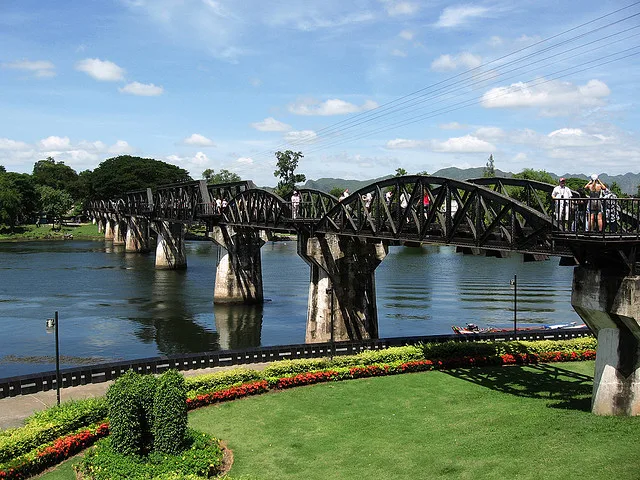
You can walk the full length of the bridge, and you should: crossing end to end takes only a few minutes and gives you the river view from mid-span that the road end cannot. The track runs down the middle, with spaces provided along the sides where you can step off the rails. Keep to those side platforms when a train is due and you can watch it pass from a few feet away without standing in its path.
For photographs, the river bank is the better vantage point: you get the whole steel span and the train in profile instead of a close-up of girders. Walk down to the bank, frame the bridge, and wait rather than shooting from the middle of the crossing where other visitors are moving through. Early morning and late afternoon give softer light and thinner crowds than the middle of the day.
The train crossing is the moment worth planning around, because the bridge goes from a static structure to a working railway in seconds. The published guidance is to be on the bank, not on the bridge, when the train comes through, even though side platforms exist. Check the day's train times locally or with the railway before you set your schedule, since timetables shift.
What's on the Far Bank
Cross the bridge completely and keep walking a few minutes: there is a large Chinese temple and the tomb of a Chinese soldier on the other side, both easy to miss if you turn back at mid-span. This is the part of the visit most short guides skip, and it adds perhaps 20 minutes to the trip. It also gives you a reason to cross rather than just photograph.
Riverside restaurants and cafés near the bridge make a natural pause before or after the crossing, and they are useful if you are waiting out a train time rather than standing on the bank in the heat. Prices vary by venue and are not published consistently, so check menus at the door.
How Much Time to Allow
A quick visit is 20 to 30 minutes: walk across, look at the river, walk back. That is enough if the bridge is one stop on a packed day and you are not waiting for a train. Budget the short version honestly and you will not feel rushed.
A half-day version adds the far-bank temple and tomb, a riverside drink, and one town sight such as a museum or the war cemetery. That is the version that makes the trip feel like more than a photo stop. If you are coming from Bangkok on a day trip, the travel time is the constraint, not the bridge.
Allow extra time if you plan to ride the Death Railway beyond the bridge, since that is a separate excursion with its own schedule rather than something you fold into a 30-minute stop. Confirm current train times and any fares with the railway before committing.
Tickets, Hours and What to Confirm
Some visitor listings describe the bridge as open year-round around the clock with no entry charge, but that is a third-party description rather than an official operator statement, and access arrangements around a working railway can change. Confirm current access and any charge at the bridge or through Kanchanaburi tourism information before you count on it. Do not budget around an assumed free entry.
Train times, Death Railway excursion fares and museum opening hours are the details most likely to trip up a plan, and none of them should be taken from an old blog post. Check the railway operator for trains and each museum directly for hours. That is the one round of verification worth doing the week you travel.
Nearby Stops That Fit the Same Trip
The Kanchanaburi War Cemetery (Don Rak) in town is the natural companion stop, holding the graves of those who died on the railway, and it is a sober counterweight to the bridge itself. It is a short ride from the river and easy to combine with a museum visit in the same half-day.
The JEATH War Museum in Kanchanaburi covers the railway's history in more depth than anything at the bridge, so it is worth doing before or after the crossing rather than instead of it. Pair the two and the chronology makes sense.
For a different register, Wat Tham Suea (Tiger Cave Temple), Kanchanaburi sits outside the centre and is usually visited as its own stop rather than tacked onto a bridge walk. It works better on a separate half-day.
If you want the fullest picture of the railway, the Thailand-Burma Railway Centre in town is the museum most visitors use to put the bridge in context before seeing it. Go there first if you can.
Hellfire Pass, further along the line, is a longer excursion and belongs to a separate day; do not try to bolt it onto a bridge visit. The bridge is the accessible, in-town entry point to that story, not the whole of it.
Is the Bridge Over the River Kwai Worth the Stop?
Yes, if you treat it as a short, atmospheric history stop rather than a destination in itself. Walk the full span, stand on the bank for a train, and cross to the temple and tomb on the far side. That sequence takes an hour or two and earns the trip; a photo from the road end does not.
Build the rest of the day around a museum or the war cemetery so the bridge is part of a story rather than an isolated landmark, and confirm train times and any access details close to your travel date. If you only have time for one stop in Kanchanaburi and want depth, choose a museum first and the bridge second.
Explore more Kanchanaburi guides
Frequently Asked Questions
Can you walk across the Bridge Over the River Kwai?
Yes. Visitors can walk the length of the bridge, keeping to the side platforms along the track, and crossing end to end takes only a few minutes. The better photograph is from the river bank, where you can frame the whole span and watch a train pass.
Is the Bridge Over the River Kwai the original wartime bridge?
No. The wartime crossing was built under Japanese control between 1942 and 1943; the original wooden structure was destroyed during the war and rebuilt in 1943, and the steel bridge standing today is a later version. The visit is about the Death Railway's history and the people who built it, not an intact wartime relic.
Is there an entrance fee to walk the bridge?
Visitor listings describe it as free with round-the-clock access, but that comes from third-party travel content rather than an official operator notice. Confirm access and any charge at the bridge or through Kanchanaburi tourism information before you rely on it.
How far is the bridge from Bangkok?
It sits in Kanchanaburi town, roughly 130 kilometres west of Bangkok. Trains from Bangkok stop at the Bridge over the River Kwai station, and buses and tours also run the route; check current departure times and fares with the railway or your operator.