
Wat Tham Khao Noi: A Practical Guide to Kanchanaburi's Chinese Hilltop Temple

Wat Tham Khao Noi is worth 60 to 90 minutes, mainly for the spiral staircase up its seven-tiered pagoda and the view it gives you of the giant Buddha at Wat Tham Suea next door. It is a separate temple from its famous neighbor, not a wing of it, and treating the two as one stop is the most common mistake visitors make on this bluff in Tha Muang District. This guide covers where the temple sits, how to get there from Kanchanaburi town, what to look for inside, and how to fit it into a half day.
What Wat Tham Khao Noi actually is
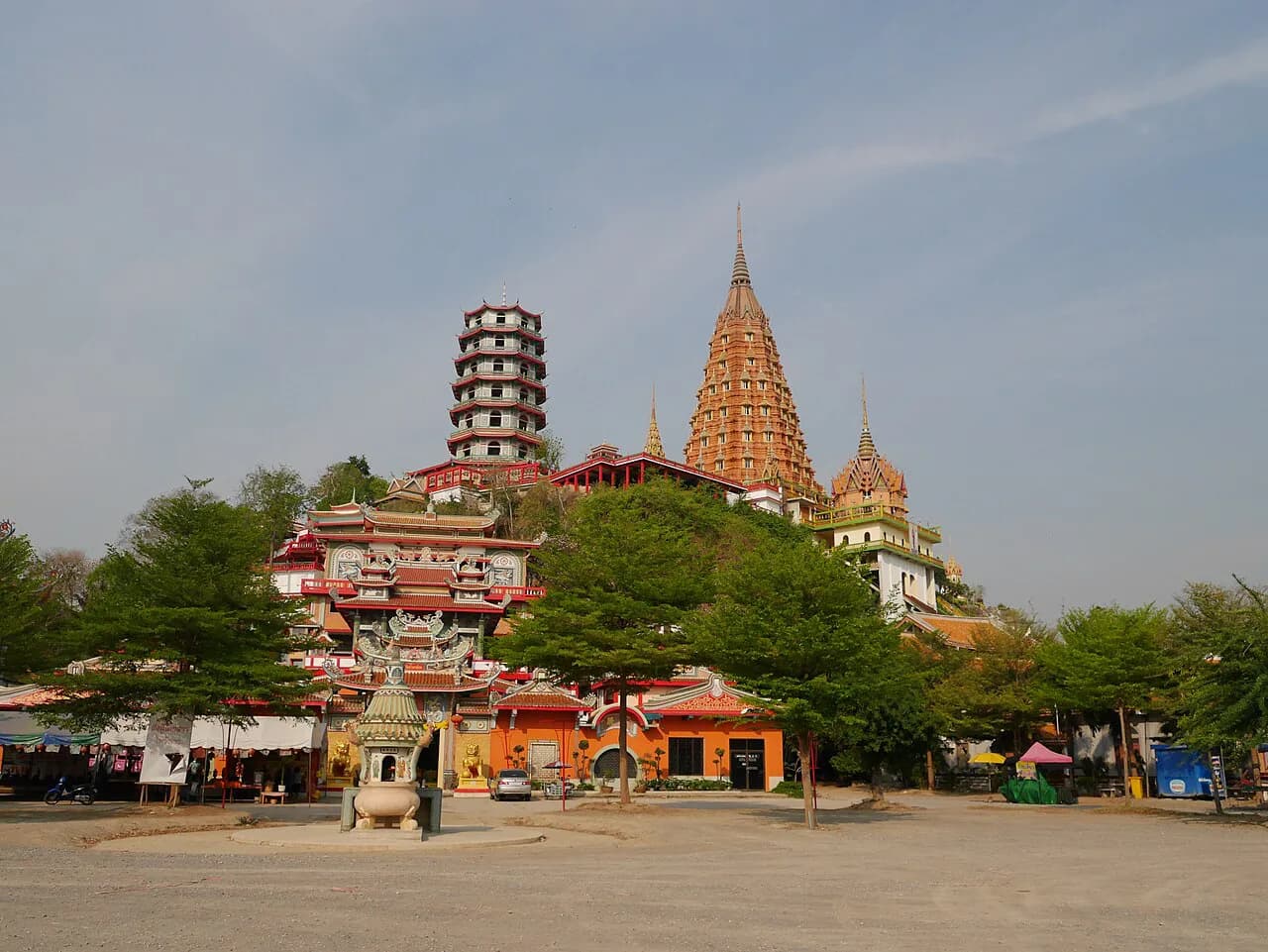
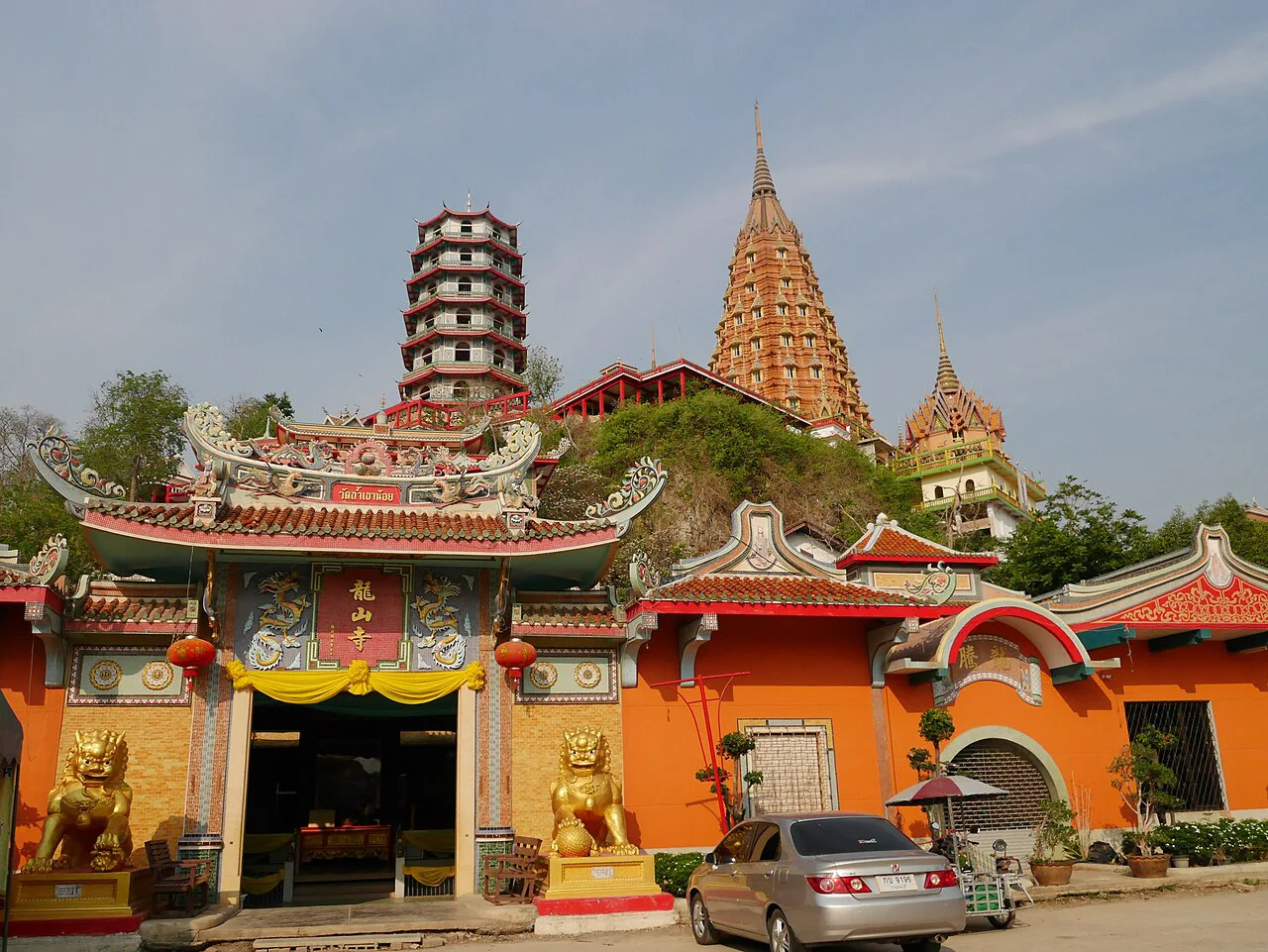
This is a Mahayana Buddhist temple in the Chinese style, founded in 1881 and originally led by a Chinese monk before Vietnamese Mahayana monks took over its care. That heritage shows in the red lanterns, the laughing Buddha figures and the Chinese deities that fill the shrine rooms, which is why it reads as distinctly different from the Thai temples elsewhere in the province. Cruise Asia, which brings river cruisers here, describes it as one of the few Chinese-style temples in Kanchanaburi Province.
The name translates as Temple of the Small Cave, matching the modest cave shrine inside rather than any deep chamber. The English-language labels cause real confusion: Krabi's Tiger Cave Temple shares the Tiger Cave name, and Kanchanaburi's Wat Tham Suea next door is also called Tiger Cave Temple, so search results and map pins get mixed up. If a driver looks puzzled, show the Thai name วัดถ้ำเขาน้อย and mention Tha Muang rather than Krabi.

Where it sits above the Mae Klong
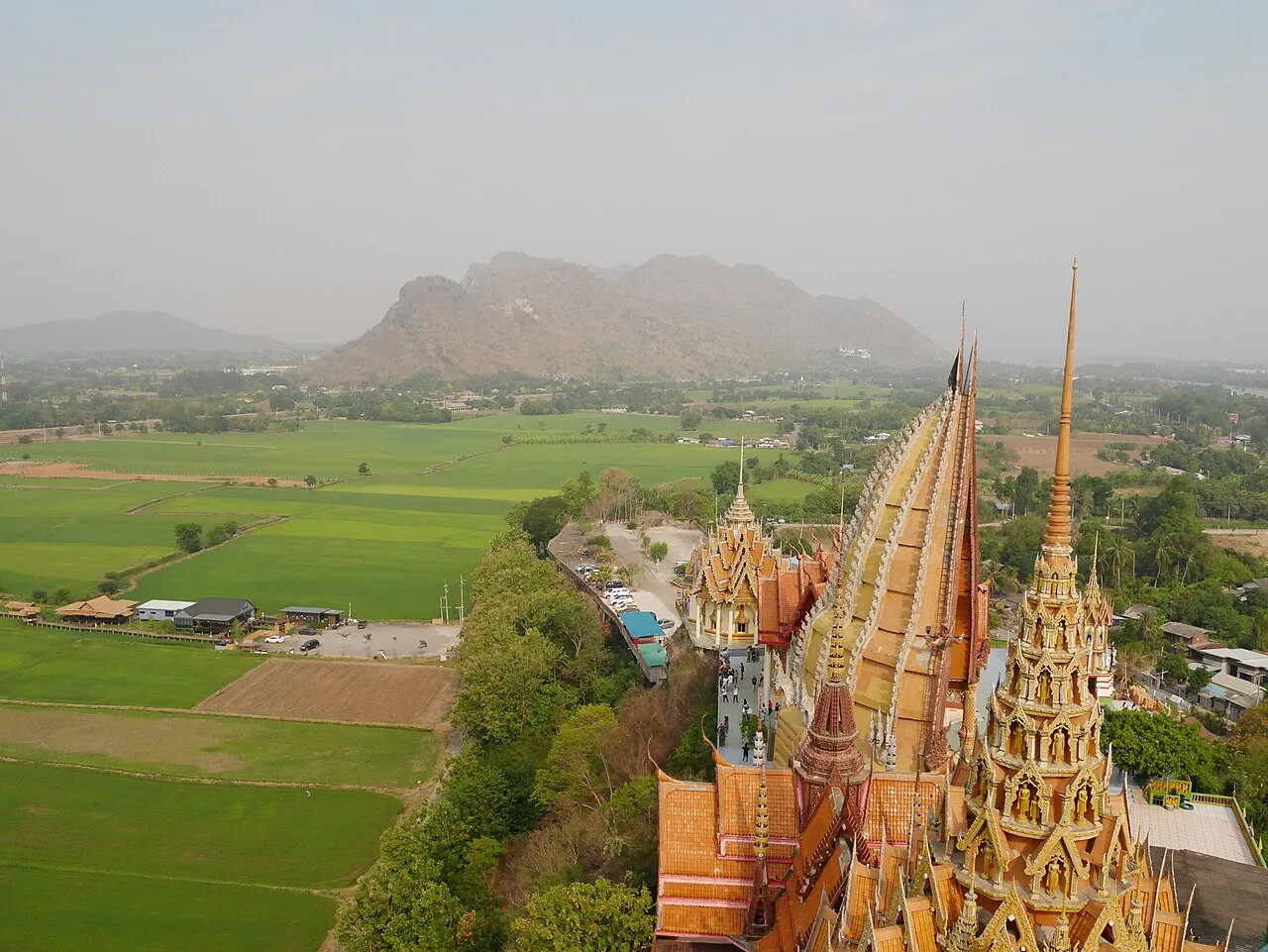
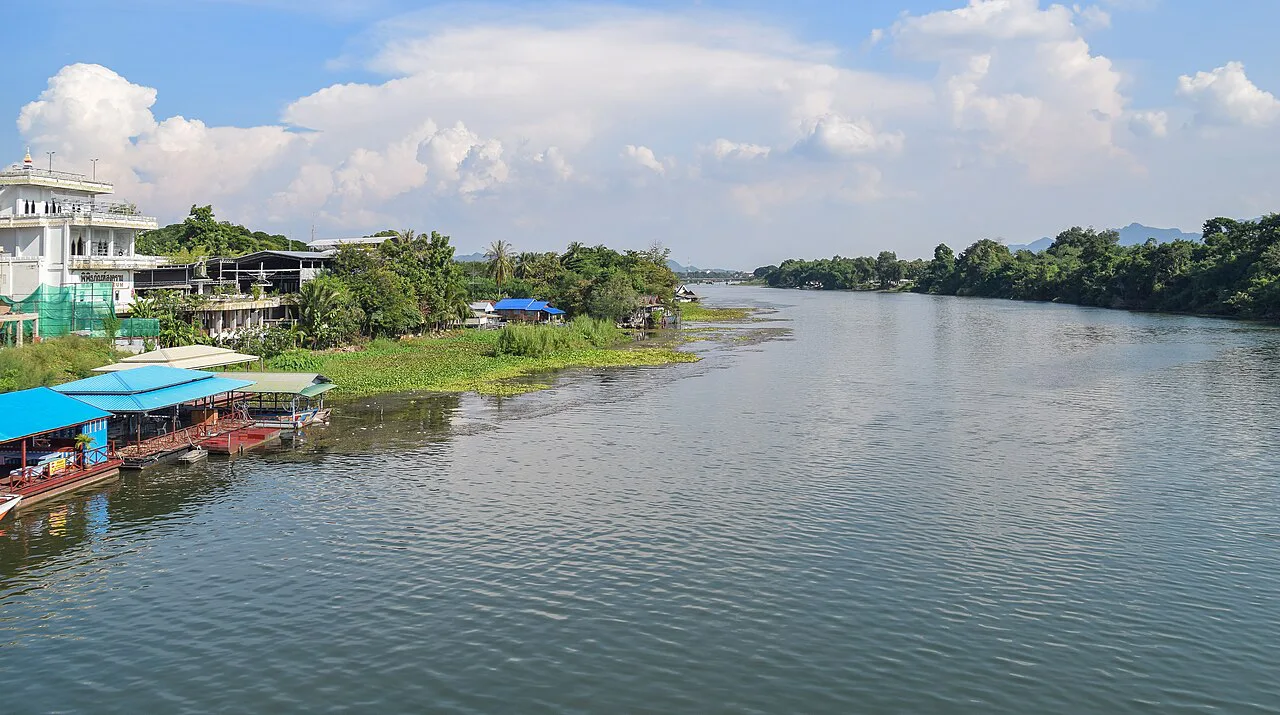
The temple occupies a limestone bluff above the Mae Klong River, with rice fields spreading behind it and mountains on the horizon. Wat Tham Suea shares the same hill and stands immediately beside it, so the two appear from a distance like a single complex. They are not: each has its own entrance, its own buildings and its own atmosphere, and you should budget time for both if you have come this far.
Because the pair sit close together, the pagoda terrace at Wat Tham Khao Noi works as a viewing platform for the giant Buddha at Wat Tham Suea. A first-hand visitor account favors this angle for a wide shot of the Buddha and the river valley over the view from the neighboring temple's own summit, where crowds and the Buddha's own scale make a clean frame harder. Plan your stops with that in mind rather than treating the order as arbitrary.

Getting there from Kanchanaburi town
The temple is in Tha Muang District, outside the main town across the river, so you will need wheels: a songthaew, a tuk-tuk, a Grab car or a private vehicle. No source here publishes songthaew fares or trip times, so ask your hotel or the driver to confirm the fare and the return arrangement before you set off, since the shared access road is also used by tour buses. Most Bangkok day-trippers arrive by minivan or hired car and combine this stop with the River Kwai sights, which makes for a long day rather than a relaxed one. For the wider picture of what else sits around town, see Kanchanaburi attractions: plan your walk along the Khwae Yai.
If you are basing yourself in town, spread the driving over a couple of days instead of cramming Tha Muang and the war sites into one loop. The Bridge Over the River Kwai and the Kanchanaburi War Cemetery (Don Rak) sit on the town side, so they pair naturally with a morning before or after the hill temples. Sorting your days this way cuts the time spent doubling back along the same road.
Which temple to do first
Start at Wat Tham Khao Noi, then cross to Wat Tham Suea. The logic is simple: the pagoda here gives you the wide view of the giant Buddha and the river valley while you are still fresh and while the light is clean, and you finish at the busier site rather than beginning in a crowd. A traveler account describes arriving at Wat Tham Suea just as a coach unloaded and finding the summit a madhouse, while only two people were encountered at the neighboring temple.
Watch the timing of coach arrivals, which cluster in the middle of the day. If you reach the shared access road and see buses lined up, do Wat Tham Khao Noi first and let the group move through the big Buddha site before you follow. That reversal costs you nothing and buys a quieter pagoda climb.
What to see inside
The centerpiece is the seven-tiered pagoda, climbed by narrow spiral staircases that circle up to a top platform. Shrine rooms off the main walkways are lined with colored tiles and hold Buddha figures, and the grounds include murals, tapestries, koi ponds and round-bellied laughing Buddha images alongside Chinese deities such as Guan Yin. The overall effect is dense and colorful rather than grand, so slow down and look into the small rooms instead of heading straight for the stairs.
Visitors consistently name the top platform as the payoff, with rice fields, the river and, in the right season, green paddies spread below. Trip.com's community write-up also points to views toward the Mae Klong Dam and describes the atmosphere as peaceful, which fits the quieter setting compared with next door. Allow a little patience at the stairway: it is a two-way flow in a tight space, and you may have to wait.
The cave that gives the temple its name is a modest shrine rather than a chamber you walk deep into, so give it a few minutes as a side stop between the shrine rooms and the pagoda. Inside and around it you will find the murals, tapestries, koi ponds and laughing Buddha images described above, set among Chinese deities and red lanterns.
The climb and how much walking
Expect a short but steep approach followed by the pagoda's internal spiral stairs, which are narrow enough that you should leave large bags behind if you can. The stairwell is the real constraint, not distance: each level is a short push, but you will pause for people coming down. Anyone in the group who struggles with tight, steep steps can wait on the terrace, which already carries a good share of the view.
Comfortable shoes matter more than any special gear, and you will be asked to remove them where signs indicate, so slip-ons save time at each threshold. Carry water for the exposed upper platform, where shade is limited. Late afternoon light flatters the fields below, while mornings tend to be cooler for the climb.

Opening hours and entry
Published hours do not agree. The Tourism Authority of Thailand listing gives 8:00 a.m. to 5:00 p.m., while a recent Trip.com travel moment reports 7:00 a.m. to 6:00 p.m., so treat any single figure as indicative and confirm with your driver or hotel on the day. No source in this packet states an admission fee, and visitors' accounts describe simply walking up; check locally rather than assuming entry is free.
One practical note from the neighbor: Wat Tham Suea reportedly runs a cable car up the hillside as an alternative to its staircase, which matters if someone in your party cannot manage steps. Treat the existence of that option as reported and confirm on arrival rather than planning around it.

Crowds and pacing
The two temples feel completely different in volume. Wat Tham Suea draws the coaches and the souvenir stalls along its approach, while Wat Tham Khao Noi stays comparatively still, which is exactly why the order above matters. If you only have an hour, spend it here and photograph the big Buddha from across the gap rather than queuing for the summit next door.
Build in slack rather than scheduling the bluff tightly against a minivan departure. The stairway bottleneck, the shoe stops and the wander through the shrine rooms all eat minutes you cannot predict. A relaxed half day covering both temples, with a drink stop in between, is more realistic than a rushed hour for the pair.
What else is nearby
On the town side of the river, the war heritage stops fill out the rest of a Kanchanaburi stay: the JEATH War Museum, the Thailand-Burma Railway Centre and the cemetery are all close to the bridge. If you want a broader plan before committing your days, our roundup of things to do in Kanchanaburi sets out the options by area.
Other cave and hill temples nearby, such as Wat Ban Tham, suit travelers who want a second or third temple without repeating the same view. Keep them as alternates for a different morning rather than adding them to the Tha Muang run, which is already a full half day.
Is Wat Tham Khao Noi worth the detour?
Yes, if you are already heading to the Tiger Cave Temple bluff: the pagoda climb, the tiled shrine rooms and the view back at the giant Buddha justify the stop, and it costs you little extra time. It is a weaker reason on its own for a dedicated trip from Bangkok, since the site is compact and the drive is long. Pair it with the war sites in town and give the bluff a half day rather than a rushed hour.
Explore more Kanchanaburi guides
Frequently Asked Questions
How long does it take to climb the pagoda at Wat Tham Khao Noi?
The climb itself is short but slow, because the spiral staircases are narrow and shared with people coming down. Most visitors spend their time on the top platform rather than on the stairs, so count on a relaxed half hour for the pagoda and its levels, plus more for the shrine rooms and grounds below.
Do I need to book a tour to visit Wat Tham Khao Noi?
The sources here do not require any reservation to visit. Tours and river cruises include the temple as a scheduled stop, which is convenient but ties you to their timing on the bluff; if you go independently, confirm transport and any on-site arrangements with your driver or hotel on the day.