
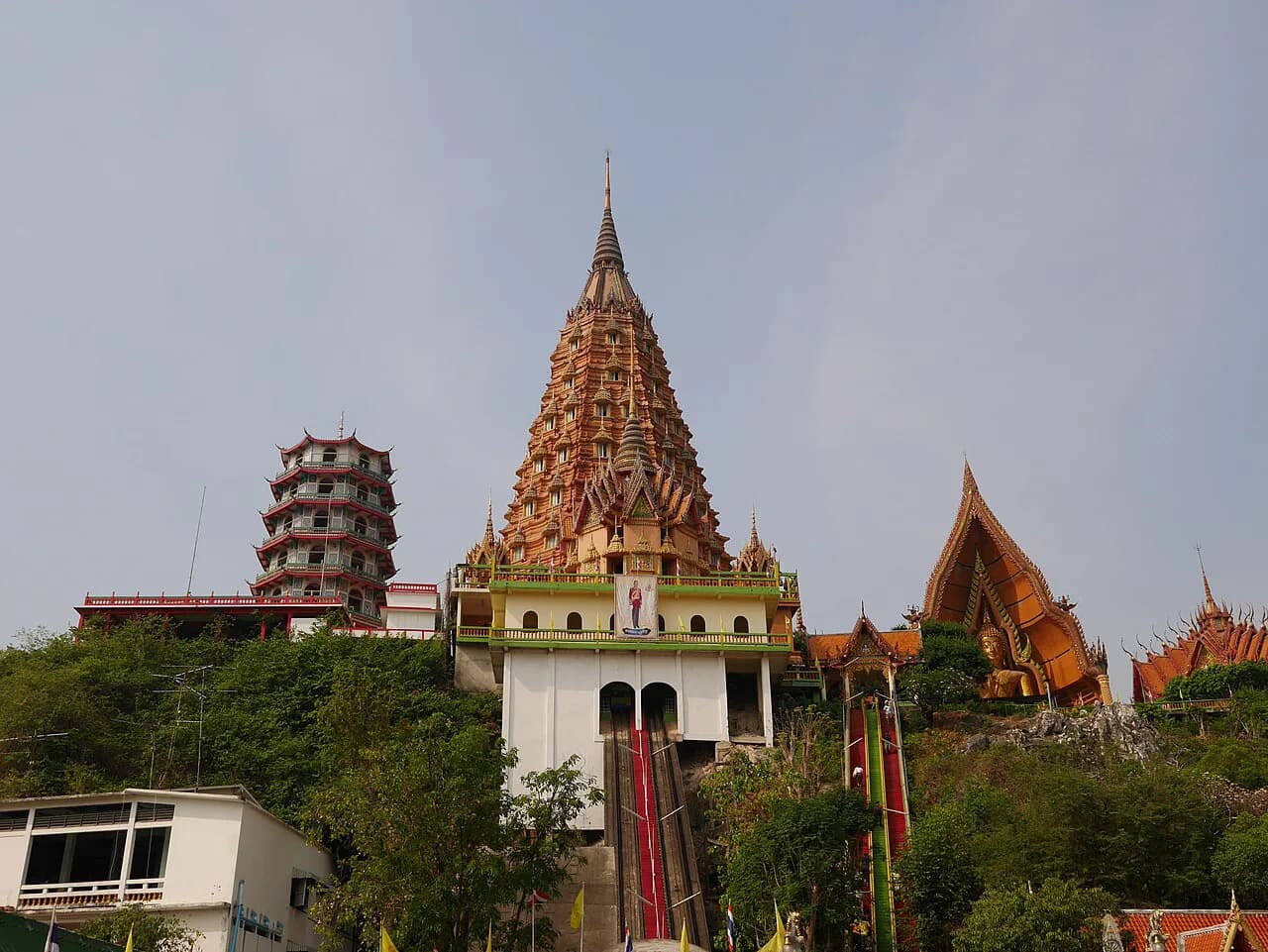
Wat Tham Suea (Tiger Cave Temple), Kanchanaburi: How to Visit

Wat Tham Suea is a hilltop temple complex in Tha Muang District, Kanchanaburi Province, and it is a different place entirely from the Tiger Cave Temple near Krabi. Allow about one to two hours on site, more if you add the neighboring temple on the same bluff. This page covers where the temple sits, how the road route works, and what you see from the base to the chedi.
What Wat Tham Suea actually is
The name translates as Tiger Cave Temple, and a small cave with a tiger shrine sits within the grounds, which is why generic searches pull up both this site and the Krabi temple with its famous stair climb. Do not merge the two: the Krabi site is a separate temple in southern Thailand. If a blog describes a 1,237-step staircase to a mountaintop pagoda, you are reading about Krabi.
Established in 1973 according to the hotel blogs that document it, the temple spreads across a wide hillside above the Mae Klong River, with rice fields stretching behind the ridge. The layout stacks in layers: a car park and stall area at the bottom, a staircase or tram up to the giant seated Buddha, and the tall chedi further along the ridge.
Where it is: a limestone bluff above the Mae Klong
The temple occupies a limestone bluff in Tha Muang District, with the Mae Klong River along the front and farmland behind, and the views from the top are the reason many people rate it above the river bridge sights in town. Wat Tham Khao Noi, a Chinese-style Buddhist temple, stands on the same bluff and is often mistaken for part of Wat Tham Suea because the two appear to join. They are separate temples, and you can walk between them.
Because the temple sits outside Kanchanaburi town rather than in the center, plan it as a half-day outing with transport arranged both ways. The bluff location also means the last stretch is a climb regardless of how you arrive.
How to get there from Kanchanaburi and Bangkok
By car, the published route runs along Phetkasem Road toward the kilometer 43 marker, past Mae Klong Dam, then about 5 km further to a sign directing a right turn for 2 km, followed by a short left and a brief run to the entrance; the hotel-blog source puts the total drive from Bangkok at roughly 121 km. Treat those directions as a sketch rather than a navigation app: the turn-off is easy to overshoot, so watch for temple signage after the Dam.
Without your own car, the practical pattern is a public bus or train to Kanchanaburi town, then a taxi, Grab or songthaew for the final leg to Tha Muang, since the temple is not on the town's walking circuit. Ask your driver to wait or agree on a return pickup, because through-traffic on the rural approach is thin, and confirm the fare and whether a round trip is included before you set off.
From Bangkok, most visitors base themselves in Kanchanaburi town and visit the temple as one stop among the river sights, such as the bridge over the river Kwai Kanchanaburi and the Kanchanaburi war cemetery, rather than attempting it as a standalone dash from the capital.
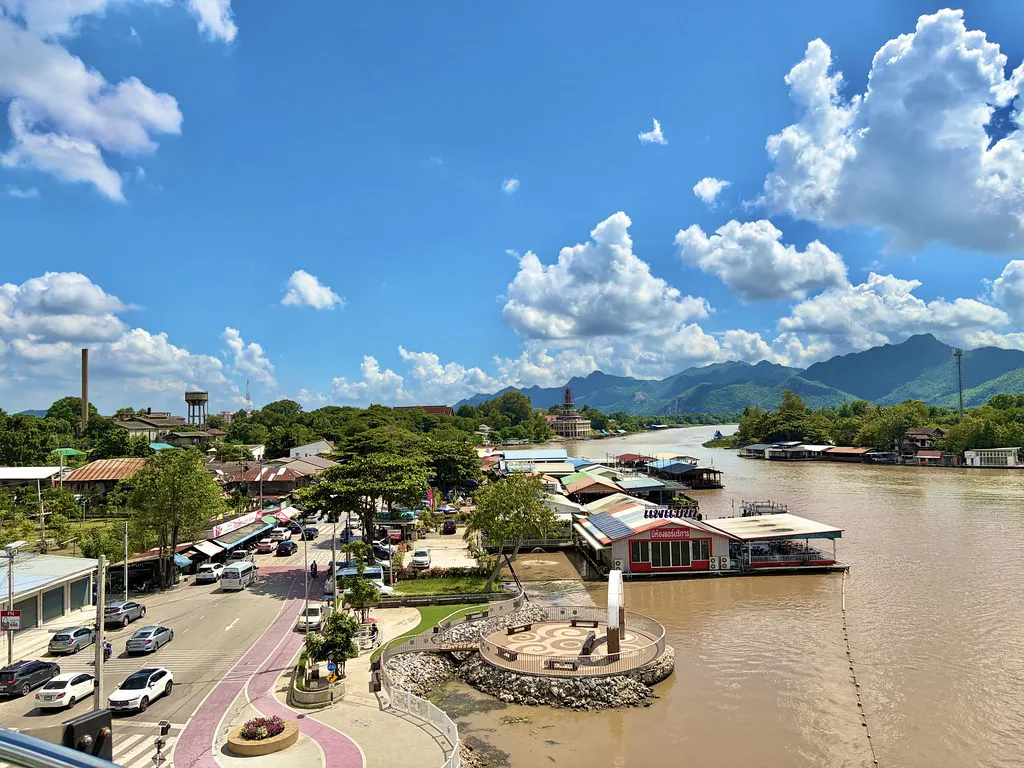
Arrival at the base: car park, stalls and the first decision
The bottom of the site is organized and busy in the way Thai temple car parks tend to be: a parking area, food and souvenir stalls, and places to buy offerings before you head up. This is where you make the day's main on-site decision, walking the staircase or riding the tram. Scan the crowd before you commit, because a tour bus unloading changes the queue in minutes.
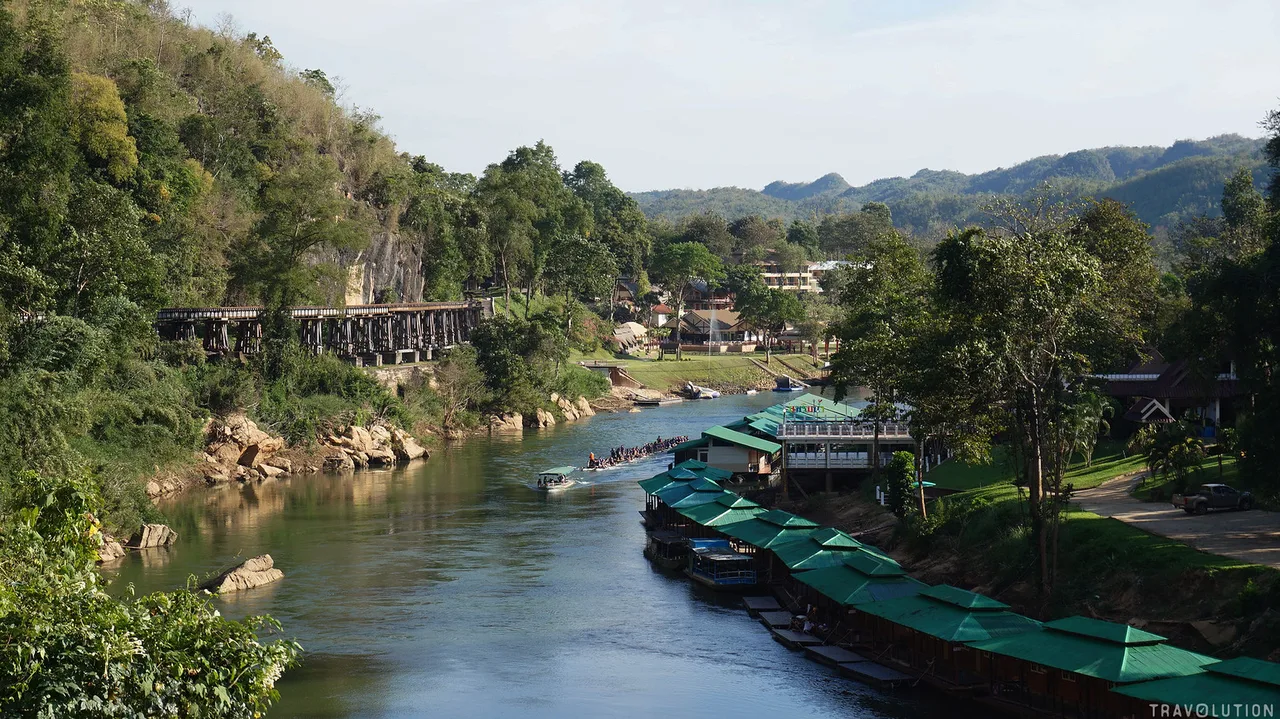
The 157-step staircase versus the tram
One source counts 157 steps on the staircase up to the seated Buddha and describes a round-trip tram as an alternative for anyone who wants to skip the climb. The tram fare is described only as very affordable, with no confirmed figure, so check at the ticket point on arrival rather than budgeting from old blog posts.
On foot, the staircase is brightly colored and exposed, so the climb is short but hot in the middle of the day; the tram wins on effort, not scenery. Another traveler describes the tram as looking rickety, which is a fair warning for anyone nervous about small cable systems.
Timing matters more than the mode. Arrive early or late in the afternoon to dodge the bus surge; when a group lands, the platform around the Buddha and the chedi entrance both clog, and the difference between a calm visit and a scrum is often fifteen minutes.
At the summit: the Chin Prathanporn seated Buddha
The hilltop statue, Chin Prathanporn, is the visual anchor of the whole complex, a large golden seated Buddha set against the sky with a glass pavilion and Naga ornament around it. Sources disagree on scale, giving figures such as 18 meters tall and 10 meters wide, and one claims a Thai record; skip the superlative and judge it in person.
The plaza in front of the Buddha is where most people linger, and it is also the best place to understand the site's orientation: river in front, fields behind, chedi along the ridge. Give yourself ten or fifteen minutes here before moving on.
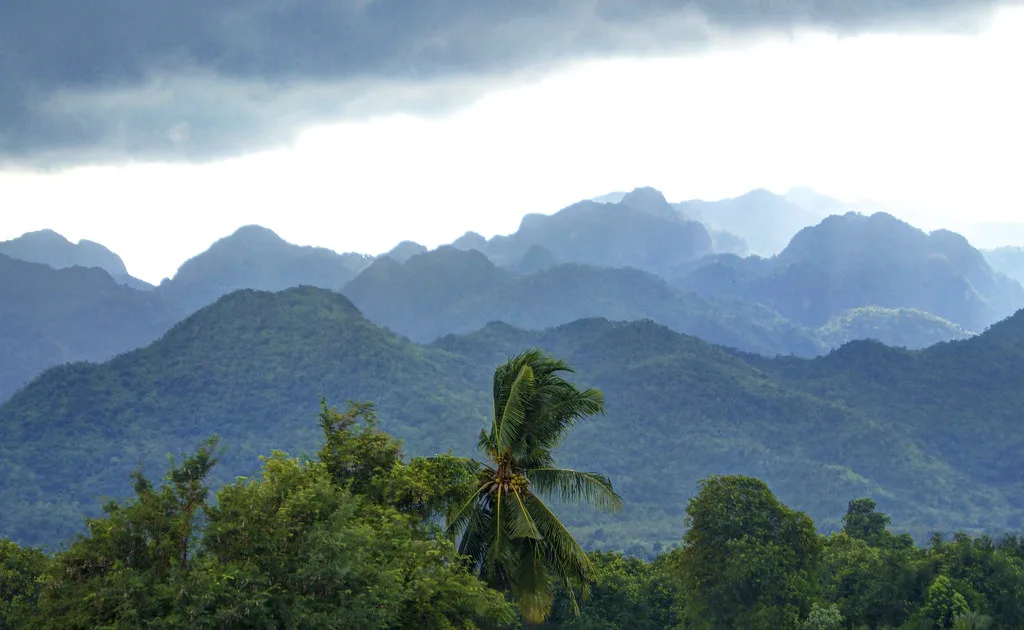
Chedi Kaew Prasat: the nine-story octagonal pagoda
The chedi, called Chedi Kaew Prasat, is described as a 75-meter, nine-story octagonal pagoda in terracotta tones, with Buddha statues on each floor and relics on the top level. The hotel blog that documents it says construction took seven years, which helps explain the density of detail on the upper galleries.
Walking the floors adds real time to the visit, so decide at the base whether you are doing the chedi interior or just the viewpoint. The upper level is open to Thai and international visitors for worship and viewing, and it carries the best panorama of the Mae Klong and the fields.
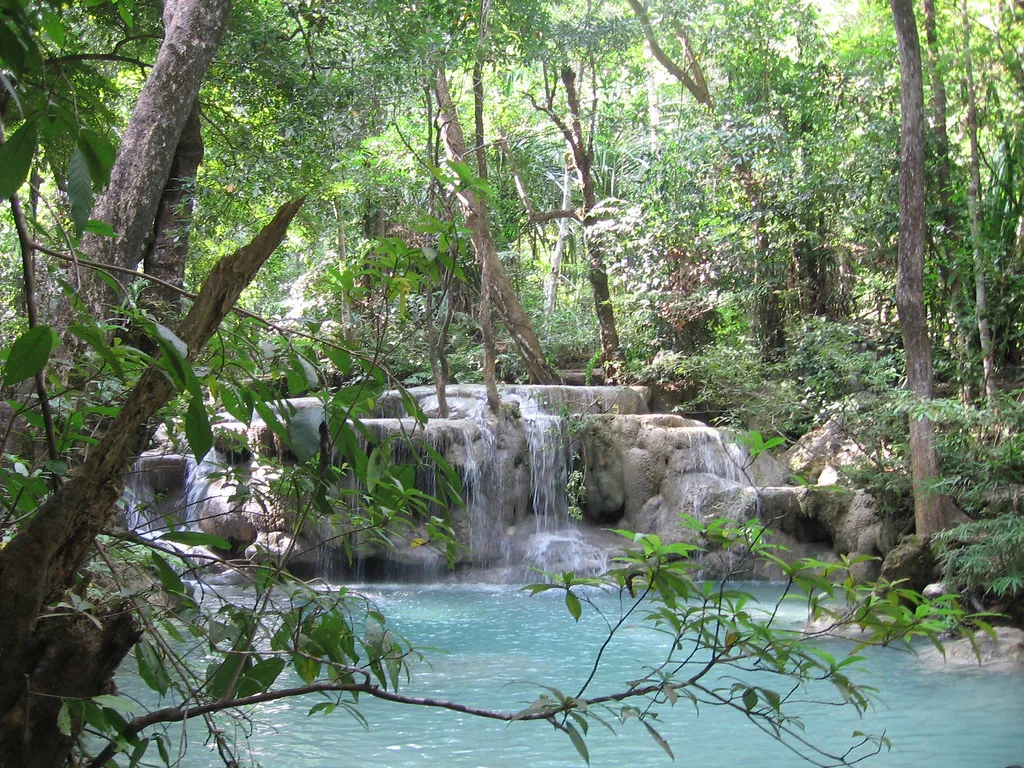
The Tiger Cave and its day-of-the-week Buddhas
The cave that gives the temple its name sits inside the grounds and holds Buddha statues standing for the different days of the week, a quiet counterpoint to the busy summit plaza. It is a small space, so a few minutes is enough, but it is the part that ties the nickname to this site rather than to Krabi.
Because the cave is easy to miss on the way to the staircase, look for it before you climb rather than promising yourself a stop on the way down, when tired legs tend to skip it.
Views and pairing it with Wat Tham Khao Noi next door
The panorama from the ridge takes in the Mae Klong River and the rice fields, and from Wat Tham Khao Noi you get the classic view back toward the seated Buddha and the chedi. Travelers who climb the neighboring temple's tower describe it as one of the finest views in the area, with spiral staircases and small shrines on each level.
Wat Tham Khao Noi is a Chinese-style temple with tiled shrine rooms and bells, and it draws far fewer people than its neighbor, so many visitors end up preferring it for quiet. Treat the two as one combined stop on the bluff and plan your photos from the quieter side.
How much time to allow
For Wat Tham Suea alone, count on 60 to 90 minutes: ten to fifteen at the base, a short climb or tram ride, twenty to thirty around the Buddha and the chedi, and the cave if you catch it. Add 30 to 45 minutes for Wat Tham Khao Noi, plus whatever your driver needs for the rural approach from town.
If your schedule is tight, choose one temple and one viewpoint rather than both interiors, because the chedi floors and the neighboring tower both reward slow walking. A half-day window from Kanchanaburi town comfortably covers the bluff and one river sight on the way back.
What's nearby to build the rest of the day
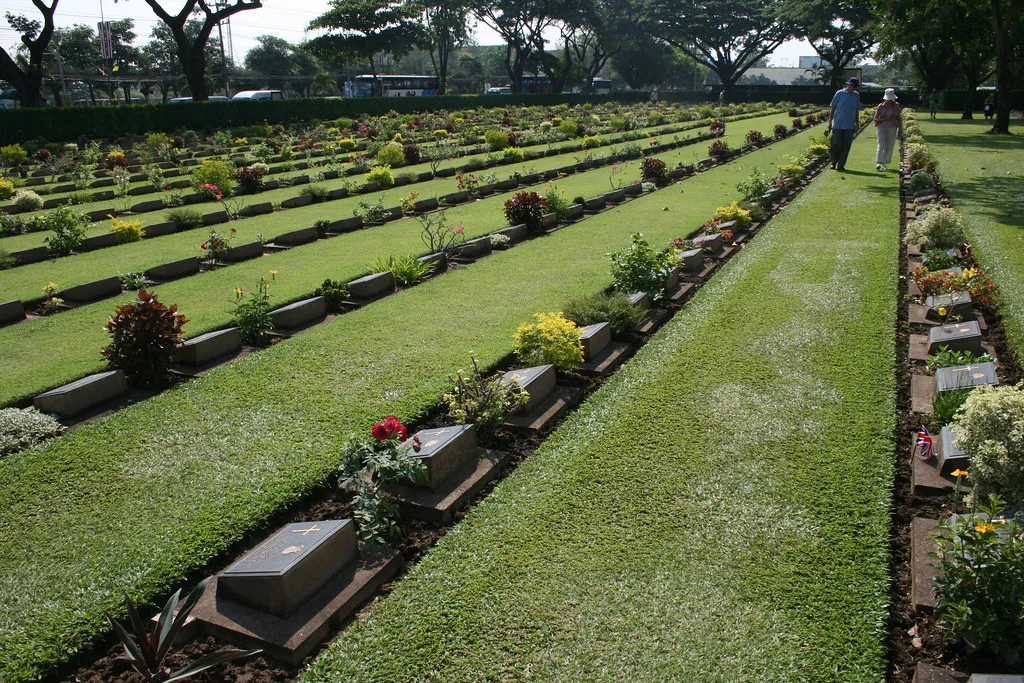
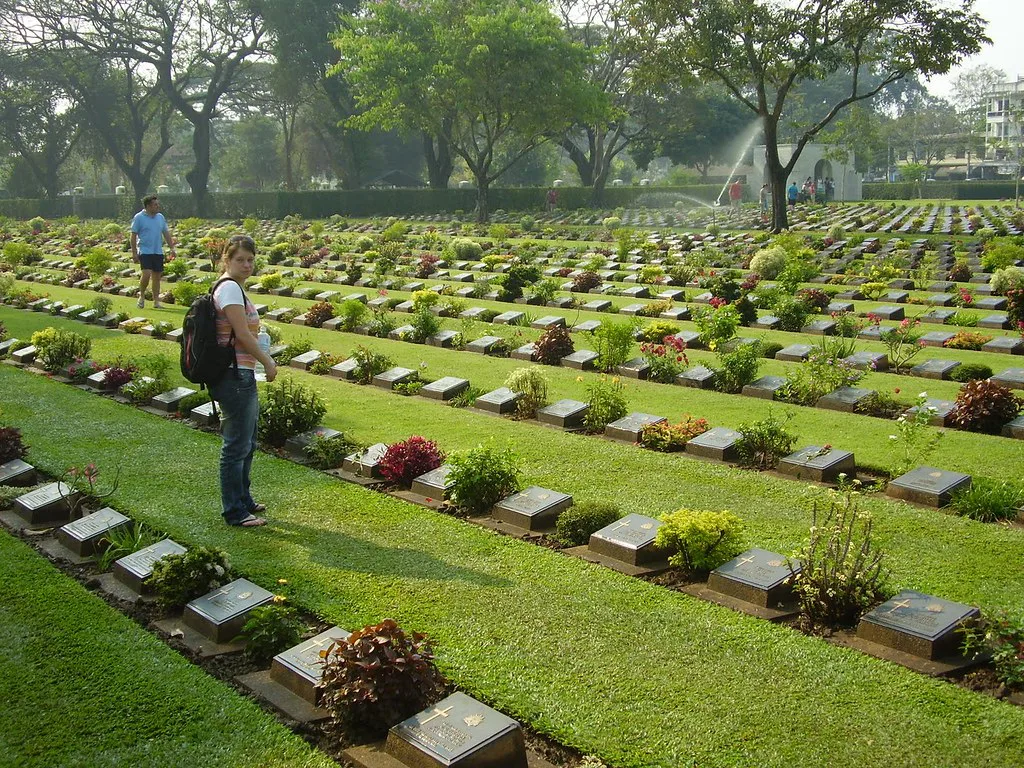
The temple pairs naturally with the town's river and railway sights: the Bridge Over the River Kwai, Don Rak cemetery, the Thailand-Burma Railway Centre and the JEATH War Museum all sit in or near Kanchanaburi town, a drive of roughly half an hour back from the bluff. Pick two, not four, unless you are staying overnight.
Other cave and hillside temples in the province, such as Wat Ban Tham, follow the same pattern of shrine plus climb, so they make sense only if you want a second temple day. Save them for another outing rather than stacking three climbs into one hot afternoon.
Is the bluff worth the detour?
Yes, if you want one sacred site with a real view and a manageable climb, and you are already in Kanchanaburi for the river sights. Skip it if your only free day is a rushed Bangkok round trip, because the rural approach and the climb eat the time you would spend in town. Plan a morning start, combine it with Wat Tham Khao Noi, and sort your return ride before you go up.
Explore more Kanchanaburi guides
Frequently Asked Questions
How tall is the Buddha at Wat Tham Suea in Kanchanaburi?
Published figures differ, with one source giving 18 meters tall and 10 meters wide and another using a traditional Thai measurement, so treat the statue as large rather than quoting an exact number. The seated Buddha, Chin Prathanporn, is the visual centerpiece on the summit either way.
Does Wat Tham Suea have an entrance fee?
No confirmed entrance fee appears in the sources used here, so check at the temple ticket point or with a local operator in Kanchanaburi town before you go. The tram up the hill is described only as inexpensive, with no fixed price published.
Is this the same as the Tiger Cave Temple in Krabi?
No. Krabi's Tiger Cave Temple is a separate site known for its long stair climb, while Wat Tham Suea in Kanchanaburi is a hilltop temple in Tha Muang District with a seated Buddha, an octagonal chedi and a small tiger cave. Do not use directions for one when visiting the other.