
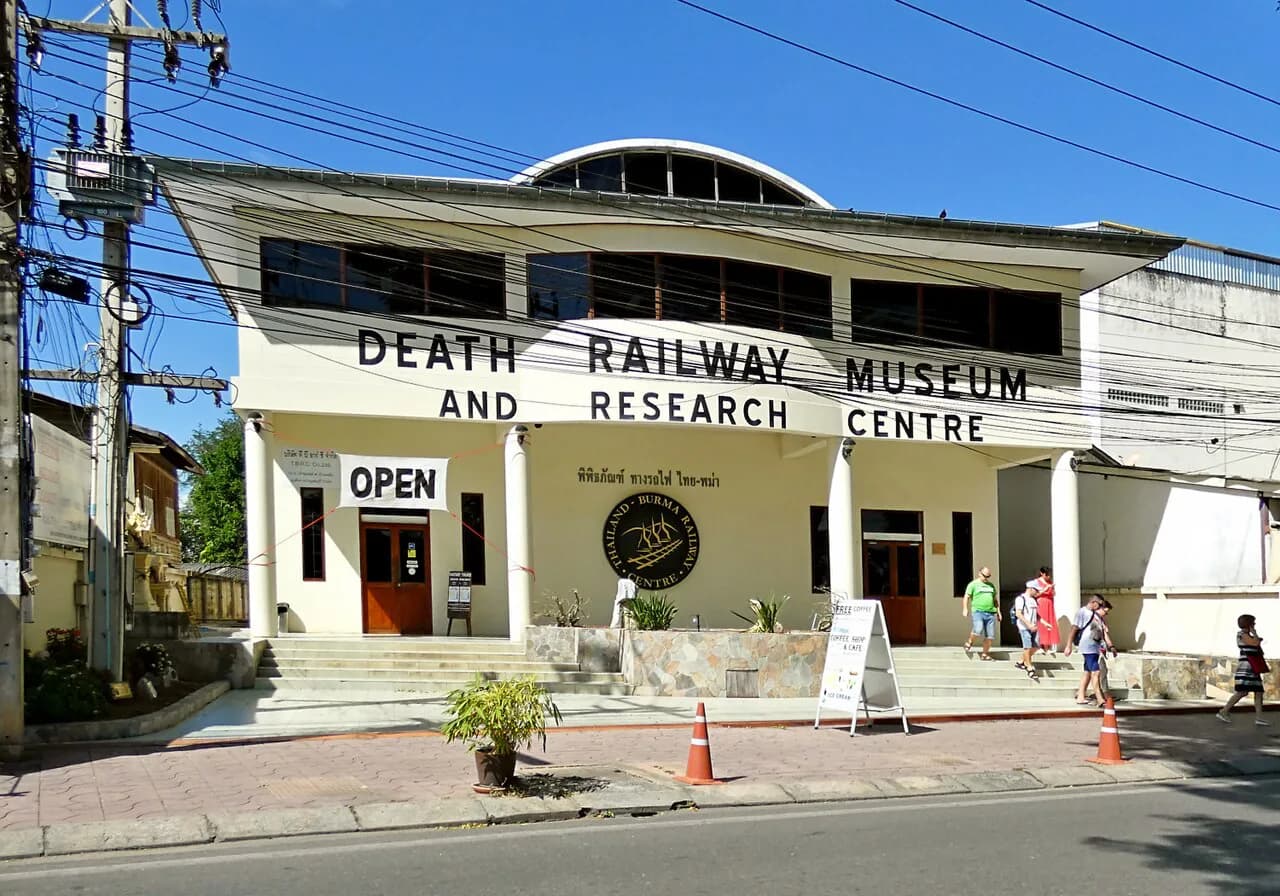
Thailand-Burma Railway Centre: What to See and How Long to Allow

Plan about one to two hours for the Thailand-Burma Railway Centre, a small museum that works best as the first stop of a Death Railway day in Kanchanaburi. Its two gallery levels explain how the Thailand-Burma railway was built by Allied prisoners of war and Asian laborers, and it sits directly beside the Kanchanaburi War Cemetery, about 200 meters from Kanchanaburi railway station.
This guide covers where the Centre sits in town, how to reach it on foot or by train, what the galleries hold, and how to sequence it with the cemetery and the bridge so you are not retracing the same stretch of road.
Where the Centre Sits in Kanchanaburi
The museum occupies the western side of the main Kanchanaburi War Cemetery, roughly a kilometer from the town center, with the cemetery entrance about 100 meters away and Kanchanaburi railway station around 200 meters beyond. That tight cluster is the practical reason to visit: you can step out of the Centre, cross to the cemetery, and be on a platform within a few minutes on foot.
Its street address is on Chao Khun Nen Road in the Ban Nuea area, so a taxi or Grab driver will recognize either the road name or the cemetery itself as a landmark. If you are coming from guesthouses along the main riverside strip, expect a short ride rather than a long transfer; walking the whole way is feasible in cooler hours but tedious in the midday heat.
Treat the Centre as one museum visit rather than as a gateway to every wartime sight in town. The other Death Railway stops and the wider things to do in Kanchanaburi spread across a much larger area, so keep this stop focused and plan separately for the rest if you want more than one day in the province.


Getting There: Walking, Station and the Train from Thonburi
If you arrive by train from Bangkok, you will come in at Kanchanaburi station, which puts you a few hundred meters from the museum door. The rail line itself runs from Nong Pla Duk Junction in Ratchaburi through Kanchanaburi to its terminus, and tour groups often board at Kanchanaburi station or at the River Kwai Bridge halt rather than riding the full route.
Independent travelers usually start at Thonburi station in Bangkok, where trains on this line are third class with fans and open windows and seats are not assigned. The same source notes that foreigners pay a fixed fare on this line and that tickets are bought at the station on the day rather than online, so check the current timetable and fare with the operator before you set out.
Do not build your day around the exact departure times printed in any guide, including this one. Schedules shift, and the practical step is to confirm departures and return options with the State Railway of Thailand or an updated train guide the day before you travel.
Once in town, songthaews, tuk-tuks and Grab all cover the short hop from the riverside guesthouse strip to the cemetery area. Walking from the station is the simplest option because the route is short and flat, but you will be sharing the roadside with traffic and little shade.


What the Museum Covers
The Centre is dedicated to presenting the construction of the railway between Thailand and Burma by Allied prisoners of the Japanese and by Asian laborers during the Second World War. The story is told across two levels of galleries, and the Centre describes its approach as factual and unbiased, which shapes the tone: expect documentation and testimony rather than theatrical reconstruction.
The railway it documents ran about 258 miles through difficult terrain and took roughly eight months for the prisoners to build, and more than 12,000 Allied prisoners died on the project along with tens of thousands of Asian civilian laborers known as romusha. Those numbers are the reason the museum exists, and they frame the galleries before you reach the individual displays.
Because the museum concentrates on the railway rather than on the wider war in Southeast Asia, it pairs naturally with the bridge and the cemetery instead of duplicating them. If you want a broader or more graphically presented account of the period, the JEATH War Museum in Kanchanaburi is a separate and differently organized stop, but it is not a substitute for the Centre's research-driven presentation.
What You Actually See Inside
Inside, the visit is a walk through sequential galleries with photographs, artifacts and interpretive panels, and the Centre notes that some displays are graphic. The collection keeps growing as families donate artifacts and ongoing research turns up new material, so return visitors may find sections that were not there on an earlier trip.
The building is fully air-conditioned, which matters in Kanchanaburi's heat and makes the museum a sensible midday stop rather than an early-morning dash. A coffee shop and café on the second level looks out over the cemetery, giving you a quiet place to sit before or after the galleries.
The Centre also functions as a research facility, with staff who answer questions from families of former prisoners and run tailored pilgrimage tours to specific work areas and campsites. If you are tracing a relative, ask ahead through the Centre's enquiry channel rather than turning up expecting an on-the-spot archive search.
How Long to Allow, and the Best Order for Your Day
Budget one to two hours for the galleries, plus fifteen to thirty minutes for the cemetery next door. Two hours suits readers who stop to read panels and watch any media; a brisk pass through takes closer to an hour, but that undersells a museum built around testimony and documents.
Visit the Centre first, then walk the Kanchanaburi War Cemetery (Don Rak) while the context is fresh, and finish at the bridge. The cemetery is maintained by the Commonwealth War Graves Commission and its rows of headstones make more sense once you have seen the railway's scale and death toll laid out in the galleries.
The Bridge Over the River Kwai, Kanchanaburi is a short ride away and is the natural final stop, since it is an outdoor site you can walk across at your own pace. Going in this order also means you end near the railway line if you plan to continue by train.
If you are staying several days, save other temple and cave stops for a separate half-day rather than cramming them in after the museum. Wat Tham Suea, also called the Tiger Cave Temple, and Wat Tham Phu Wa are both outside the cemetery cluster and deserve their own outing.
Tickets, Opening Hours and Closures
The Centre does not publish a stable, citable ticket price or opening schedule that can be stated here with confidence, so confirm both before you travel. Check the Centre's own pages or ask at your guesthouse in Kanchanaburi the day before; a phone call or message from your hotel is usually faster than relying on an old listing.
The same caution applies to any closure notices, which are often tied to maintenance or funding rather than a fixed annual calendar. Because the Centre is privately operated and partly dependent on donations and visitor revenue, treat any third-party listing's hours as a lead to verify rather than a guarantee.
Nearby: Cemetery, Bridge and the Station
The cemetery next door is the closest companion sight, and its position on the museum's doorstep makes the pairing almost effortless. Allow time to walk the rows rather than photographing the entrance and leaving, since the headstones carry ages, regiments and dates that connect directly to the galleries.
Further out, Chungkai War Cemetery, Kanchanaburi is a second burial ground associated with the railway camps and is worth the extra ride if you are following the story beyond the town center. It is a quieter site than the main cemetery and works better as an add-on than as a first stop.
For the wider set of stops in the province, including the bridge and the wartime sights along the line, use the Kanchanaburi Attractions guide to plan the rest of the day. It is the sensible place to decide what else fits after the museum rather than working it out at the ticket desk.
Should the Railway Centre Be Your First Stop?
Yes, if you are giving Kanchanaburi even one full day: start at the Thailand-Burma Railway Centre, walk the cemetery while the context is fresh, then take the bridge at your own pace. The museum is compact, air-conditioned and next to the station, which makes it the easiest anchor for a Death Railway day rather than an afterthought squeezed in at the end.
Explore more Kanchanaburi guides
Frequently Asked Questions
Is the Thailand-Burma Railway Centre worth visiting?
It is worth it if you want the railway's history explained clearly before you see the bridge and the cemetery. The Centre covers the construction of the Thailand-Burma railway by Allied prisoners and Asian laborers across two gallery levels, and its position beside the Kanchanaburi War Cemetery makes it a natural first stop rather than a detour.
How far is the Thailand-Burma Railway Centre from the Bridge on the River Kwai?
They are separate sites a short ride apart in Kanchanaburi, with the Centre beside the war cemetery and about 200 meters from Kanchanaburi railway station. The simplest plan is to visit the museum and cemetery on foot, then take a taxi, songthaew or Grab to the bridge, or ride the train between the station and the bridge halt.