
Wat Ban Tham: Climbing the Dragon Staircase to Kanchanaburi's Cave Temple
Plan on two to three hours at Wat Ban Tham, the dragon cave temple in Tha Muang district, most of it spent on the climb and inside the cave. The payoff is a staircase built as a dragon, roughly 269 steps according to the most detailed account, and a main cave chamber holding a Buddha image called Luang Pho Yai Chinnarat. This guide covers where the temple sits, how to reach it from Kanchanaburi, what to see on the way up and at the top, and which questions to settle before you set out.
Where Wat Ban Tham Is
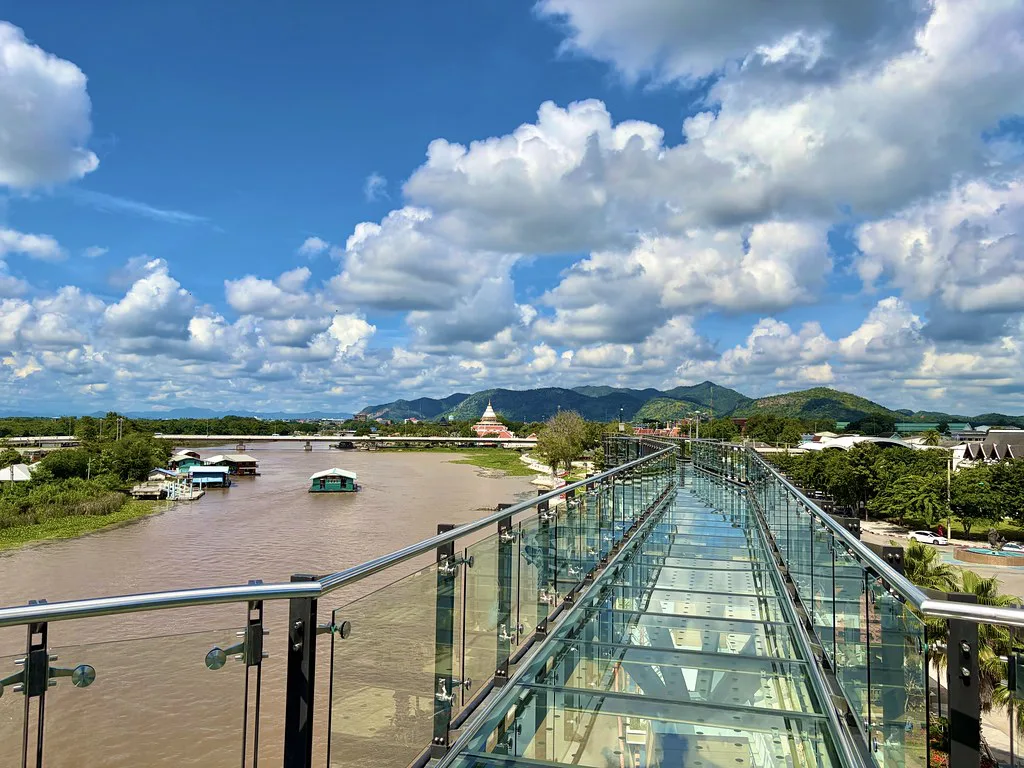
Wat Ban Tham stands in Khao Noi subdistrict, Tha Muang district, Kanchanaburi province, with the Mae Klong River in front of the temple buildings and a limestone hill behind them (the river placement is from the detailed account; at least one reader review instead says the Khwae Noi, so check the map before you drive). The name translates roughly as cave village temple, which fits a site built around the hill's caves. It is not in Kanchanaburi city itself, so treat it as a district-level stop rather than something you walk to from the backpacker strip.
Because the temple sits in Tha Muang rather than the city center, the sensible way to slot it into a trip is as a stop on a wider Mae Klong or River Kwai loop. Paired with one or two other sights, it fills a morning or an afternoon comfortably; on its own it is a thin reason to charter a vehicle. Our Kanchanaburi attractions: plan your walk along the Khwae Yai guide shows how the district's stops distribute across the map before you fix a route.
How to Get There from Kanchanaburi
There is no published timetable for reaching Wat Ban Tham by public transport, so plan around a private vehicle, a Grab car, or a songthaew or tuk-tuk arranged for the round trip. Agree on the waiting time and the return fare before you leave, since the temple is off the main road and you do not want to hunt for a ride back at the riverside. Ask your guesthouse to confirm which songthaew line currently serves Tha Muang, as routes change.
If you are staying in Sai Yok rather than the city, budget a full day: one resort source measures its own distance to the temple at about 77 km in a straight line and explicitly notes that driving distance is longer. That figure is a map-coordinate measurement from a specific hotel, not a road distance from Kanchanaburi town, so check your own route on a map instead of scaling from it.
The Dragon Staircase and Its Step Count
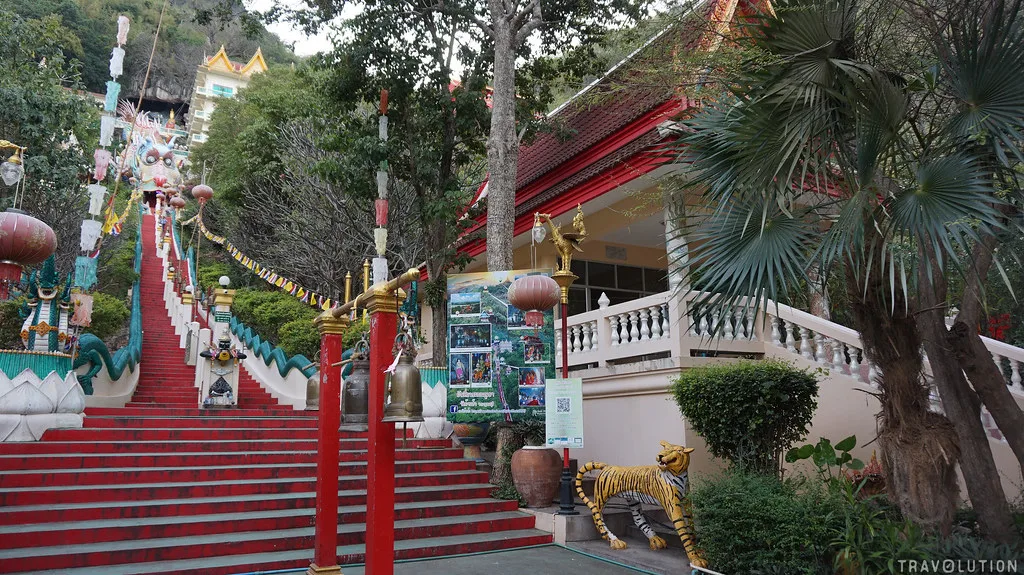
The entrance stairway is built in the shape of a dragon, and you climb up through its open mouth toward the cave. The most specific breakdown found puts the total at about 269 steps: 114 from the head to the mouth, 105 from the mouth to the tail, and 50 more descending into the cave chamber. Other accounts count the hill paths as well, so you may see higher numbers quoted; treat 269 as a solid working figure rather than a certified one.
The steps and railings are brightly colored, and the stone treads are what you will actually be walking on, so grip matters more than style. Parts of the staircase sit in full sun at midday, which turns an already steep climb into a slow one. Morning or late afternoon is the more comfortable window, and either way you should build in rest stops rather than pushing straight up.
Climbing It: Time, Sun and Who Should Skip It
Allow 30 to 45 minutes for the ascent with breaks, and a similar stretch inside and coming down. Travelers with knee problems, older visitors, and anyone unsure of their stamina should size up the flight from the base before committing, because there are many stone steps and limited shade. Companions who would rather not climb can wait in the riverside area at the bottom, which the source describes as a place to rest before or after the climb.
Bring water and a hat or umbrella, since the exposed sections get hot and there is no changing area at the foot of the stairs. This is an active place of worship, so keep voices low and ask before photographing monks. Carry small notes for donations even though no admission fee is reported.

Inside the Cave
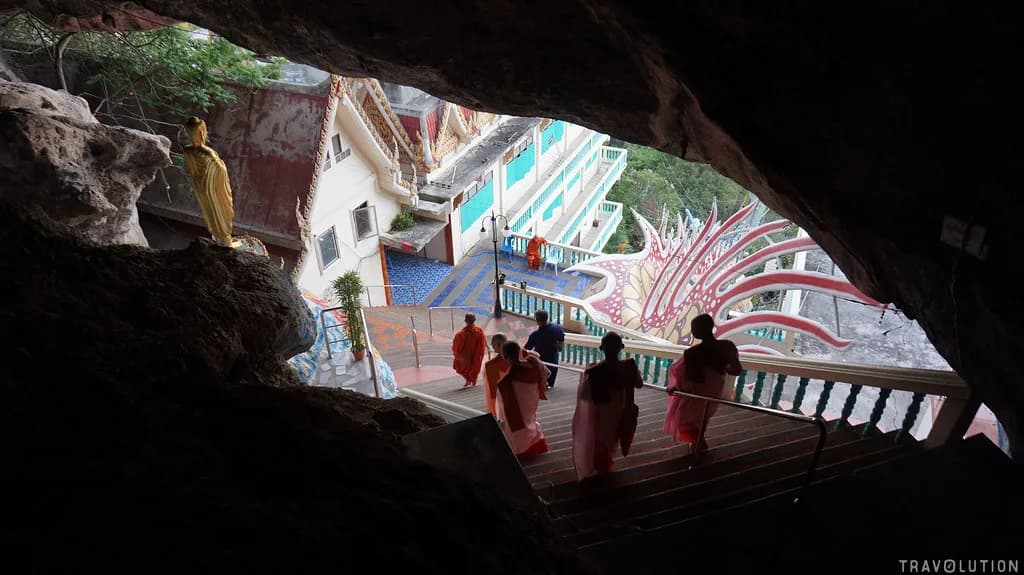
The main cave chamber, which the source calls the Dragon Abode Heaven Cave, holds Luang Pho Yai Chinnarat, a Buddha image in the Subduing Mara pose with the right hand pointing to the earth. A skylight in the cave ceiling lets in daylight and air, so the chamber is not the black hole some cave temples are. Shoes come off before you enter the chamber.
Look for the Nang Bua Khli stalagmite, a rock formation that local people link to a character in the Thai literary classic Khun Chang Khun Phaen. The pairing of a natural formation with a literary figure is the detail that makes this cave more than a photo stop. Do not touch or damage the formations, which stay damp in places.
The Hill Paths Above the Cave
Above the main chamber, paths lead to smaller caves and viewpoints over the Mae Klong River and the surrounding countryside. Surfaces on these upper routes can be damp and slippery, so watch your footing and skip any section that looks wet. The extra walking is optional; the cave and the staircase are the core of the visit.
Hours and Admission
Sources give daily hours of about 07:30 to 17:00, with some saying the gate opens at 08:00, so aim to arrive well before late afternoon rather than testing the closing time. No admission fee was reported in the sources checked, though that is a description of what has been published, not an official free-entry policy. Confirm the day's hours locally or by phone before you build a long drive around them, and carry small cash for donations.
How Long to Budget and When to Climb
Two to three hours covers the staircase, the cave, the upper paths and a rest at the river, which makes Wat Ban Tham a half-day anchor rather than a quick photo stop. If you are combining temples, start here in the morning before the sun is strong on the exposed steps, then move on to shadier or indoor sights in the afternoon. Drive time is the variable that decides whether the day fits, so check your route on a map first.
What's Nearby on the Same Route
Tha Muang and the Mae Klong corridor put several well-known stops within reach of the same day's drive. The Bridge Over the River Kwai, Kanchanaburi in the city is the headline sight most visitors pair with a temple run, and it is an easy add-on if you are heading back toward town. Our Bridge Over the River Kwai, Kanchanaburi: Visiting Guide covers what the bridge visit actually involves.
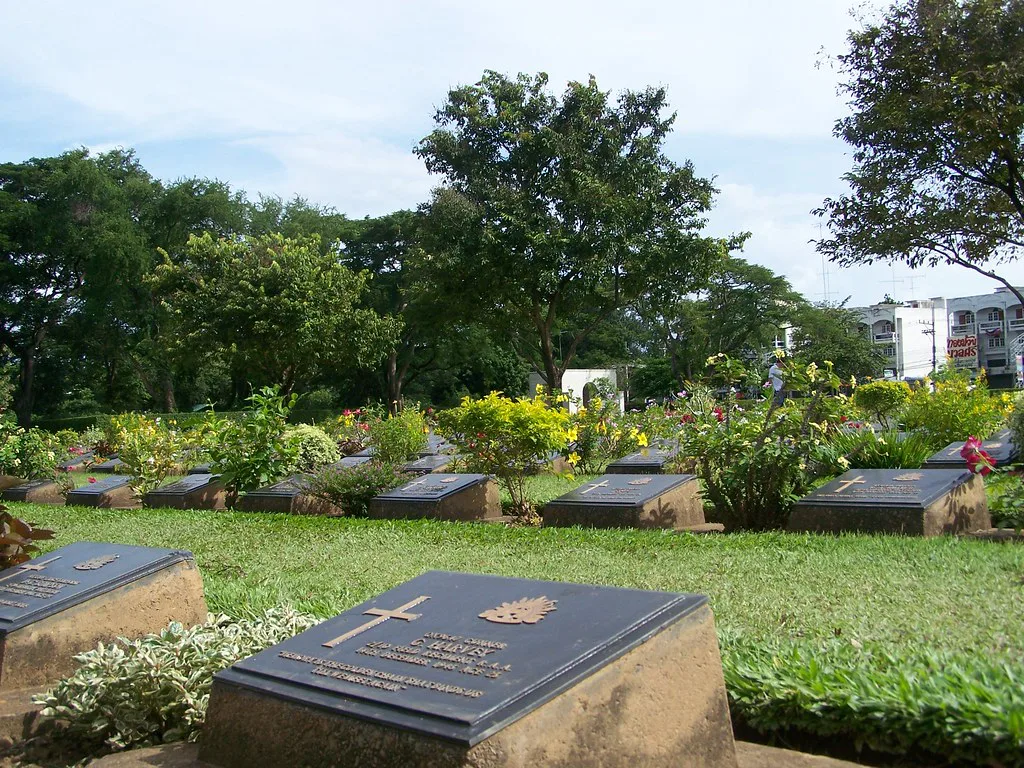
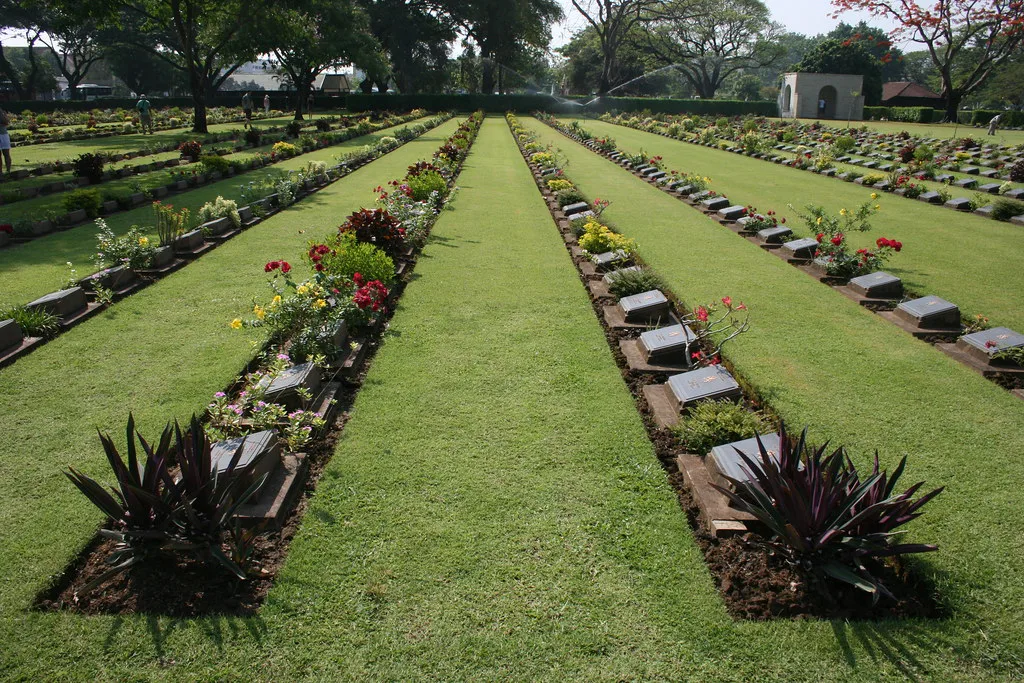
Wat Tham Suea, the hilltop temple with the giant Buddha and wide countryside views, is another temple that rewards an early start, so do not stack it against Wat Ban Tham at noon. Travelers with an interest in the railway's history can add the Kanchanaburi War Cemetery (Don Rak) in town rather than trying to fit everything in one push.
If you want the fullest picture of how these pieces fit together, the broader list of things to do in Kanchanaburi is the place to sketch a two- or three-stop day before booking a driver. Wat Ban Tham works best as one deliberate stop inside that plan, not as the whole reason for the trip.
Is Wat Ban Tham Worth the Climb?
Yes, if you want a cave temple with a distinctive approach and you are comfortable on steep stone steps in the heat. The dragon staircase and the Luang Pho Yai Chinnarat chamber deliver something the flat riverside sights do not, and two to three hours is a fair price in time. Skip it if stairs in full sun are a dealbreaker, or send the climbers up while the rest of your group waits by the Mae Klong.
Build the visit into a Tha Muang or River Kwai driving day, start early, and confirm the current hours before you go. That single check protects a long drive better than any other preparation.
Explore more Kanchanaburi guides
Frequently Asked Questions
Do I need a guide to visit Wat Ban Tham?
No. The temple is a straightforward self-guided visit: you climb the dragon staircase, enter the cave chamber, and can walk the upper paths at your own pace. A driver is useful mainly for the transport problem, since the temple is in Tha Muang district rather than central Kanchanaburi and public connections are not reliably published.
Can I visit Wat Ban Tham with limited mobility?
The core visit depends on a long stone staircase of roughly 269 steps with unshaded sections, so it is not a realistic option for wheelchair users or anyone who cannot manage sustained climbing in heat. The riverside area at the base is level and gives companions a place to wait while others go up.