
Wat Chai Chumphon (Wat Tai) in Kanchanaburi: What You'll See and How Long to Allow

Wat Chai Chumphon is a riverside temple in Kanchanaburi town, and it is worth 45 to 90 minutes as a low-key stop rather than a headline sight. Thai visitors describe it as a place to make merit, feed fish, sit in the garden and drink coffee, not to tick off a checklist. This page covers where it sits, how to get there, the specific buildings and shrines to look for, and how to fit it around the town's war museums and the Bridge Over the River Kwai, part of our wider Kanchanaburi attractions guide: plan your walk along the Khwae Yai.
Wat Chai Chumphon: a riverside temple in Kanchanaburi town
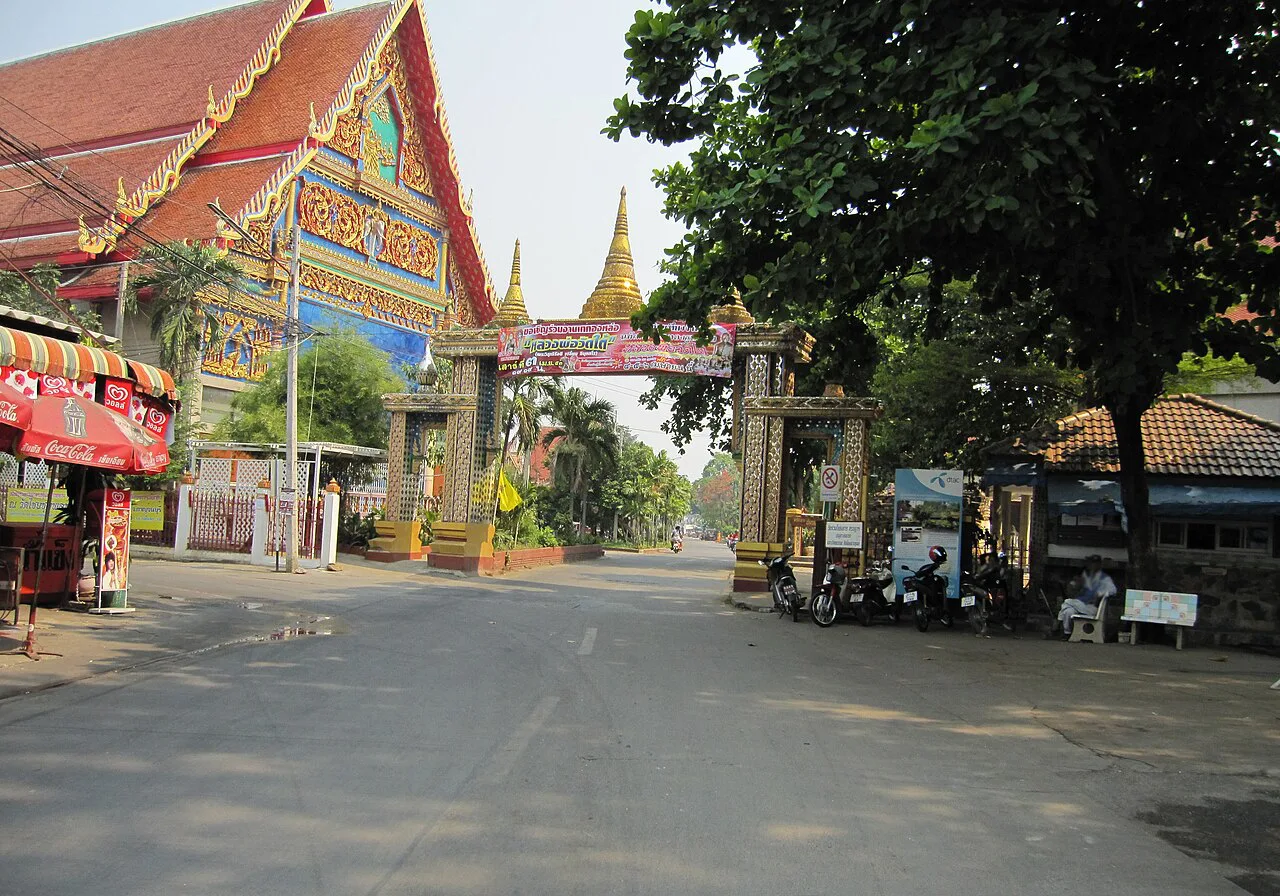
The temple sits in Kanchanaburi town, which puts it within easy reach of the cluster of sights along the river rather than out in the countryside. Travelers who visit describe it as an old temple in the town center with convenient access, so you can slot it into a walking or short-drive itinerary. Group it with the town sights rather than treating it as a separate excursion.
What you will not find are published visitor facts in the usual form. The temple grounds are described by travelers as calm, green and simple, with a Buddha relic pavilion that is the main object of veneration. There is no official site in the sources here, so treat any hours, tickets or seasonal details you see elsewhere as unconfirmed until you check them locally.

Getting there from Kanchanaburi town
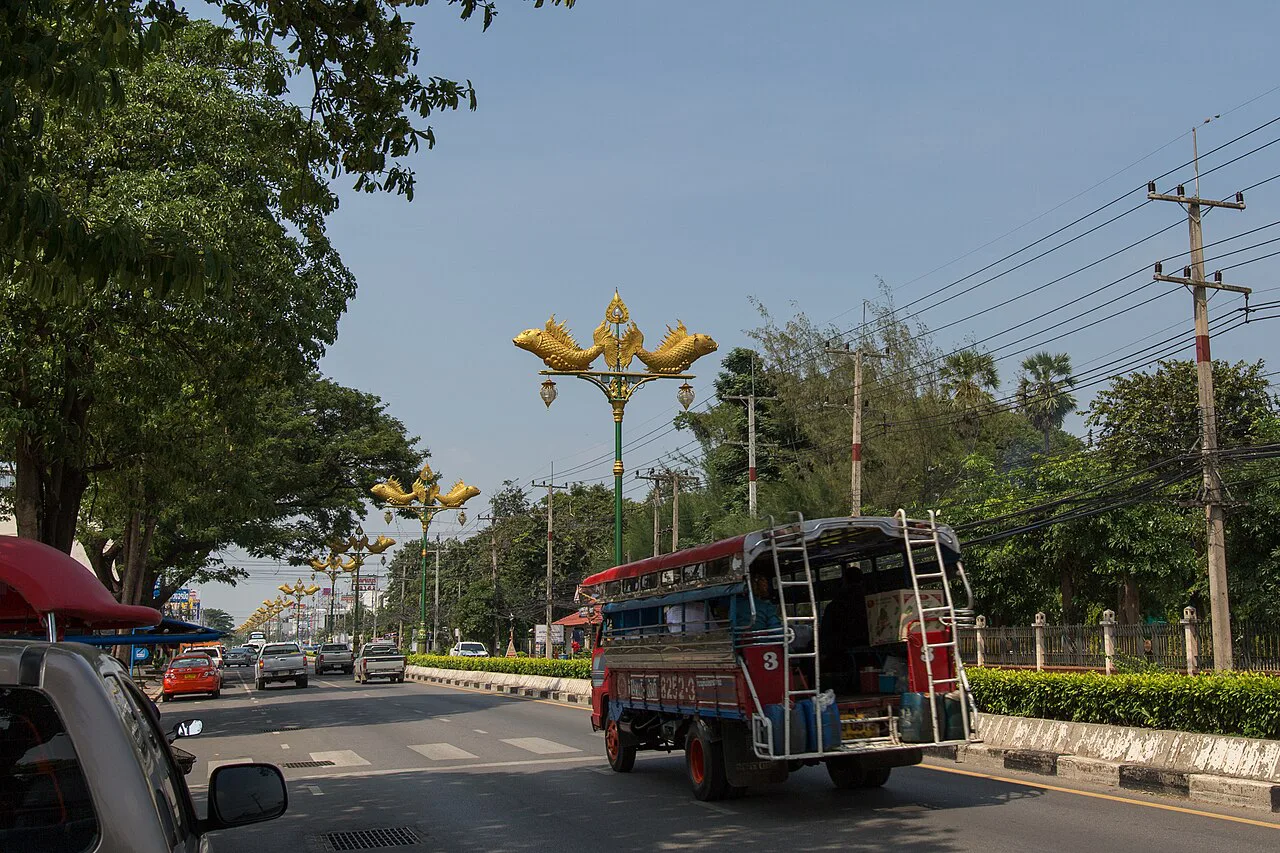
Because the temple is in town, the realistic options are walking from a town-center hotel, a Grab car, a tuk-tuk or a songthaew. Ask your driver for Wat Tai if Wat Chai Chumphon draws a blank, since the local name is the one usually used. Confirm the return leg before you get out, because a small temple stop can be awkward to leave if you are relying on a passing ride.
If you are combining stops, have the driver wait rather than drop you and leave. The temple's own riverside setting and garden mean you will want to move at a slow pace rather than hurry back to the road. Build the stop into a loop past the war museums and the bridge, and you avoid paying for a separate trip.

The name problem: Wat Tai, Wat Chai Chumphon, Wat Chai Chumphon Chana Songkhram
Expect to see the name written several ways. Maps and photo captions use Wat Chai Chumphon Chana Songkhram, while travelers and some captions shorten it to Wat Tai or Wat Chai Chumphon. One caption even places the temple in Kamphaeng Phet with a Mekong riverbank, which is a different province and river entirely, so read the location on any post before you follow it.
The practical fix is to search the longest form on a mapping app and cross-check that the pin sits in Kanchanaburi town, near the river. If a result shows a town in another province, it is the wrong one. Showing a driver the Thai name is more reliable than an English transliteration.
What to see as you walk in: the old ordination hall and painted ceiling
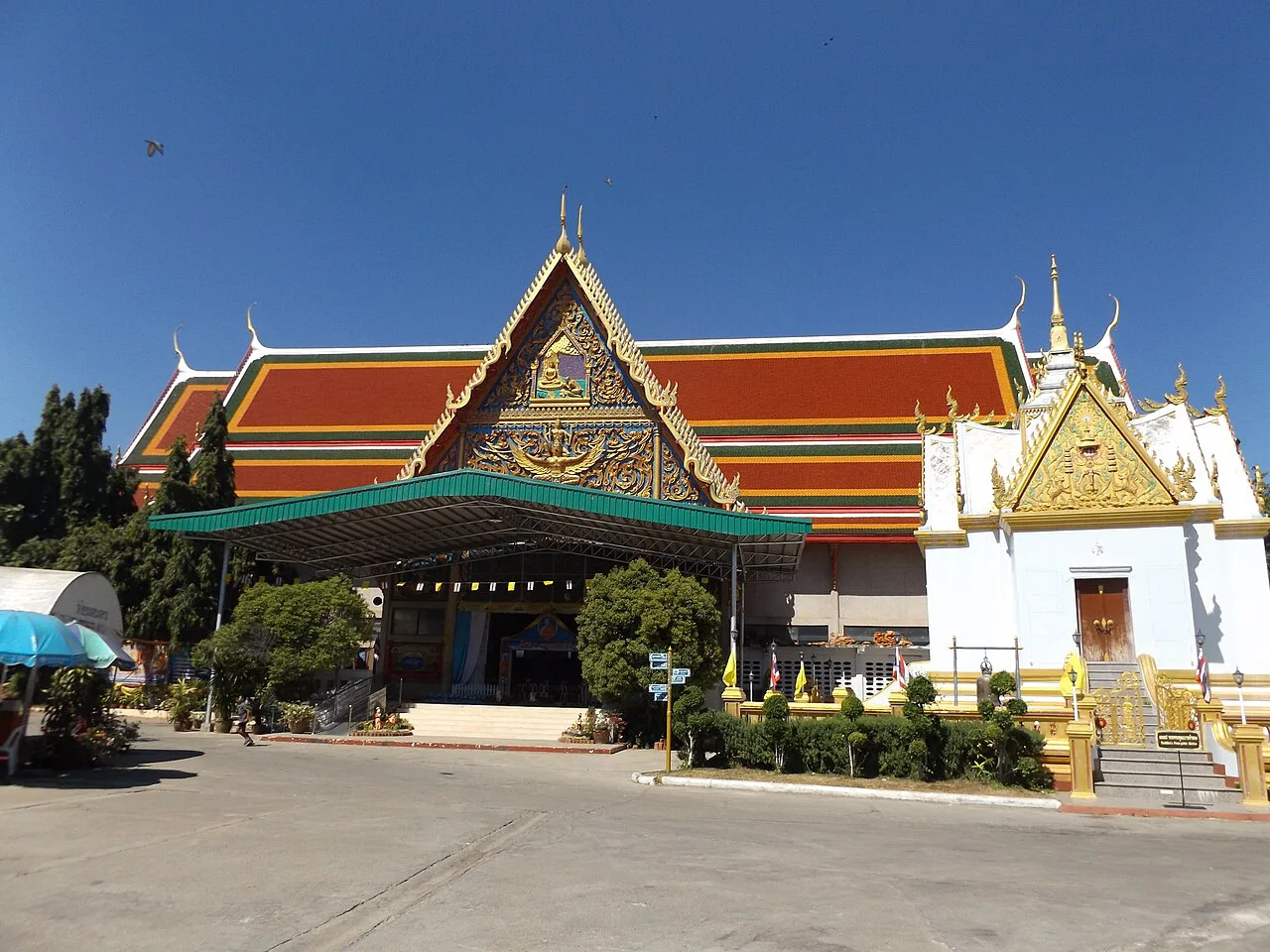
The building most often described as historic is the ordination hall, said to date from the reign of King Rama III. That is a claim about the reign rather than a precise construction year, so treat it as a tradition attached to the building, not a documented date. Look for the older masonry and the contrast with the newer pavilions around it.
Inside, the detail worth slowing down for is the painted ceiling, which appears in close-up photographs of the temple. Many visitors walk straight through to the Buddha images and miss it; tilt your head back on the way in. Photography inside is best kept quiet and unobtrusive, since this is an active place of worship.
The riverside setting: the Dam, the fish and the garden
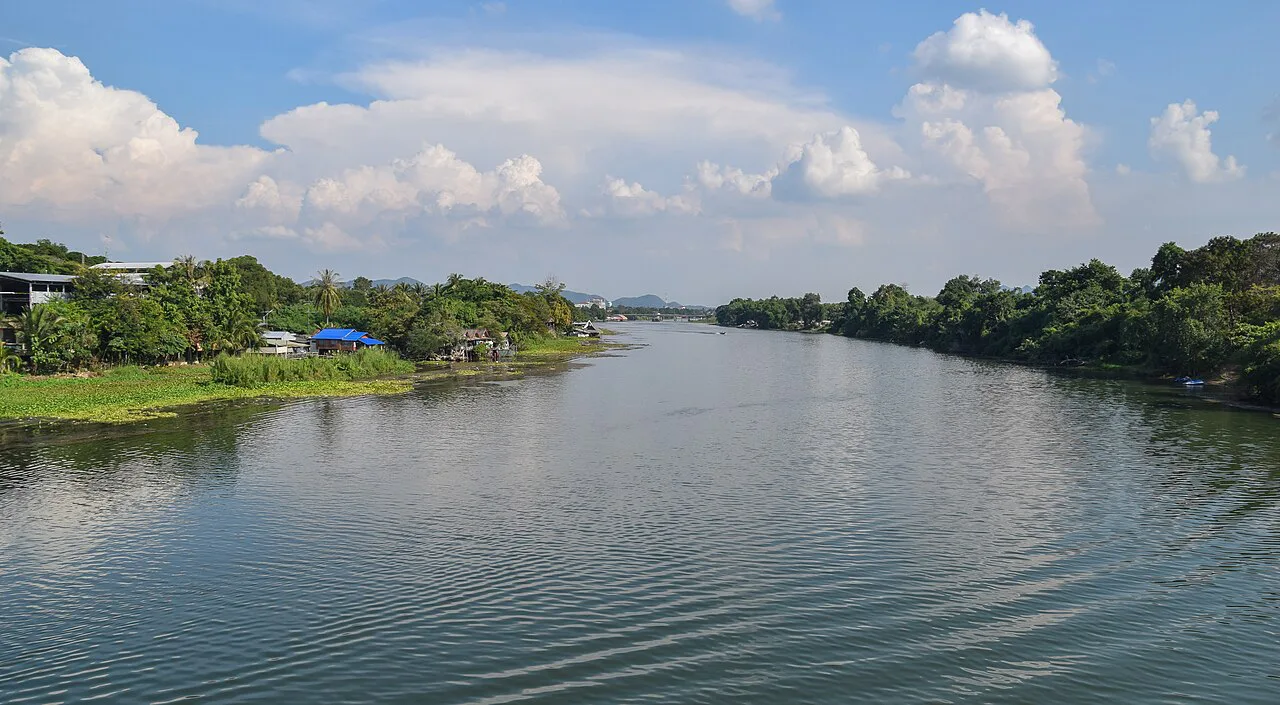
The river edge is part of the visit, not just a backdrop. Travelers describe feeding fish at the riverbank and a quiet, cool setting by the water, which is what Thai families actually come for. Sit by the water for ten minutes here and the stop starts to make sense as a pause rather than a sight.
Behind the buildings, the temple has a garden area that travelers describe as tidy, green and quiet, with space to sit or meditate. It is laid out in an orderly way and maintained, which is why it reads as a designed garden rather than untended grounds. If you want a break from the war history elsewhere in town, this is the section to linger in.
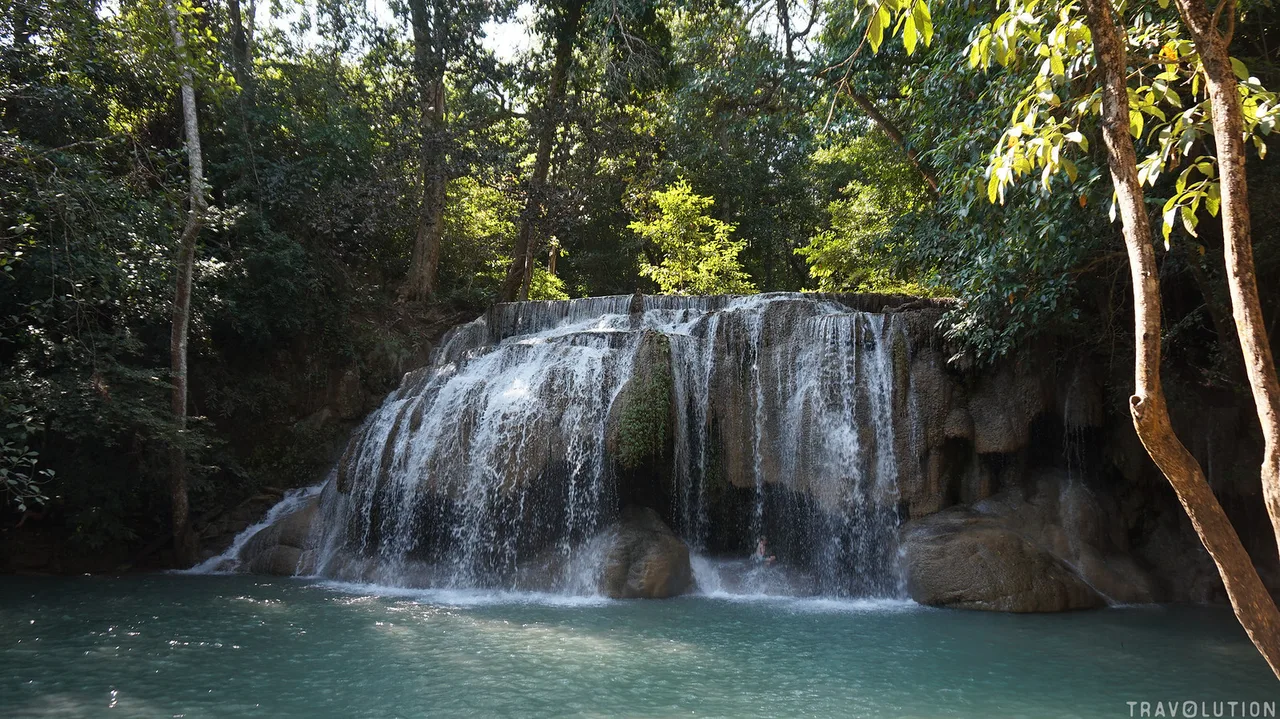
Luang Por Wat Tai and the shrine visitors come to honor
Travelers describe coming specifically to pay respects to Luang Por Wat Tai at shrines within the grounds, and separate captions for the same temple treat these figures as objects of devotion rather than exhibits. Approach them quietly and unhurriedly, as locals do.
The white-horse deity statue and the photogenic corners
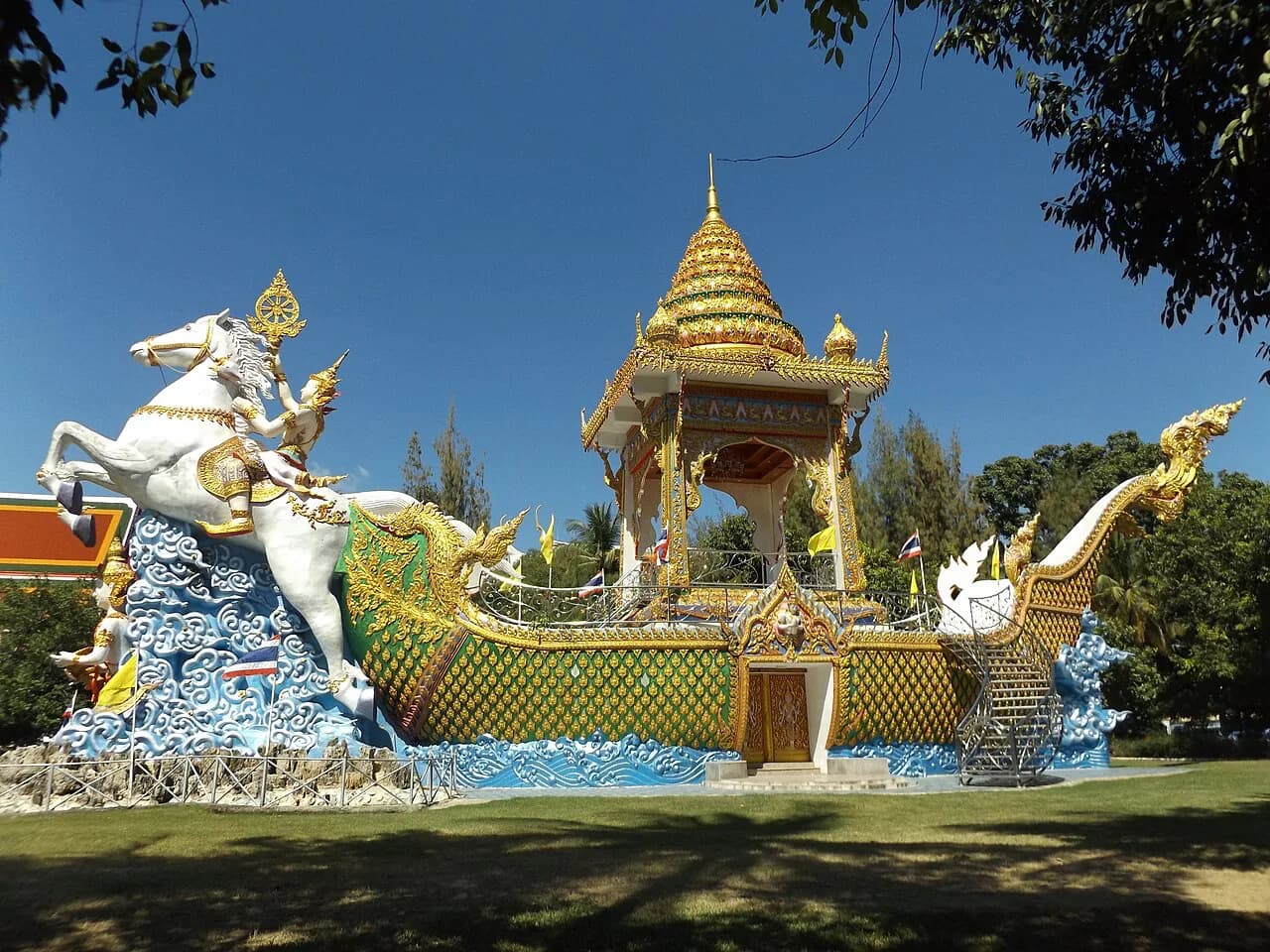
One of the more unexpected sights is a statue of a deity riding an ornately decorated white horse, which photographs well against the garden greenery. The stock caption describes the figure above a golden boat, so expect a clustered, decorative composition rather than a single isolated statue. It is the kind of corner that rewards a slow walk with a camera.
These smaller shrines and statues are the reason to wander the whole compound instead of stopping at the main hall. Keep your pace slow, look behind the main buildings and along the riverbank, and give yourself time to notice them. A snapshot tour misses most of what makes the temple distinctive.

Coffee@Wattai and the in-grounds café stop
There is a small café inside the grounds called Coffee@Wattai, which travelers mention as part of the visit rather than a separate destination. Menus, prices and opening days are not published in what is available, so check on arrival rather than planning around it. If it is closed, the garden seating still gives you the same pause.

How long to allow and what to pair it with
Budget 45 to 90 minutes. The lower end covers the ordination hall, the relic pavilion and a riverbank pause; the upper end adds the garden, the white-horse statue and a coffee stop. Anything longer usually means you have settled in, which is the point of the place.
The natural pairing is with the town's war history, since the Bridge Over the River Kwai and the Kanchanaburi War Cemetery (Don Rak) are the sights most travelers already have on their list. Doing the temple first or last gives you a quiet bookend to a heavy subject. If you want a broader plan for the day, our guide to the best things to do in Kanchanaburi lays out the order.
If you are building a temple day rather than a history day, Wat Tham Suea can make sense as a second stop, not a substitute. Keep the two apart in your plan so you are not rushing the quiet one.
Opening hours and entry fees: what is published and what is not
A listing on one travel platform tags the temple as open 24 hours and notes it as currently open, but that is user-contributed content on a third-party site rather than the temple's own notice. Treat it as an indication only. Before you go, confirm on the ground or by asking your hotel, and avoid building a tight schedule around it.
No entry fee is stated in the sources available, so do not budget on a figure in either direction. Temples of this kind commonly have no ticket, but that is an expectation, not a published fact. Check at the entrance and keep small notes for merit-making if you plan to make an offering.
Is Wat Chai Chumphon worth the stop?
Yes, if you want a calm hour in Kanchanaburi town rather than another ticket queue. It will not compete with the bridge or the war museums for emotional weight, and it is not a reason to plan a day around. Come for the old ordination hall, the painted ceiling and the riverbank, then move on.
Skip it if your time in Kanchanaburi is one packed day and you would rather spend the hours at the cemeteries and the railway sights. For everyone else, it is a low-cost, low-effort addition that pairs naturally with the town's history stops. Check the hours locally on the day and keep the visit loose.
Explore more Kanchanaburi guides
Sources
- 佛陀舍利館,Wat Chaichumphon Chanasongkhram,北碧府|Trip.com 北碧市
- Statue of Deity at Wat Chai Chumphon Chana Songkhram Temple in Kanchanaburi Stock Image - Image of green, culture: 161917167
- 柴春蓬寺佛法繼承者花園|Trip.com 北碧市
- Painted ceiling at Wat Chai Chumphon Chana Songkhram a.k.a. Wat Tai Temple, Kanchanaburi, Thailand Stock Photo - Alamy