
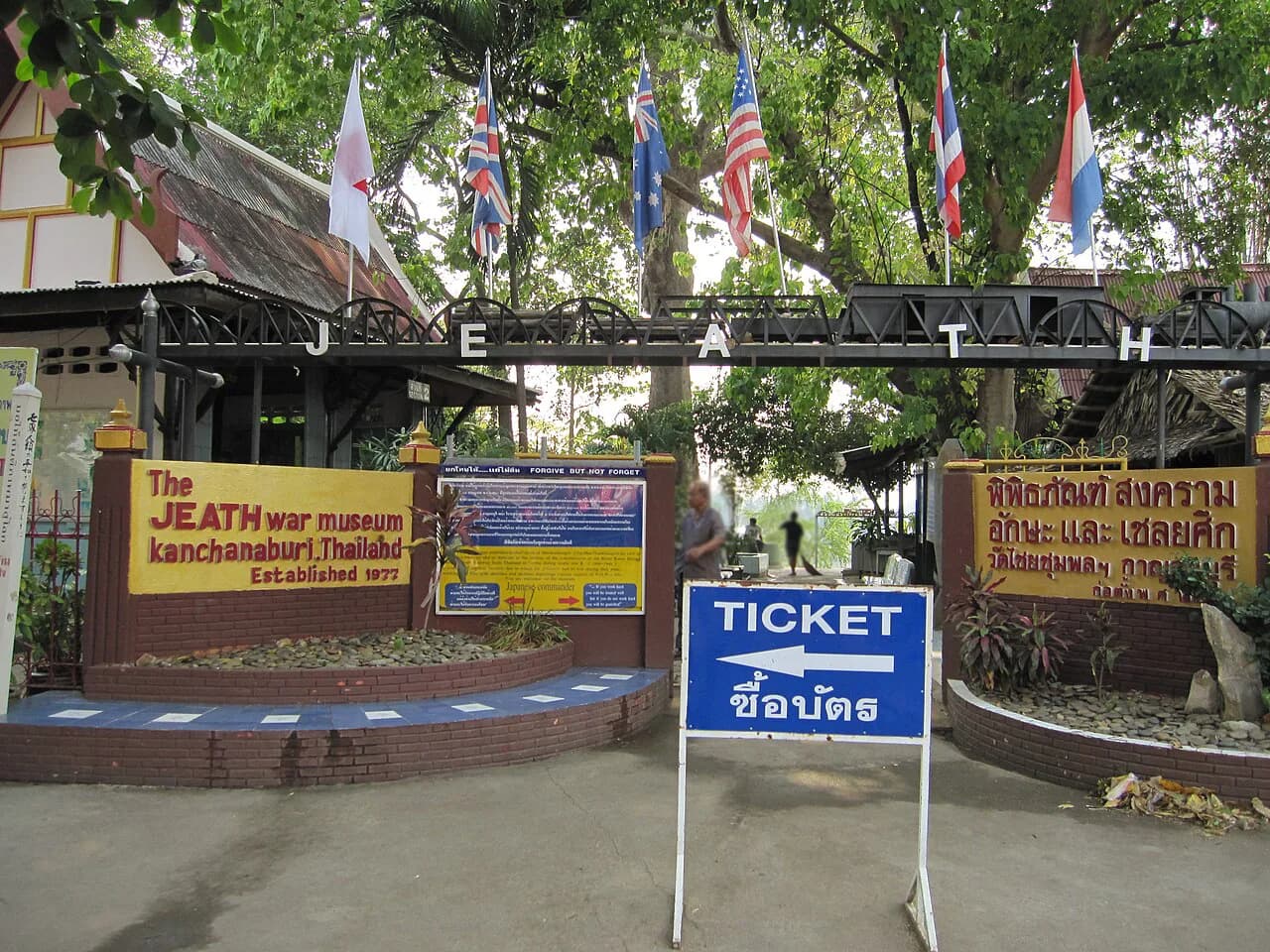
JEATH War Museum in Kanchanaburi: A Visitor's Guide to the POW Hut Memorial

Allow about 30 to 45 minutes for the JEATH War Museum, and come expecting a simple, hand-made memorial rather than a polished exhibition hall. It is a long bamboo and attap hut rebuilt in the pattern of the prisoner-of-war barracks used during construction of the Burma Railway, and the plain presentation is a large part of its effect. This guide covers where the museum sits, how to reach it, what is actually on display, and how it fits alongside the bridge, the cemetery and the other war sites in town.
A temple memorial, not a museum hall
The museum was created by the monks of Wat Chaichumphon as a memorial to the prisoners of war who built the Thailand-Burma railway, and it still sits within the temple grounds rather than in a purpose-built gallery. The main building reproduces a POW hut in bamboo and attap, with sleeping platforms running down each side. Because it is a working temple site, the atmosphere is quiet and uncurated; you are looking at objects assembled by hand, not at interpretive panels designed by a museum team.
That framing changes how you should read the place. Treat it as a memorial you walk through slowly rather than an attraction you tick off, and give the photographs and personal accounts the time they need. If you want timelines, maps and researched context, plan on visiting a second site as well, because this one is not built to deliver that.
Where it sits at the east end of town
The museum is inside Wat Chai Chumpol, at the far eastern end of Kanchanaburi town on the river, roughly where the Khwae Noi meets the Mae Klong. That eastern position matters for routing: it puts the museum away from the central strip of guesthouses and restaurants, so you will usually combine it with a ride rather than pass it on foot.
Think of Kanchanaburi as a small grid pinned by the river, the bridge and the main road, and place the museum at the town-side end of that grid. If you are staying near the bridge or the cemetery, the museum becomes a separate stop at the start or end of your day rather than something in the middle of a walking loop.
Getting there from town and from the bridge
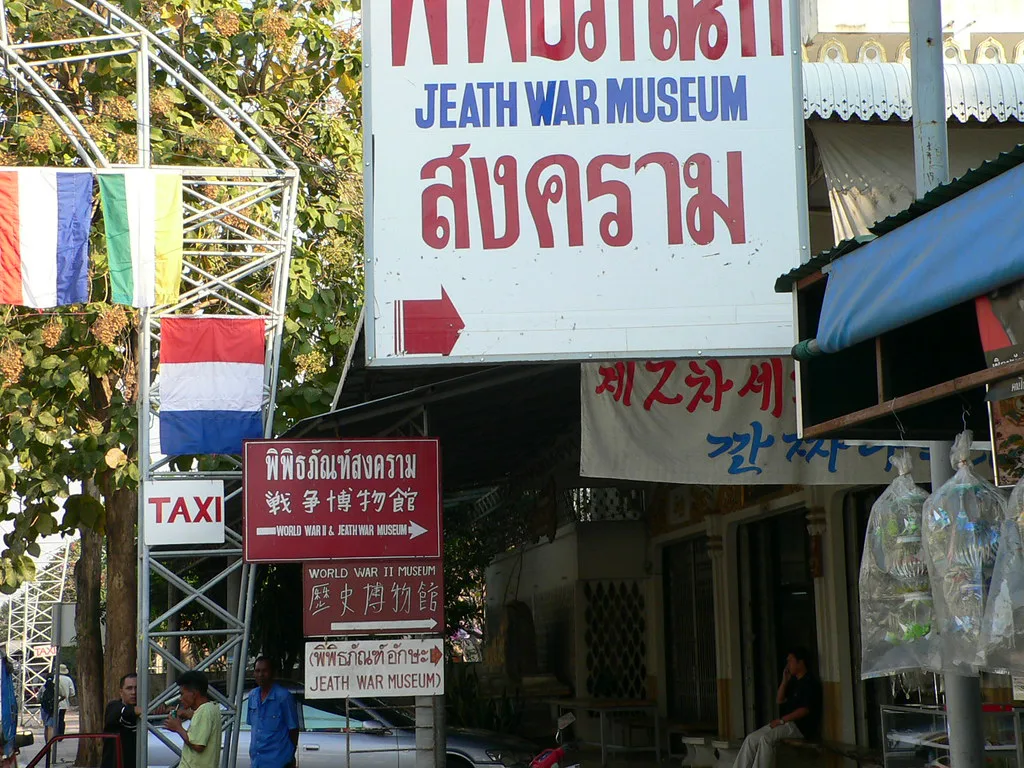
From central Kanchanaburi, the practical options are a songthaew, a tuk-tuk or a Grab car; distances in town are short, but the heat makes walking the full route unpleasant in the middle of the day. Ask your driver for Wat Chai Chumpol rather than only the museum name, since the site is inside the temple grounds. Shared songthaews run along the main routes and are the cheapest option, while a hired tuk-tuk or app car saves the guesswork.
From the Bridge Over the River Kwai, the ride to the museum is a short hop of roughly ten to fifteen minutes depending on traffic and exactly where you start. Walking it is possible but not especially pleasant, and it eats time you could spend at the sites themselves. A sensible sequence is bridge first, then a ride east to the museum, keeping the rest of the day flexible.
What you'll actually see inside the hut
The centrepiece is the long hut itself, reconstructed as a prisoner barracks with sleeping platforms down each side, so you get a physical sense of the cramped quarters rather than a diagram of them. Along its length are photographs, drawings made by prisoners, tools, newspaper cuttings and personal accounts of the railway's construction. The displays are plain and sometimes faded, which reads as authenticity rather than neglect.
A separate building holds belongings and memorabilia from the Japanese guards who worked at the camps, an angle many visitors skip. It is worth ten minutes, because it complicates the story rather than repeating it. Beyond these items, do not expect interactive exhibits, audio guides or a big film screening; the collection is modest and the experience is quiet.
What JEATH stands for, and why sources disagree
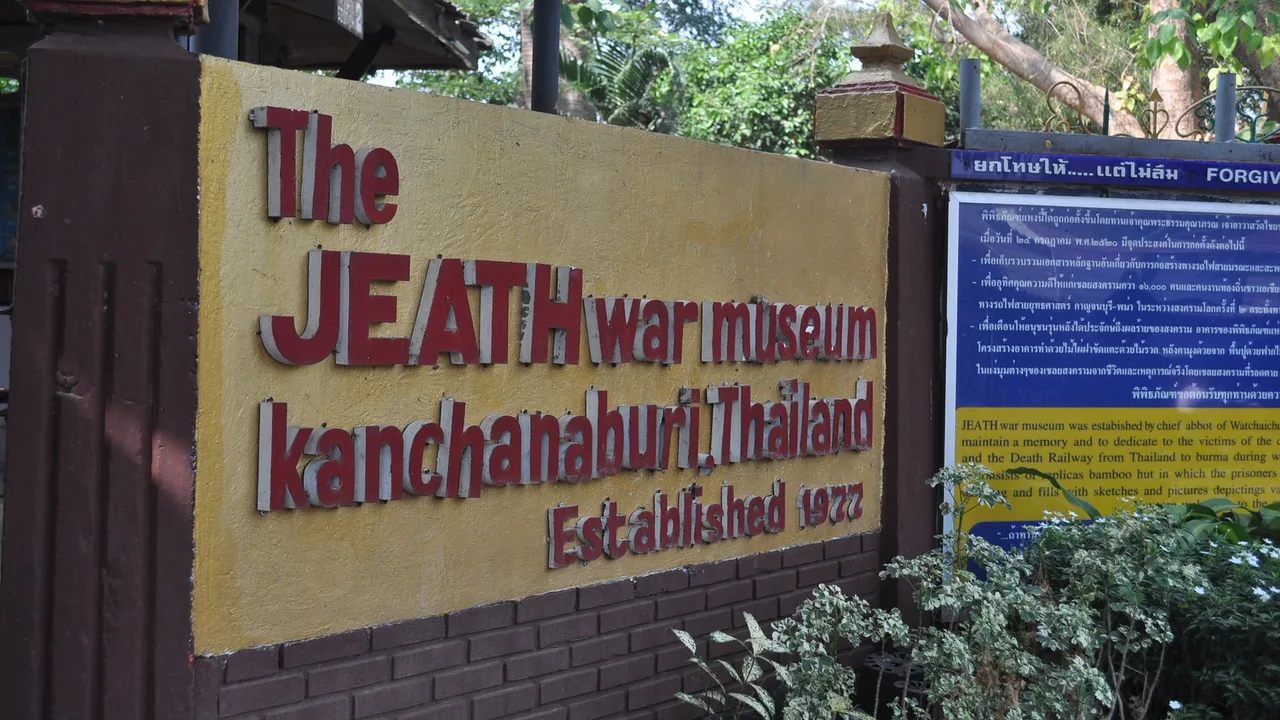
JEATH is usually explained as an acronym of the main countries involved in building the railway, but different sources expand it differently, and at least one swaps in America where another uses Australia. Confirm the version on the signage when you arrive, and do not treat any single online expansion as definitive.
The practical takeaway is that JEATH is a label rather than a rigorous historical category, so judge the museum by what is on display. The name also explains the local confusion: there are two museums in Kanchanaburi town using the JEATH name, and they are separate operations with separate entrances and displays. Check which one you are heading to before you set out.
Tickets and hours: what to confirm before you go
One older guidebook listing gives admission of 30 baht, but that figure dates from an earlier edition and should not be treated as the price you will pay. The museum has no widely published current hours or ticket page, so confirm the entry fee and opening times with your accommodation or at the temple gate before making the trip across town.
Do not assume the museum keeps the same hours as the bridge or the war cemetery; temple-based sites in Thailand often close for lunch or on particular days. If your schedule is tight, visit earlier in the day and have a fallback plan nearby in case the gate is shut.
Do not confuse it with the museum that closed
Kanchanaburi's privately run World War II Museum, near the Bridge over the River Kwai and open since 1986, was reported as set to close during the 2025 Songkran period because of financial pressure. That closure applies to that separate museum, not to the JEATH War Museum at Wat Chai Chumpol, which the cited report does not cover.
Plenty of older travel content still lists all of Kanchanaburi's war museums as open, so check the specific site you plan to visit rather than trusting a town-wide list. If one museum is closed, the other war sites in town still justify the trip.
How long to allow and how to pace the visit
Budget around 30 to 45 minutes for the hut and the guards' building together, plus a little time to sit in the temple grounds. That is enough to read most of the captions and look properly at the drawings and photographs. If you are travelling with someone who reads every panel, allow closer to an hour.
The plain presentation rewards slower reading, so resist the urge to rush through and photograph everything. Pair the museum with one heavier site, such as the cemetery or a proper exhibition on the railway, and you get both the emotional and the factual sides of the story without museum fatigue. The Kanchanaburi Attractions: 11 Visitor Guides page lists the other stops so you can sequence them by distance.
Is it worth it, and how it differs from the other sites
Go if you want a tactile, human-scale introduction to the railway story and can accept a modest collection in a temple setting. Skip it if you have limited time and want the fullest historical account, in which case a research-led exhibition will serve you better. The museum's strongest asset is the reconstructed hut itself, which no set of panels replicates.
The trade-off is straightforward: atmosphere and authenticity versus interpretation and comfort. The museum is inexpensive in spirit and small in scale, so it works as a 40-minute stop rather than the anchor of a day; build the rest of your war-history route around the bigger sites.
Nearby war-history sights to pair with it
The Bridge Over the River Kwai is the obvious companion stop, and the surviving steel structure and riverside setting make it the image most visitors carry home. Read the Bridge Over the River Kwai, Kanchanaburi guide before you go so you know which side of the river to approach from.
The Kanchanaburi War Cemetery (Don Rak) sits in the centre of town and holds nearly seven thousand graves, making it the most sobering stop of the day and an easy one to reach on foot from the main strip. For a researched account of the railway, the Thailand-Burma Railway Centre fills the gap the JEATH displays leave.
Further out, Hellfire Pass is a half-day trip rather than a quick add-on, and the hilltop Wat Tham Suea offers a change of mood if you want a break from war history.
Which war site should anchor your day in Kanchanaburi?
Use the JEATH War Museum as a short, atmospheric stop rather than the centrepiece, and anchor the day on the bridge, the cemetery or a research-led exhibition. Confirm the museum's hours and entry fee locally before you ride out to the east end of town, and check that you have the right JEATH museum. With 30 to 45 minutes set aside, it slots neatly into a half-day of war history without eating the time you need elsewhere.
Explore more Kanchanaburi guides
Sources
- World War II Museum in Kanchanaburi to close Due to financial struggles, Kanchanaburi’s War Museum, near the iconic Bridge over the River Kwai, is set to close during the 2025 Songkran festival. Open since 1986, the museum showcases artifacts and stories from World War II, collected by the late foun
- JEATH War Museum | Thailand For Visitors
- JEATH War Museum, Kanchanaburi: A POW Hut Memorial