
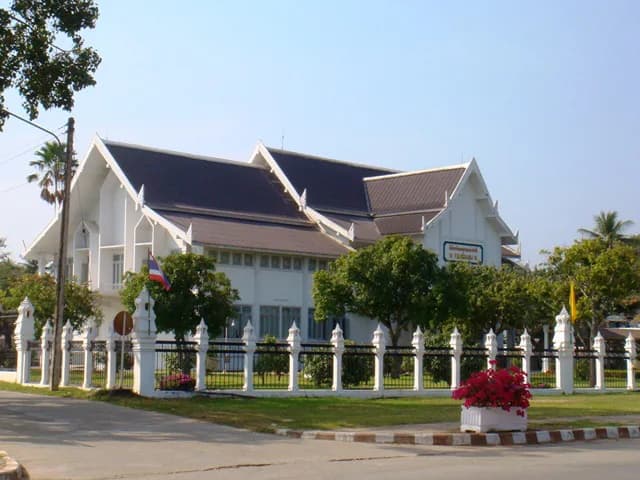
Ramkhamhaeng National Museum: A Practical Visitor's Guide

Treat the Ramkhamhaeng National Museum as your first stop in Sukhothai, not an afterthought: roughly 90 minutes here gives you the vocabulary to read the ruins you will walk through afterward. It sits beside the old city rather than in modern Sukhothai town, so it fits naturally at the start of a Historical Park day. This guide covers what is inside, how to reach it, how long to budget, and how to confirm the details that change.
Why the museum comes first, before the ruins
Sukhothai's temples are largely brick and stucco remains, and without context they blur into one another by mid-morning. The museum's displays connect the objects — the Walking Buddha, Sangkhalok ceramics, stucco fragments — to the temples that once held them, which is exactly the sequencing a first-time visitor needs. If you only have one day in the old city, spend the first hour here and the rest outdoors.
The museum's own tour operators sell a structured 1.5-hour walkthrough that moves from the kingdom's origins on the ground floor to relics upstairs, with the museum entry included rather than paid separately. That format suits travelers who want the inscription and the Buddha imagery explained rather than read off a label. Self-guided visitors can cover the same rooms faster but will get less out of the ceramics and stucco cases.
Where it is: Mueang Kao, opposite the park's central zone
The museum stands in Mueang Kao subdistrict of Mueang Sukhothai District, on the old-city side about 12 km from modern Sukhothai town according to one traveler account. Its position near the King Ramkhamhaeng monument puts it directly opposite the central zone of the park, so you can walk from the museum into the ruins without moving the car. Think of it as the gateway building rather than a separate excursion, and skim the wider Sukhothai Attractions: 12 Visitor Guides before you plan the rest of the day.
Because the museum sits at the edge of the walled area, the practical plan is to park once and cover the museum, the central temples and the ponds on foot or by bicycle. The full layout of the old city, including where the gates and moat sit, is worth skimming before you arrive.
How to get there from Sukhothai town
From modern Sukhothai town, the old city is a short ride by songthaew, tuk-tuk or a Grab car, and the museum makes an easy first drop-off point before you continue into the park. Cyclists can ride out from town or rent near the park entrance; drivers will find parking around the old-city approach. Whatever you choose, name the museum in Mueang Kao as your destination, since both the town and the old city carry the Sukhothai name. For the wider set of stops around it, see Sukhothai attractions: plan your stops from museum to hilltop.
If you arrive by public transport, ask to be set down near the King Ramkhamhaeng monument, which is the landmark directly in front of the museum. Drivers using maps should search the museum's Thai name, since English listings can point to the town office instead. Allow a few extra minutes to orient yourself at the entrance before buying anything.
Ground floor: prehistoric finds, the inscription and the ceramics
The lower level sets out the region before Sukhothai rose, then walks through the kingdom's art. Highlights include Hindu statuary from earlier beliefs, stucco work that once decorated the temples, a large carved Buddha's Footprint, and the Sangkhalok ceramics that made Sukhothai a trading name across Asia. The galleries are arranged so the story builds rather than jumps around.
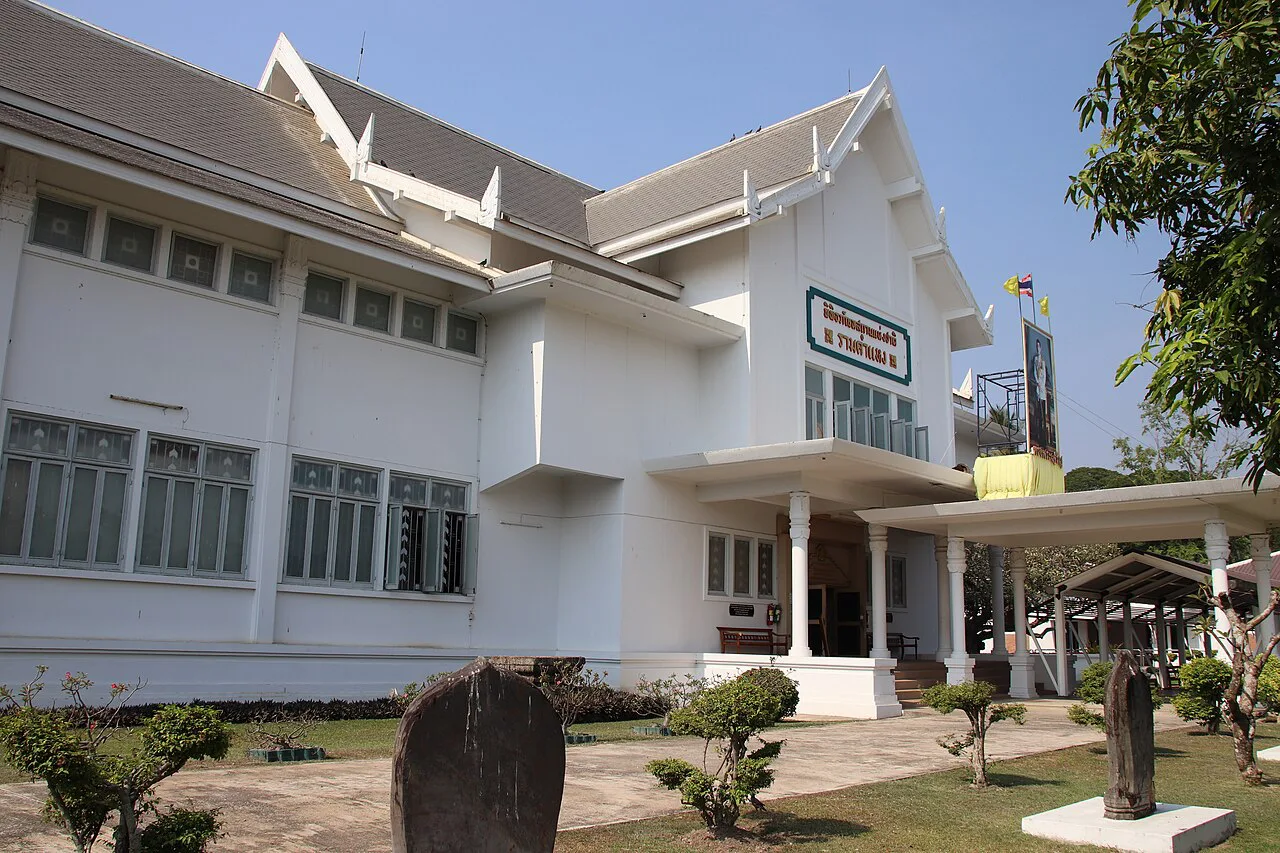
The Ramkhamhaeng Inscription on display is a replica; the original is kept in Bangkok. That matters if the inscription is your reason for coming, because you are looking at a faithful copy rather than the stone itself. The building itself is a two-story Thai-style structure completed in the early 1960s and opened by the royal family in January 1964, with a later annex added for the 700th anniversary of Thai script.
The Fine Arts Department runs a virtual museum page for the site, but as fetched it amounts to a navigation shell with older copyright dates rather than a live collection preview, so treat it as background orientation rather than a current inventory or a booking tool. For what is actually on show and when, rely on the museum desk or a phone call.
Upper floor: votive tablets, relics and stairs-only access
Upstairs holds the spiritual material — thousands of small clay votive tablets left by pilgrims and relics recovered from the museum grounds. It is the quieter half of the building and the part most visitors rush. Give it ten unhurried minutes even if the ground floor has already used up your patience for labels.
Access to the upper floor is by stairs only, with no elevator, so wheelchair users can see the ground-floor galleries but not the upper exhibits. Anyone with knee or hip trouble should weigh that before paying, because the upper rooms are the only part they will miss. The ground floor is described as fully accessible, which keeps the core collection within reach.

How long to allow, and how to sequence the day
Budget one to two hours self-guided, which is the window a major listing gives for the museum. Add time if you read Thai or want to work through the ceramic cases properly. The 90-minute guided format is a good benchmark: if a guide can fill that long, a fast walk-through in 30 minutes is shortchanging the collection.
A sensible order is museum first, then the central zone with Wat Mahathat, then the outlying temples by bicycle or car in the cooler late afternoon. Sukhothai Historical Park: Zones, Tickets and Time Needed lays out the zones so you can pair the museum with the central temples without transport. Keep the bigger circuit for after you have eaten and rested.
Hours and tickets: what is published and what to confirm
Listings give opening hours of 9:00 to 16:00, and one aggregator page carries a phone number for ticket inquiries. Treat that window as a listing rather than a guarantee, since Thai national museums adjust hours seasonally and around public holidays. Arriving by mid-morning leaves room to see the upper floor before any early closure.
The entrance fee is charged separately from the Sukhothai Historical Park ticket, so do not assume one purchase covers both. One traveler report puts the foreigner rate at roughly 150 baht and notes that prices may vary, which is a reason to ask at the desk rather than budget from a blog. Carry cash in small notes and confirm the current rate before you commit.
Some listings state that the museum opens every day, but the gate is not guaranteed on public holidays, so check before building a tight plan around a Monday or a holiday. A quick phone call or a stop at the ticket desk the day before saves a wasted trip. Confirm hours and the fee together in the same conversation.

Rules inside: bags, flash and photographs
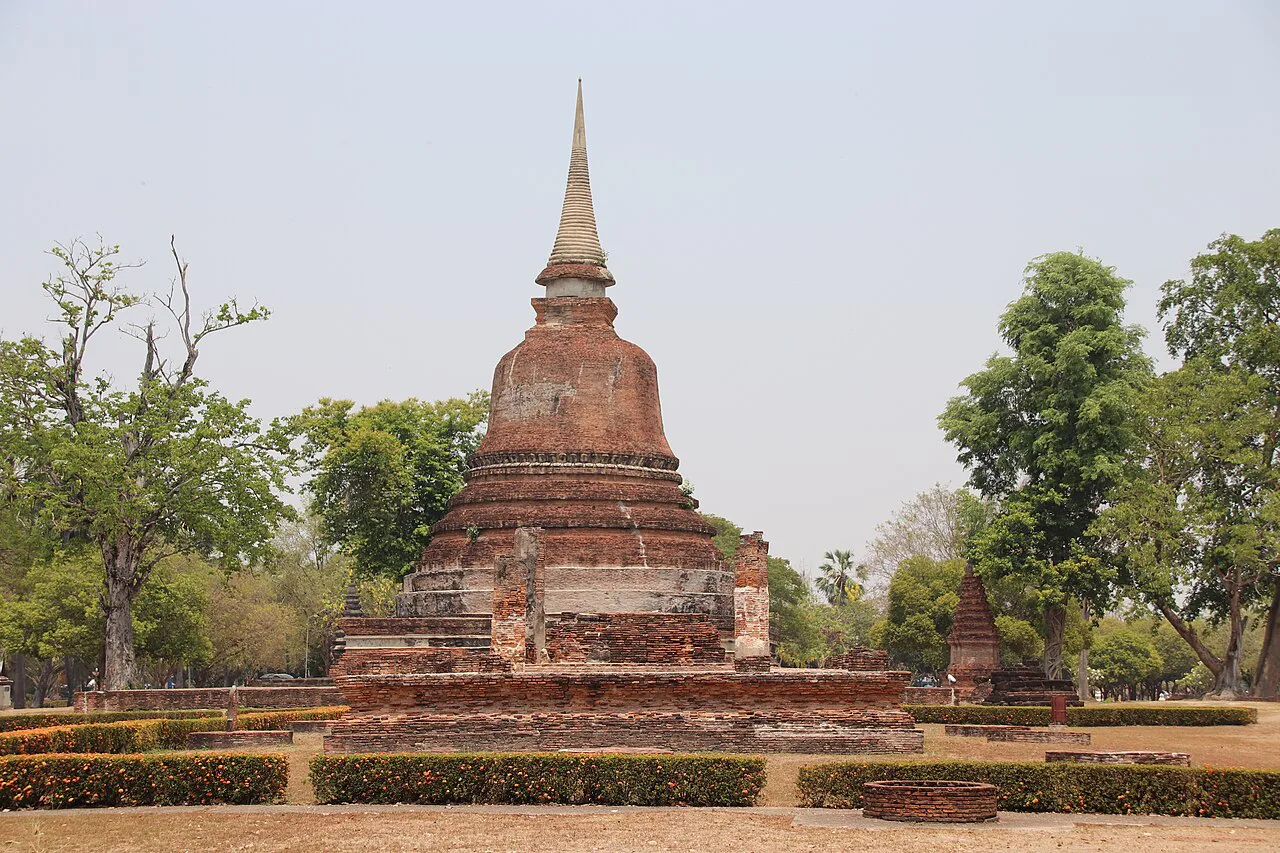
Large backpacks are not allowed in the galleries and must be left at the entrance or in a locker, a rule common to Thai national museums. Pack light if the museum is your first stop, because juggling a daypack at the desk slows everyone down. Non-flash photography is permitted, but selfies with Buddha images are discouraged out of respect, and food and drink stay outside the exhibition halls.
What's nearby in the old city
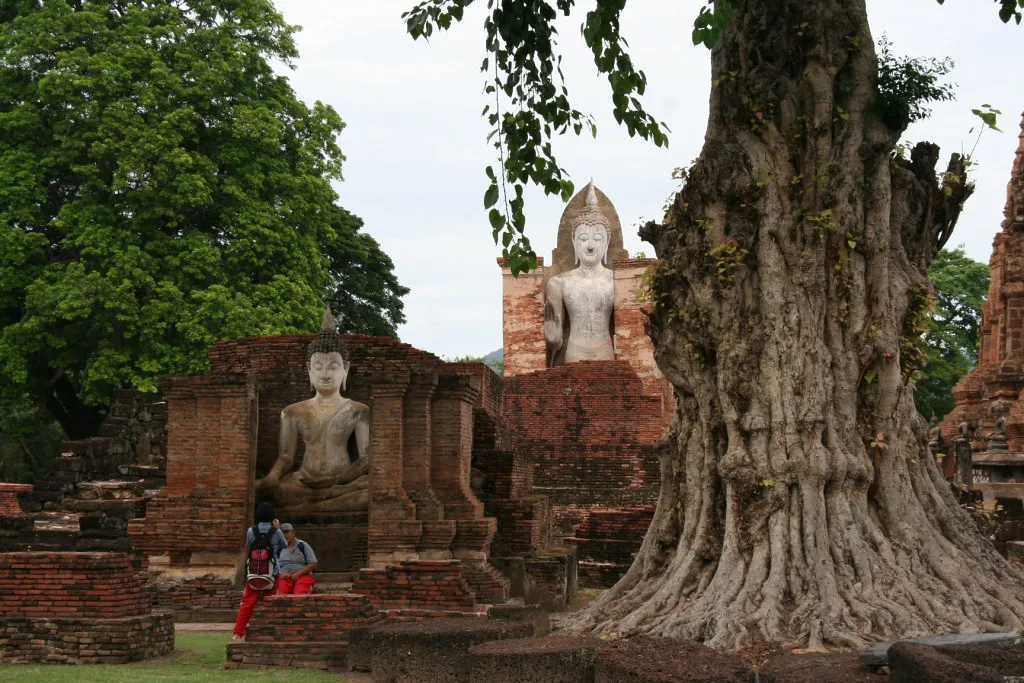
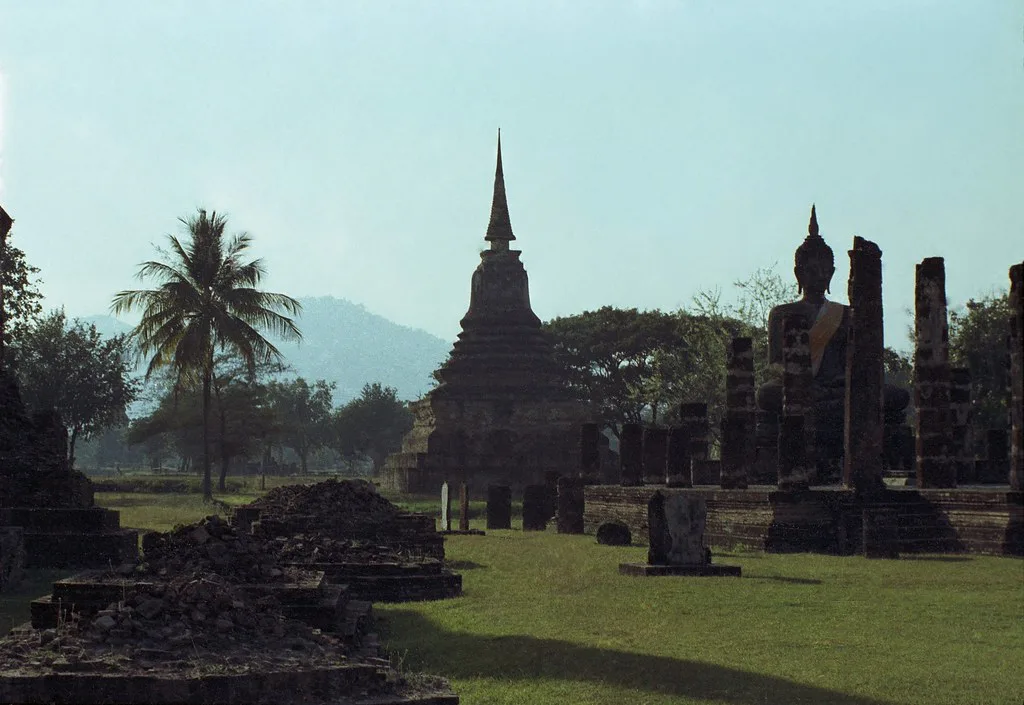
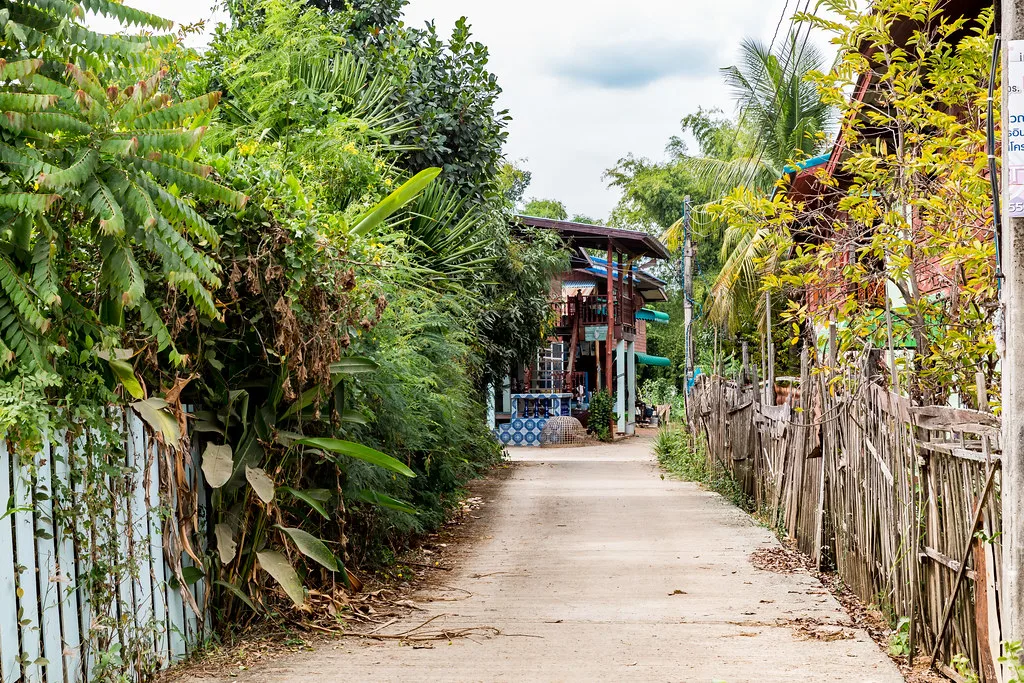
The King Ramkhamhaeng monument sits directly in front of the museum, making it an easy photo stop on the way in. Across the road, the central zone spreads out around Wat Mahathat and the lotus ponds, both pleasant in the softer light of late afternoon. Wat Sa Si, on its island in the water, is a short walk from the same cluster.
North of the center, Wat Si Chum and its massive seated Buddha in a narrow brick chamber is the image most people associate with Sukhothai, and it rewards a separate stop. Wat Phra Phai Luang and Wat Sorasak sit on the same northern loop, so a bicycle makes short work of all three. Plan the loop for after the museum rather than squeezing it in before.
If you have a car, the elephant-buttressed chedi at Wat Chang Lom and the laterite prang of Wat Si Sawai round out the old city's range of styles. Both are close enough to combine with the central zone in one afternoon. Riding a bicycle between them is the most efficient way to cover the spread.
Is the museum worth it, and who should skip it
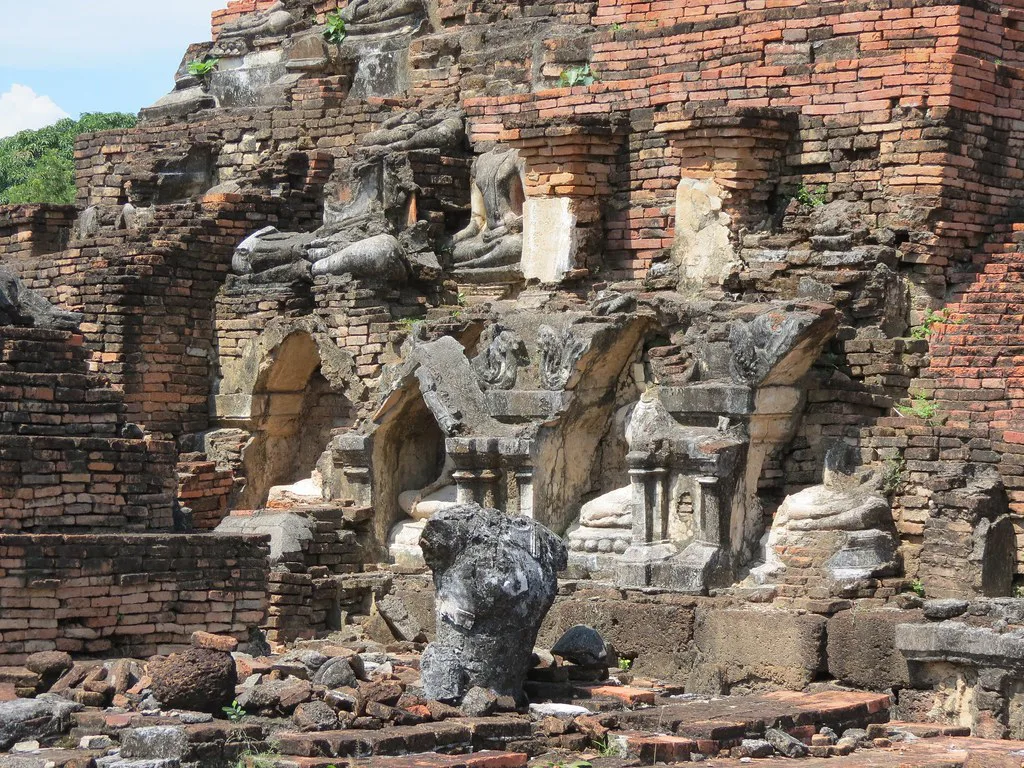
Go if you care why the ruins look the way they do, or if you are traveling with someone who tires of brick after the third temple. The ceramics, the inscription replica and the votive tablets give the outdoor circuit a narrative it otherwise lacks. Skip it if your time in Sukhothai is under a day and you would rather spend every hour outdoors, or if stairs rule out the upper floor and you only want a quick look.
Should the museum be your first hour in Sukhothai?
Yes, for most first-time visitors: an hour to 90 minutes here turns the rest of the Historical Park from pretty rubble into a story you can follow. Pair it with the central temples on foot and save the northern monuments for the afternoon by bicycle. Confirm the hours and the separate entrance fee before you go, and leave the backpack at home.
Explore more Sukhothai guides
Frequently Asked Questions
Is the Ramkhamhaeng National Museum included in the Sukhothai Historical Park ticket?
No. The museum charges its own entrance fee, separate from the Historical Park admission, so budget for two tickets if you plan to do both. Ask at the museum desk for the current rate before you pay.
Can wheelchair users see the upper floor?
The ground floor is described as fully accessible, but the upper floor is reached by stairs only and there is no elevator. Wheelchair users can see the main collection downstairs but will miss the votive tablets and relics upstairs. Ask staff at the entrance if you need assistance with the route.
How do I confirm opening hours before visiting?
Listings give a daytime window, but Thai national museums adjust hours around holidays and seasons. Call the ticket inquiry number on the museum's listing or check at the desk the day before. The Fine Arts Department's virtual museum page is useful for orientation but does not publish a live schedule.