
Wat Traphang Ngoen: The Lotus-Bud Stupa Temple on Sukhothai's Silver Pond

Wat Traphang Ngoen needs about 20 to 40 minutes, and it earns that time through its layout rather than its size: a pond-side ruin with a lotus-bud stupa, an ordination hall marooned on its own small island, and a walking Buddha relief that shows off the Sukhothai style at close range. It sits in the central zone of Sukhothai Historical Park, southwest of the pond whose east side meets the much busier Wat Mahathat, so most visitors pass it on the way between bigger names. This page covers where the temple is, how to reach it, what to look at up close, and how to slot it into a park visit without overcommitting.
Where Wat Traphang Ngoen sits in the park
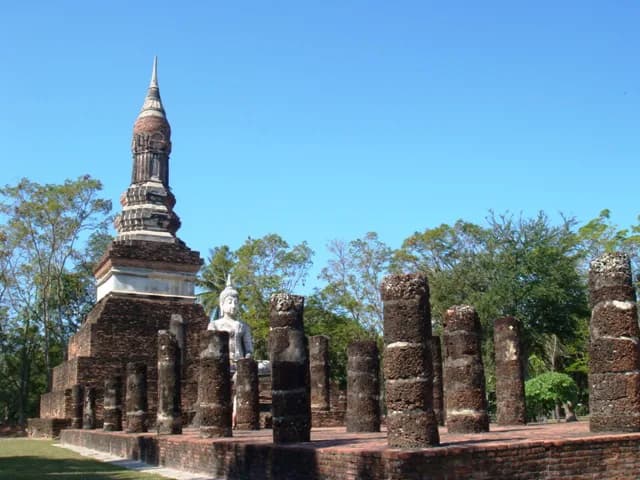
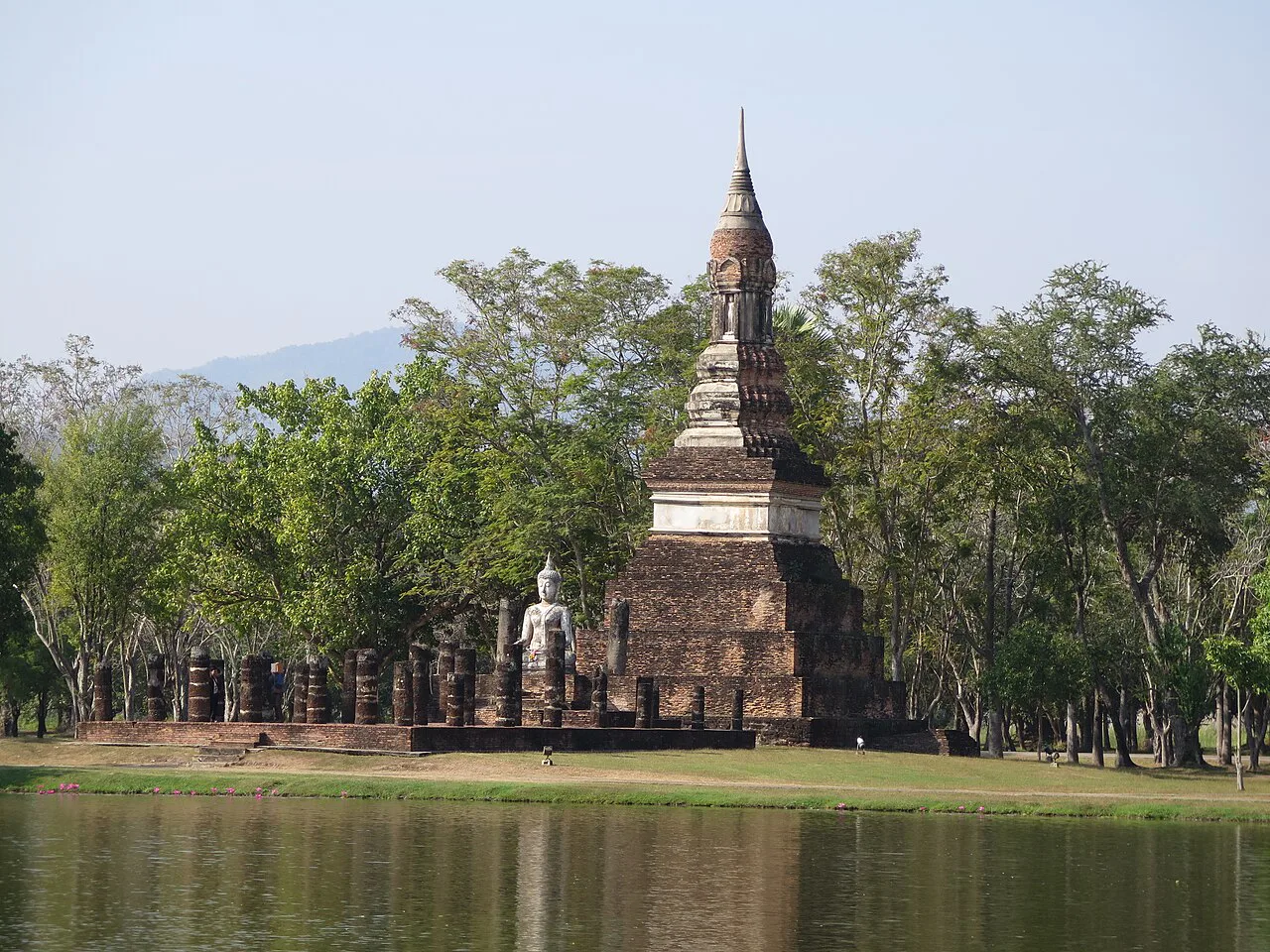
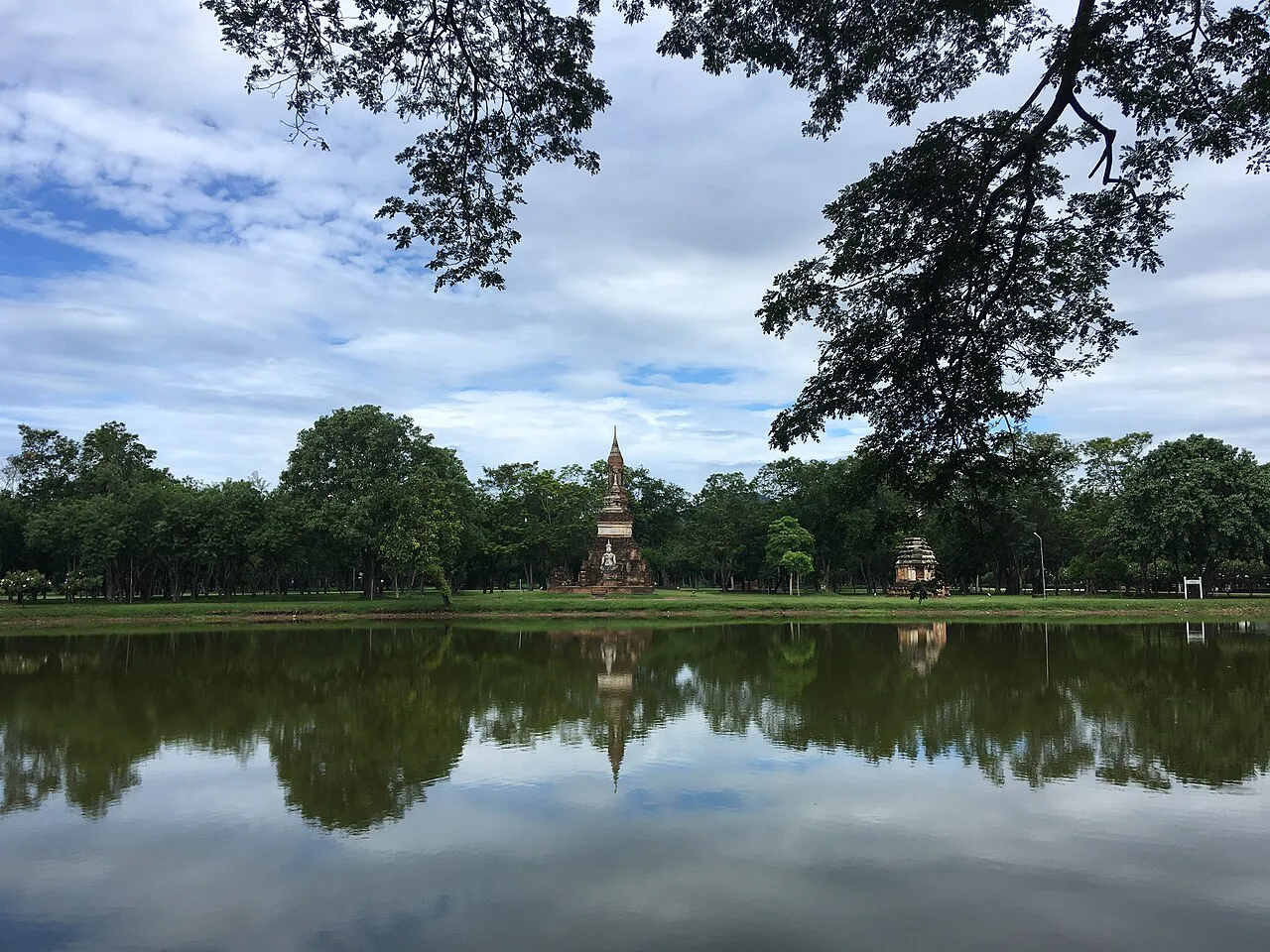
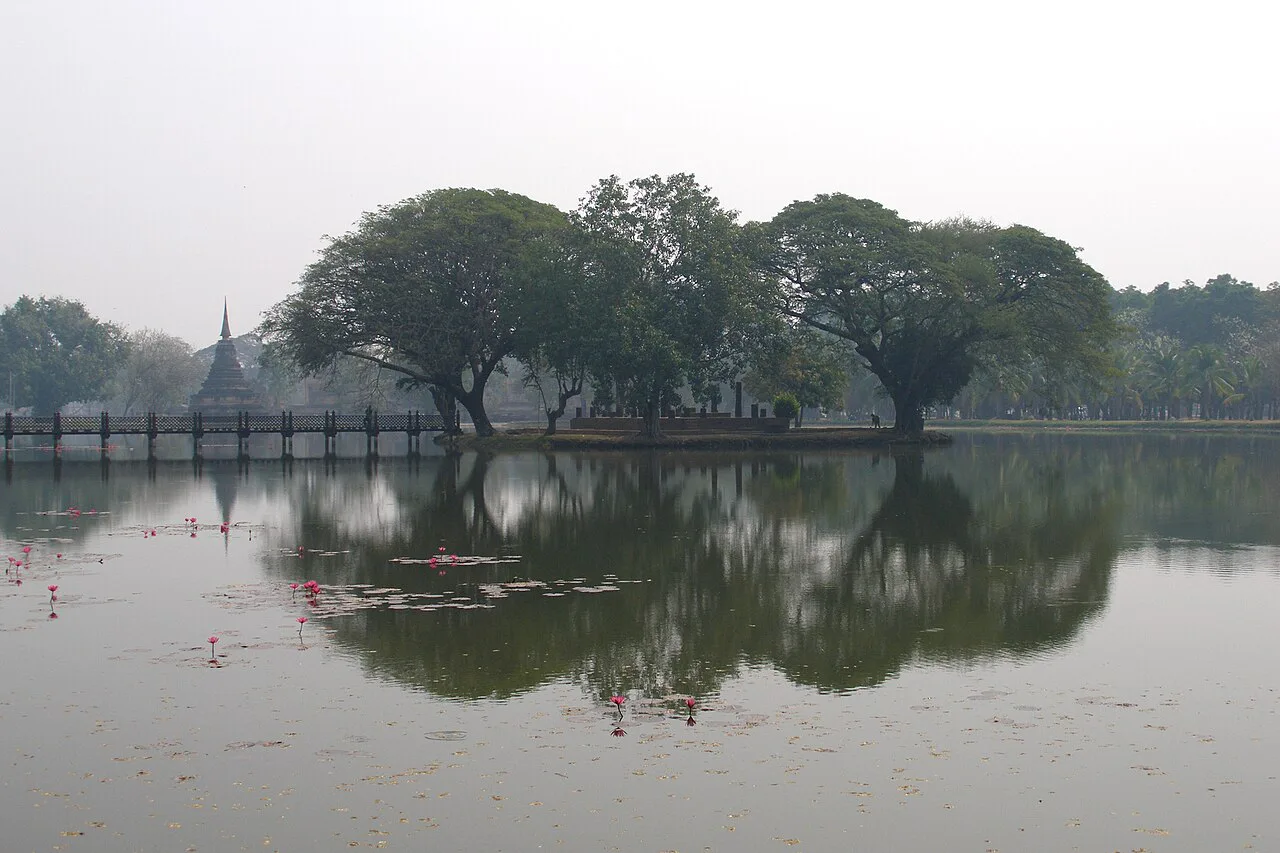
The temple stands in the central zone of the walled old city at Mueang Kao, just west of Wat Mahathat and beside the pond that gives it its name; Traphang is a Khmer-derived word for a reservoir or tank. Travel accounts place the temple west of Wat Mahathat's stupa, with the Traphang Ngoen ("silver pond") lying to the temple's east, which makes it a natural stop among the first ruins in the central area. The pond is the anchor of the whole composition, with the stupa and viharn on the bank and the ordination hall on an island within the water.
Because the site is inside the central zone, it comes with the same access arrangements as the rest of the old city, and you reach it on foot, by bicycle or by scooter rather than by any dedicated transport. The wider park holds dozens of monuments spread over several zones, so knowing this one is centrally placed matters when you sequence a day. For the full map of zones and monuments, the Sukhothai attractions: plan your stops from museum to hilltop guide is the place to start planning.

How to reach the temple from Sukhothai
Most travelers arrive from new Sukhothai town, roughly 12 kilometers east, where the bus station and most hotels are. The usual approach is a songthaew from the bus station to the old city, followed by walking or a rented bicycle or scooter inside the gates; one traveler's account describes exactly that shared pickup ride to the park. Confirm the current departure point and drop-off with your guesthouse, since these informal services change without notice.
Inside the park, a bicycle is the most efficient way to link Wat Traphang Ngoen with the other central monuments, and rentals are widely available near the main entrances. If you are on foot, the temple is a short walk from the central gate and pairs naturally with Wat Mahathat next door. Fares, rental rates and opening times for rental shops are not published in any consistent form, so ask at your accommodation rather than relying on older blog figures.

Reading the layout: stupa, assembly hall and island ordination hall
The centerpiece is a lotus-bud stupa, the Phum Khao Bin form that is a key symbol of Sukhothai art. Around the relic chamber near the top, four niches hold Buddha images facing the cardinal directions, a detail that distinguishes this stupa from plainer chedis elsewhere in the park. In front of it, the assembly hall, or viharn, faces east with a brick base and laterite columns; only parts of it and a reconstructed Buddha remain.
The most memorable feature is the ordination hall, the ubosot, set on a small island in the pond and reached by a footbridge. Physically separating the hall from the viharn and stupa marked off the area reserved for monastic rites, and the same water-hall idea appears at nearby Wat Sa Si. A short detour onto the bridge gives you the classic view back across the pond toward the ruins, which is the photograph most visitors take away.
What to look for up close
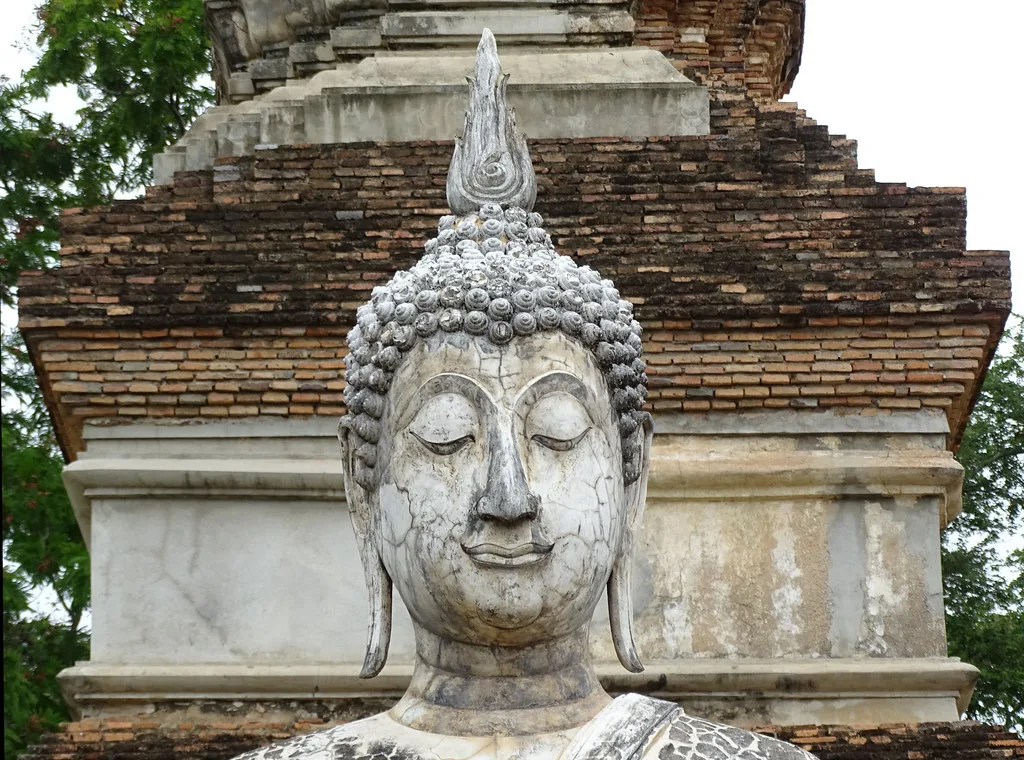
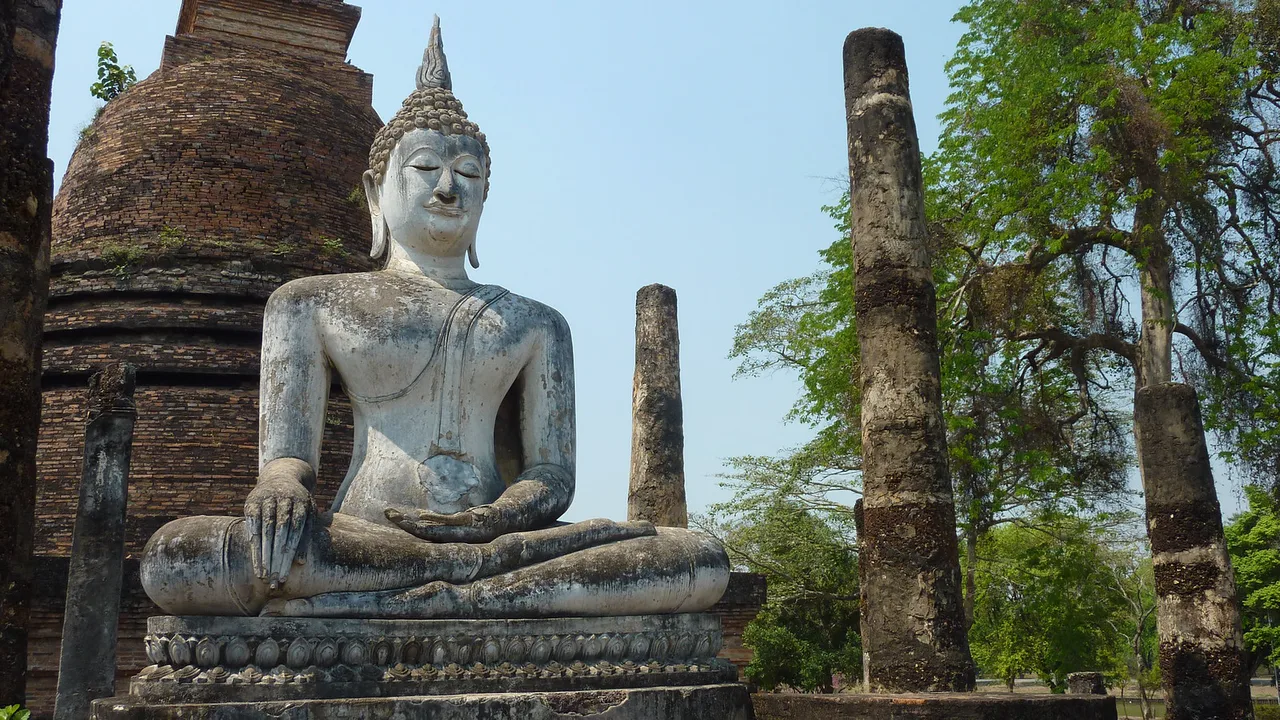
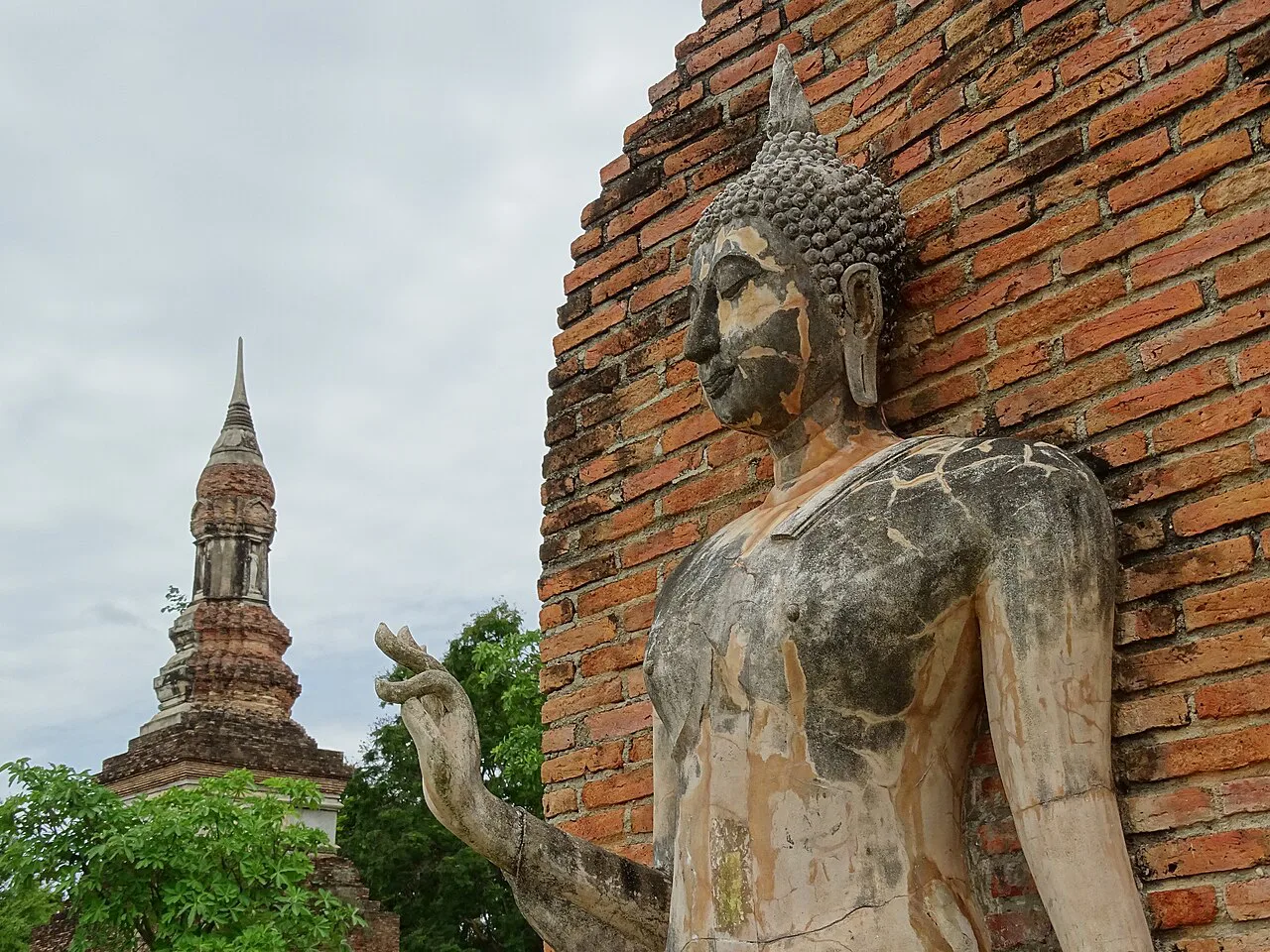
Look for the walking Buddha relief near the main structures: the fluid, almost weightless figure is the signature of Sukhothai sculpture, and seeing one at eye level on a small monument is more instructive than viewing it from a distance at a larger temple. Inside the remains of the main hall, a stucco seated Buddha in the subduing-Mara posture survives in recognizable condition, with the face still readable. To the north of the main stupa and hall stand smaller viman-style stupas with tiered roofs and niches for Buddha images.
Trip.com's community notes on the temple describe the same ensemble, though contributor hours and entry details conflict with each other and with other sources, so treat any single figure you read online as unverified. Use those notes for orientation and atmosphere, not for planning around a specific closing time. The pond itself, with water lilies and flowering trees along the bank, is part of the experience and rewards a slow lap rather than a quick photo stop.
How long to budget for the stop
Give Wat Traphang Ngoen 20 to 40 minutes on its own, which covers the stupa, the hall ruins, the bridge and a walk around the pond edge. Add more if you like photographing details or sitting in the shade, and remember that the temple sits inside a much larger park: the central zone alone can absorb two to three hours at a steady pace. Treat this as a stop between headline monuments rather than a destination in itself, and you will sequence the day more realistically.
If you are building a full day, pair it with the major central monuments and keep the outlying ruins for a second loop. A wider list of options, from temples to the museum and the old city gates, is in the guide to things to do in Sukhothai, which helps you judge what else fits around this stop.
Hours, tickets and what the central-zone ticket covers
Published hours and entry fees for the park conflict across sources: one contributor lists 06:00–18:00 with free entry, another gives 6:30am to 7:30pm and an entry fee folded into a central-zone ticket. Because these cannot be reconciled, check the posted hours and ticket desk at the park entrance on the day rather than planning around a number you read online. The practical takeaway is that a single zone ticket usually covers the monuments within that zone, including this one, but confirm the current structure when you buy.
Wat Traphang Ngoen does not publish its own independent hours or ticket prices, so the park is the authority to consult. If you want a second reference point before you travel, the overview of the Sukhothai Historical Park sets out how the zones and tickets fit together.

Best time of day, and the heat problem
The pond-side setting makes this a pleasant stop early or late in the day, when the light is softer and the open ground is less punishing. Midday heat is the real constraint here: one account of walking the park describes temperatures near 40°C and the relief of cold drinks and ice cream from a roadside vendor. There is limited shade around the ruins themselves, so plan this stop for the cooler edges of the day and carry water.
Do not count on guaranteed sunset or sunrise views from the temple; the pond reflects light nicely, but the setting is not a designated viewpoint and conditions vary. If you want a high, open panorama of the old city, that requires a different monument on a hill west of the walls. Keep expectations modest and you will enjoy the quiet here more.

What else is within the same walk
Wat Sa Si, on its own island in a lake, repeats the water-hall idea at a larger scale, and Wat Si Sawai, with its Khmer-style prangs, sits a short ride away. Wat Mahathat, the largest and most atmospheric temple in the old city, is nearby and unavoidable on any central-zone loop. Taken together they make a compact circuit that shows the range of Sukhothai religious architecture in a morning.
Beyond the central zone, Wat Si Chum and its huge seated Buddha in a narrow mondop is a separate stop, and Wat Chang Lom and Wat Phra Phai Luang add elephant-buttressed and Khmer-era layers to the story. The Ramkhamhaeng National Museum near the park entrance is the best place to put the sculpture you have just seen into context, especially on a hot afternoon.
Is Wat Traphang Ngoen worth stopping for?
Yes, as a 20-to-40-minute stop, not as a standalone destination. Its value is the island ordination hall and the sculptural details on a small, quiet monument, which you can absorb properly before moving on to Wat Mahathat. If you are short on time, keep it as a quick walk-through between the central zone's bigger names.
Before you go, verify the day's park hours, ticket structure and any access changes at the entrance or through the park's official channels, because the online listings disagree with each other. Charge your phone, carry water, and plan the stop for the cooler part of the day.