
Wat Saphan Hin: Visiting Sukhothai's Hilltop Standing Buddha

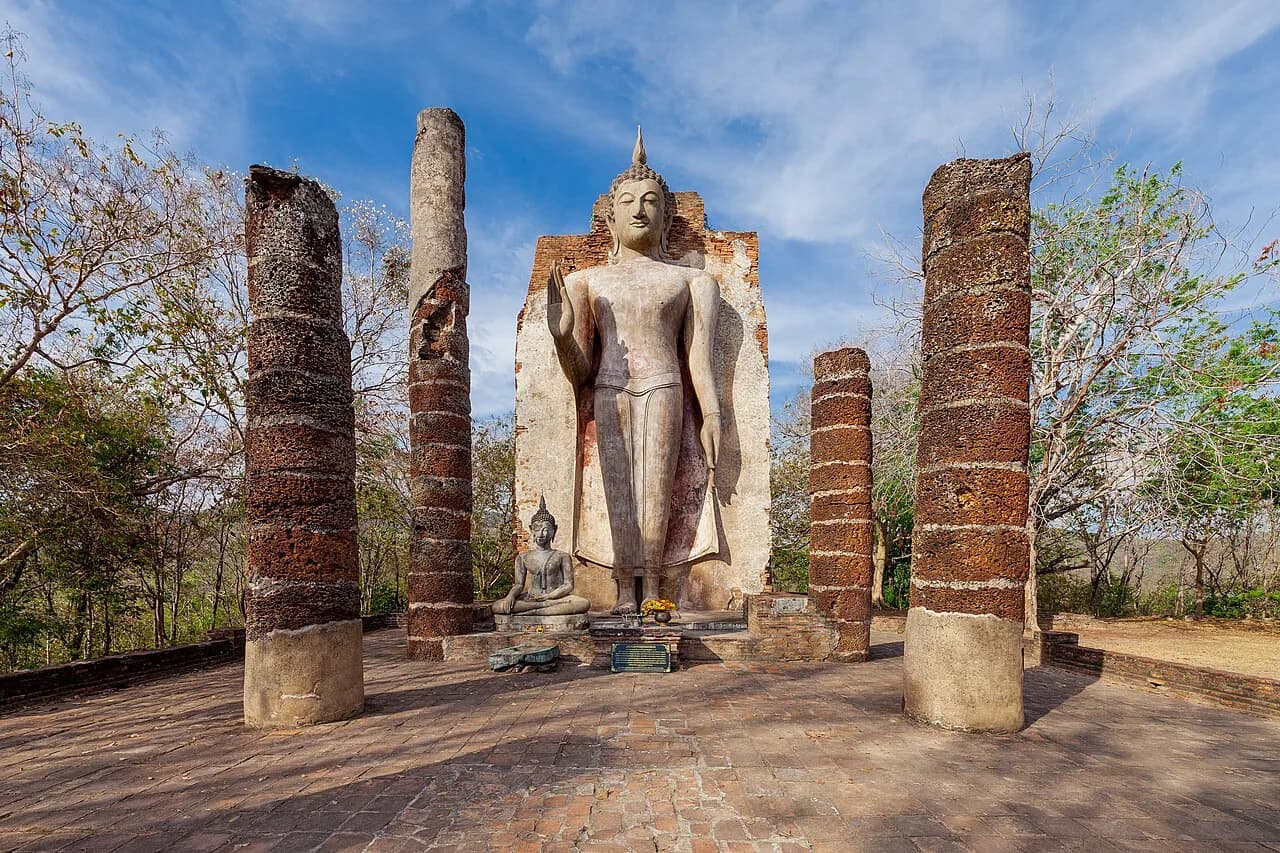
Wat Saphan Hin is worth roughly an hour of a Sukhothai day: a short uphill walk of about 200 meters that most visitors finish in 10 to 15 minutes, ending at a 12-meter standing Buddha facing the plain. It sits in the western zone of the historical park rather than among the dense central ruins, so it rewards a deliberate detour. This guide covers where the temple sits, how to reach the base, what you pass on the climb, and how to weigh the western-zone ticket against the combined park pass.
What Wat Saphan Hin actually is
The name translates as Stone Bridge Monastery, a reference to the slate path and stairway that carry you up the hillside. The temple is a hilltop sanctuary rather than a walled complex, with the standing Buddha enshrined in an open-air vihara surrounded by greenery. Plan for a compact site where the climb and the view are as much the attraction as the ruins themselves.
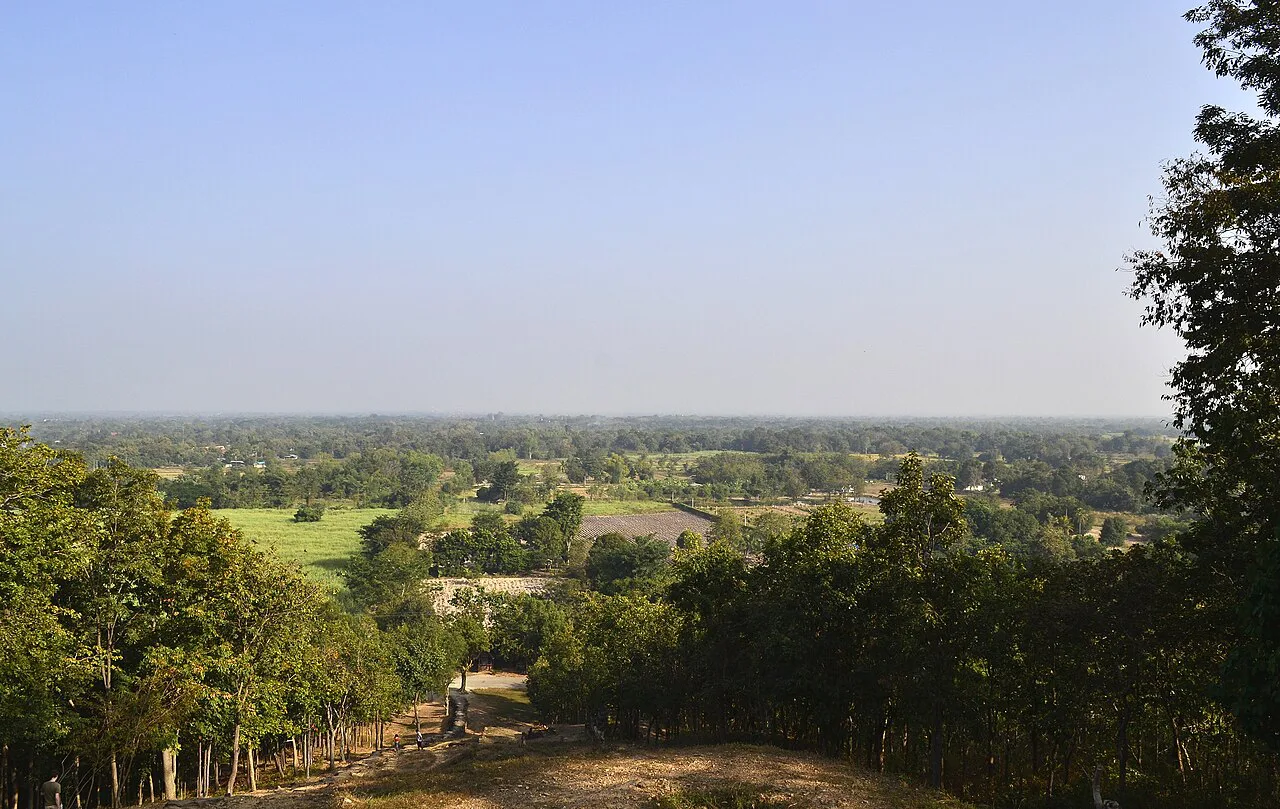
Sources describe the hill as rising about 200 meters above the surrounding plain, and the walk to the top as roughly 200 meters long. Those two figures get muddled online, so treat the elevation as the setting and the path length as your actual effort. Either way, this is a modest hill, not a mountain hike.
Where it sits in the park and how to reach the base
Wat Saphan Hin lies in the western zone of the historical park, outside the central grid of ruins near Mueang Kao. Visitors typically reach the base by bicycle, songthaew or a ride-hailing app from the old city, then cover the final stretch on foot. Because the western zone is spread out, a bicycle gives you the most flexibility for combining this temple with other stops.
If you are basing yourself around the central zone, allow extra travel time for the outward leg and confirm with your driver how you will get back, since the western edge is quieter than the center. The broader Sukhothai attractions: plan your stops from museum to hilltop collection is a useful place to sort out which zones you plan to cover before you commit to a route.
The climb: a short stone path, not a trek
The ascent follows a stone pathway that most visitors walk at a relaxed pace in about 10 to 15 minutes. It is short and manageable, but it is still an uphill walk on uneven slate, so give yourself more time in the heat of the day and pause in the shade where the path allows.
Midway up, look for a small lotus-bud chedi standing beside the stone pathway, a bell-shaped form one account describes as a distinctive hallmark of Sukhothai-era art. It is easy to walk past while watching your footing, and it is one of the details that makes the climb more than transport to the top.
Phra Attharot and the hilltop vihara
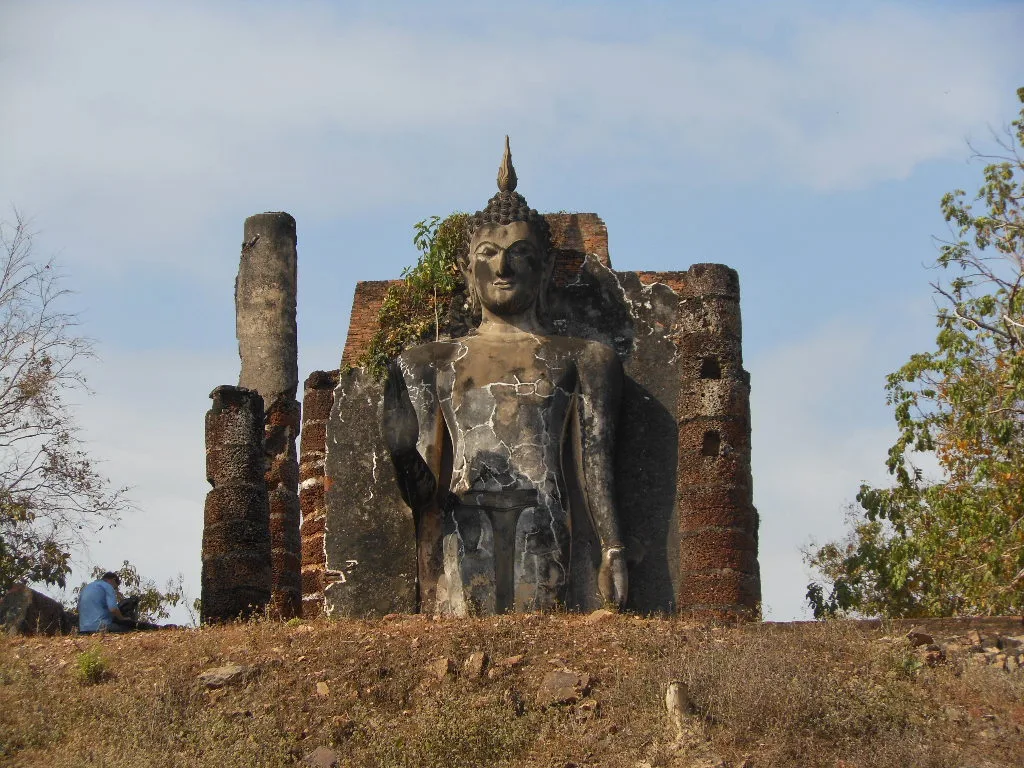
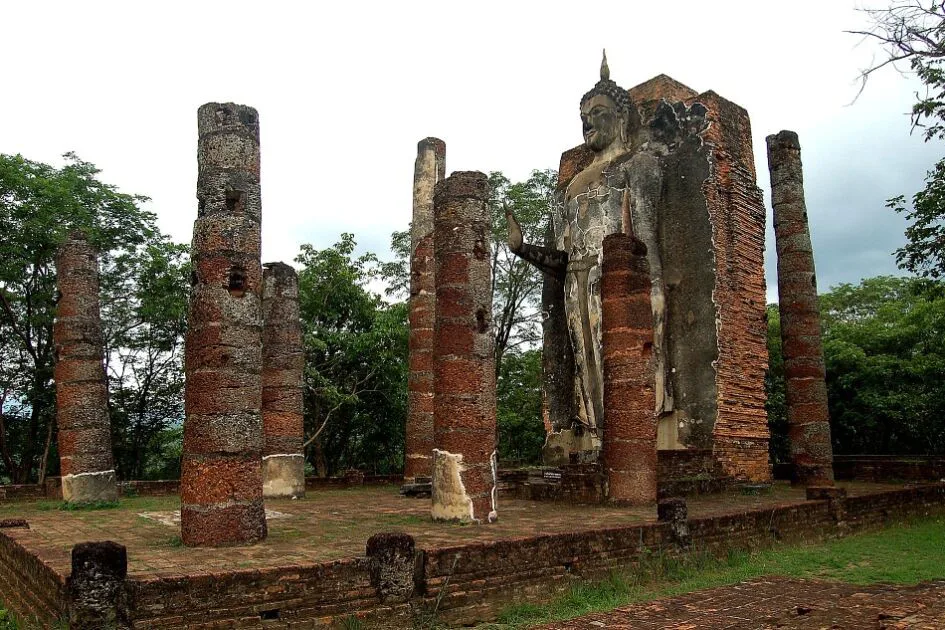
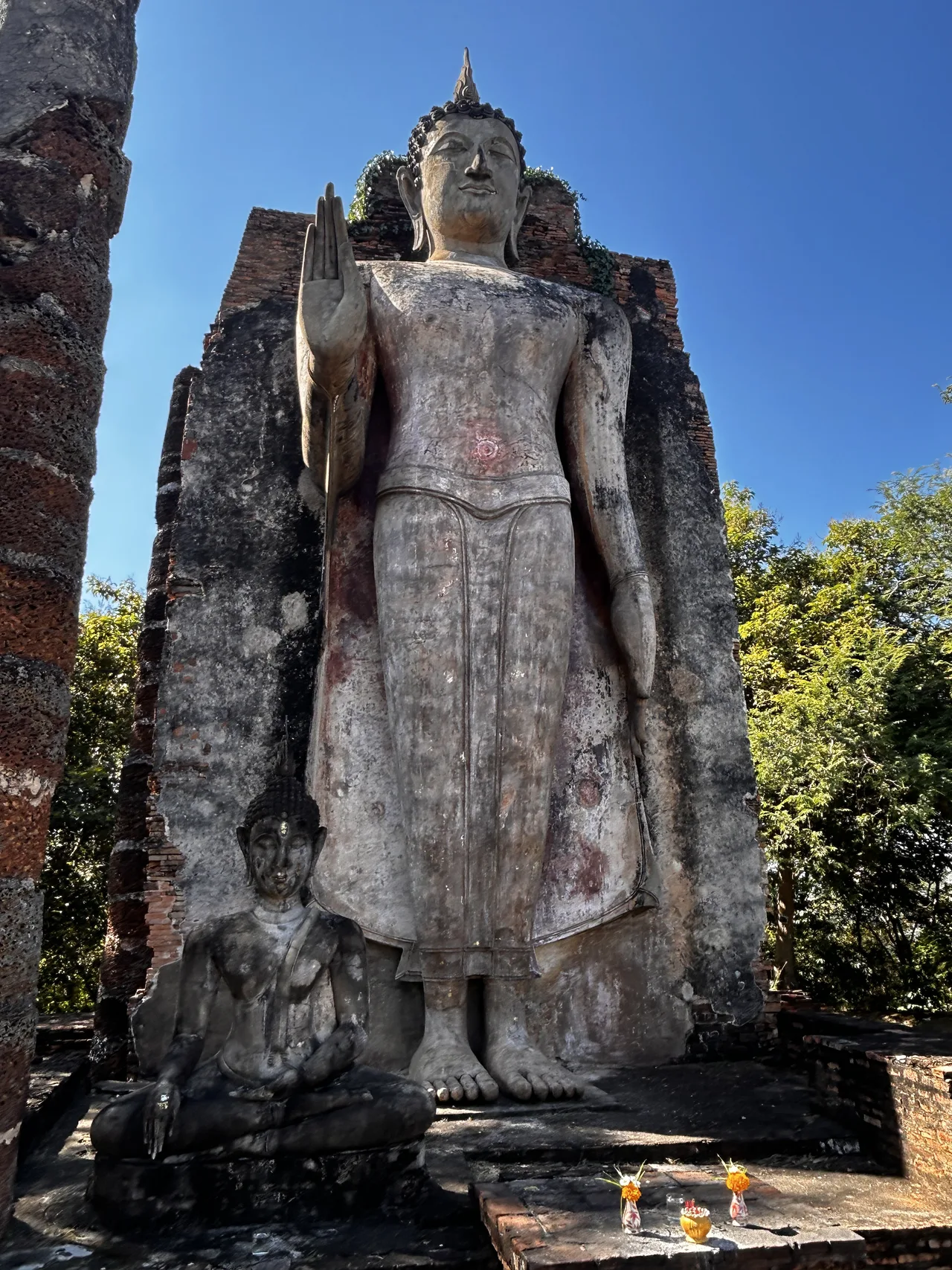
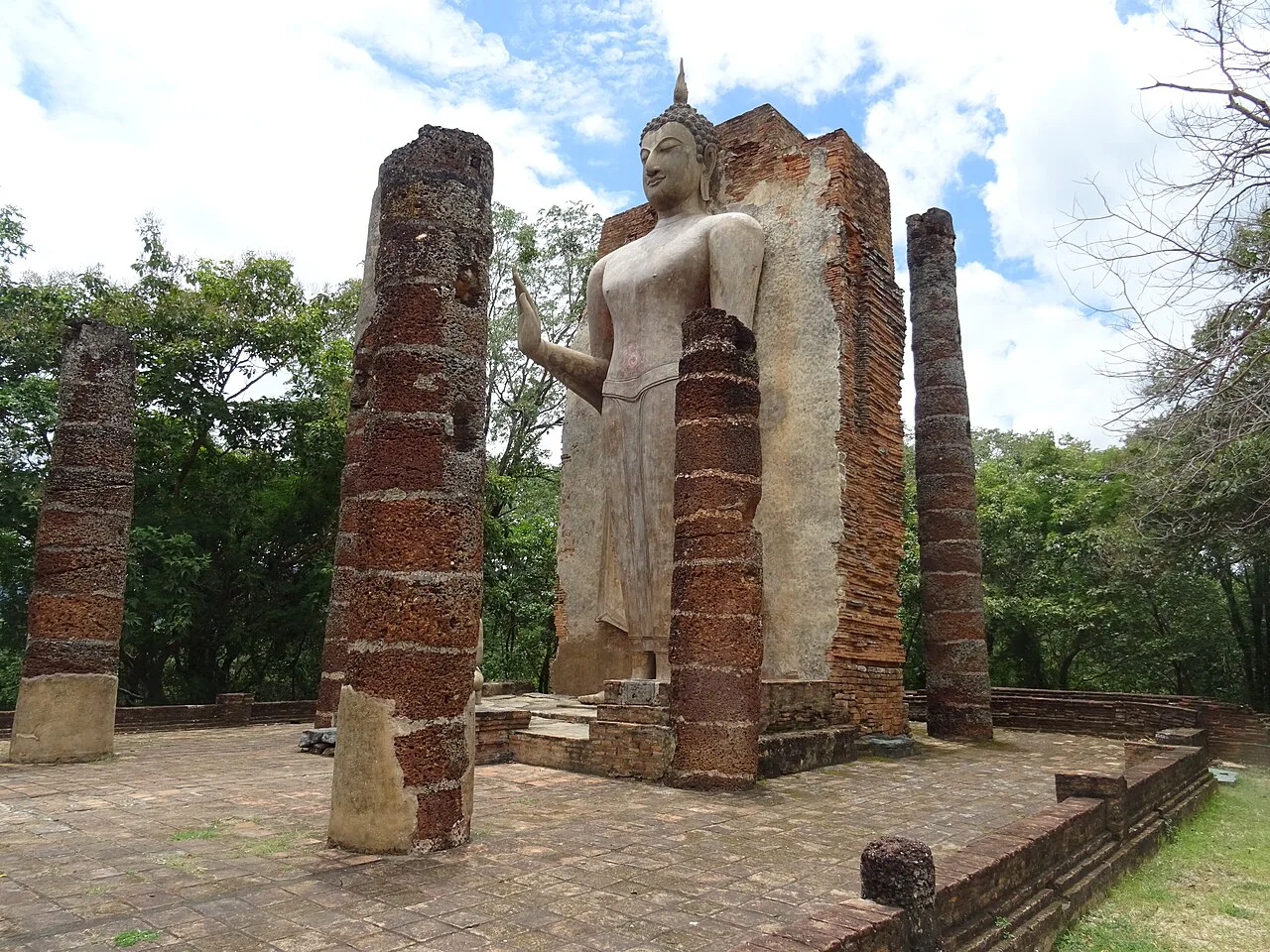
At the summit, the standing stucco Buddha known as Phra Attharot rises more than 12 meters, right hand raised in the Gesture of Forgiveness. Around it are the remains of a five-room viharn whose tall laterite pillars face east to catch the morning light. The brick base and pillar stumps give you a clear sense of how the open hall once framed the statue.
Some accounts connect this image with the Phra Attharot named in King Ramkhamhaeng's stone inscription, but that identification is presented as a belief rather than settled fact. Read the statue on its own terms and let the inscriptions question stay open. The elevated position and east-facing alignment explain why the site reads as a place built around first light.
Sunrise versus a daytime visit
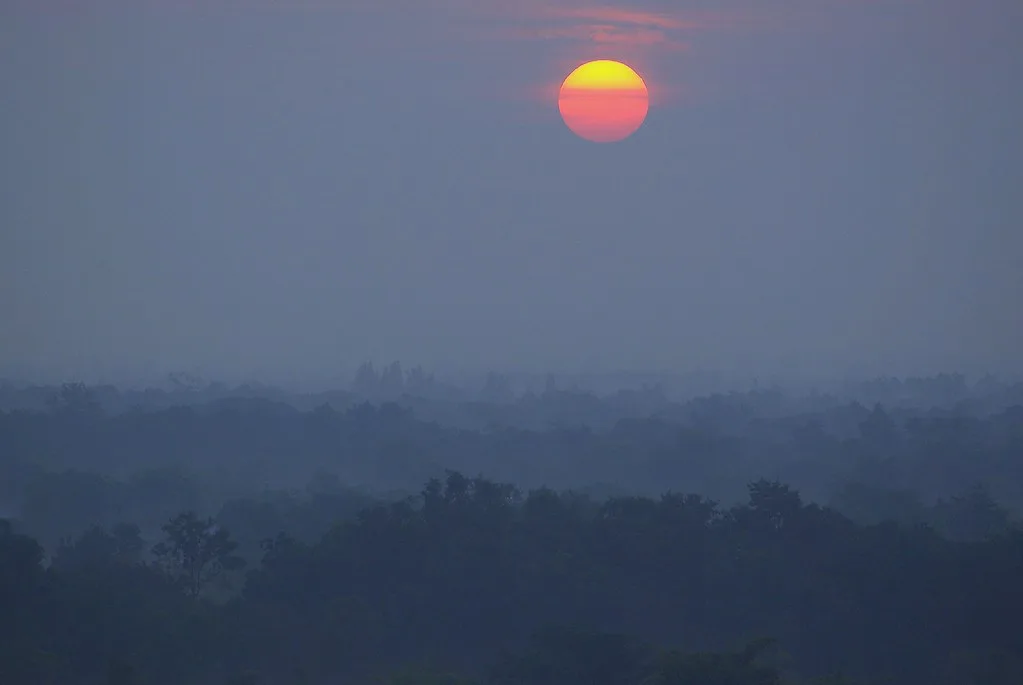
Wat Saphan Hin is promoted as one of the best sunrise viewpoints in the historical park, with the sun coming up over the flat Sukhothai plain. That reputation is the main reason to consider an early start, but it also reshapes your day: you will be climbing in low light before the rest of the park wakes up.
The park does not publish sunrise arrangements, early gate access or lighting for this zone in anything available here, so confirm before you build a dawn plan around it. A daytime visit still delivers the statue, the pillars and the view, just without the soft light. The cool months from November to February are the most comfortable for the uphill walk, while the greener rainy-season months trade comfort for lush surroundings.
Tickets and park zones
The western zone is ticketed separately from the central zone. Published figures put the western-zone fee at 120 THB, or 400 THB for a combined ticket covering all zones of the park, so the combined pass only pays off if you plan to spread across several zones in a day. Check the current rates at the ticket counter before deciding.
Park opening hours and any seasonal changes are not confirmed by the sources here, so verify them with the park directly before a sunrise attempt. If you are only visiting the central ruins and this one hilltop temple, compare the single-zone and combined prices on the spot. Then, for a clearer picture of how the whole site is laid out, read Sukhothai Historical Park: Zones, Tickets and Time Needed.

How much time to allow
Budget about an hour at Wat Saphan Hin: 10 to 15 minutes up, 20 to 30 minutes at the top, and a relaxed descent. Cyclists often pair it with the central zone in a single morning, but the round trip from the center adds travel time that walkers underestimate.
If you are tackling the central zone's headline sights, Wat Mahathat and its surrounding ruins deserve the bulk of your time, so treat the western zone as a half-day add-on rather than a quick stop. Decide on zones first, then fit this hilltop temple into the plan.

Nearby options in the western and central zones
Wat Si Chum, with its massive seated Buddha framed by a narrow brick passage, is the other western-zone highlight and sits close enough to combine with Wat Saphan Hin. Seeing both in one loop makes the western ticket easier to justify.
Back in the central zone, Wat Sa Si sits on its own island in Traphang Trakuan and is an easy flat add-on after the climb. Wat Si Sawai, with its Khmer-style prangs, is another compact stop nearby.
Is the climb worth it?
The effort is real but short: uneven stone underfoot, heat on exposed stretches, and footwear that grips matter more than fitness. If you have limited time or are managing knee trouble, the central-zone ruins give you more sculpture per step. The hilltop standing Buddha, the laterite pillars and the open view are the payoff, and they reward those willing to walk up.
Should Wat Saphan Hin make your Sukhothai shortlist?
Yes, if you can spare an hour and want one elevated viewpoint to break up the flat central ruins. Pair it with Wat Si Chum in the western zone, buy the single-zone ticket unless you are covering several zones, and check park hours before planning a sunrise.
Skip it if your schedule only allows the central zone, or if a 10-to-15-minute uphill walk in heat is more than you want on the day. Either way, the western zone rewards people who plan the transport leg before they arrive.
Explore more Sukhothai guides
Frequently Asked Questions
Can you reach Wat Saphan Hin by bicycle?
Yes. Many visitors ride from the central zone to the western zone and leave the bike at the base before walking up. The western zone is spread out, so a bicycle is often the most practical way to combine this temple with Wat Si Chum.
Is the Wat Saphan Hin climb difficult?
It is short rather than strenuous. The stone path runs roughly 200 meters and most visitors reach the top in 10 to 15 minutes at a relaxed pace, though the uneven surface and heat make it more tiring than the distance suggests.
How tall is the standing Buddha at Wat Saphan Hin?
Phra Attharot is a standing stucco Buddha rising more than 12 meters, with the right hand raised in the Gesture of Forgiveness. It is enshrined in an open-air vihara at the summit.
Does the combined park ticket cover Wat Saphan Hin?
The combined all-zones ticket is described as covering every zone of the park, including the western zone where Wat Saphan Hin sits. If you are only visiting this temple and the central ruins, compare the single western-zone fee with the combined price at the ticket counter.