
Wat Traphang Thong: Visiting Sukhothai's Alms-Giving Temple and Bridge

Wat Traphang Thong is worth about 15 to 30 minutes of your morning, and the reason to come is the merit bridge rather than the ruins. It is a working temple on an island pond inside Sukhothai's old city, not a ticketed monument zone within the historical park. This guide covers where it sits, how to walk or cycle there, how the alms round plays out, and which nearby sights pair with it.
The trade-off is timing: the grounds are pleasant and shaded at any hour, but the scene that draws people happens shortly after dawn, before the park crowds build and before the heat. Sleep in and you get a quiet pond and a chedi reflection without the monks. Both versions are fine; decide which one you came for.
A working temple, not another ruin in the park
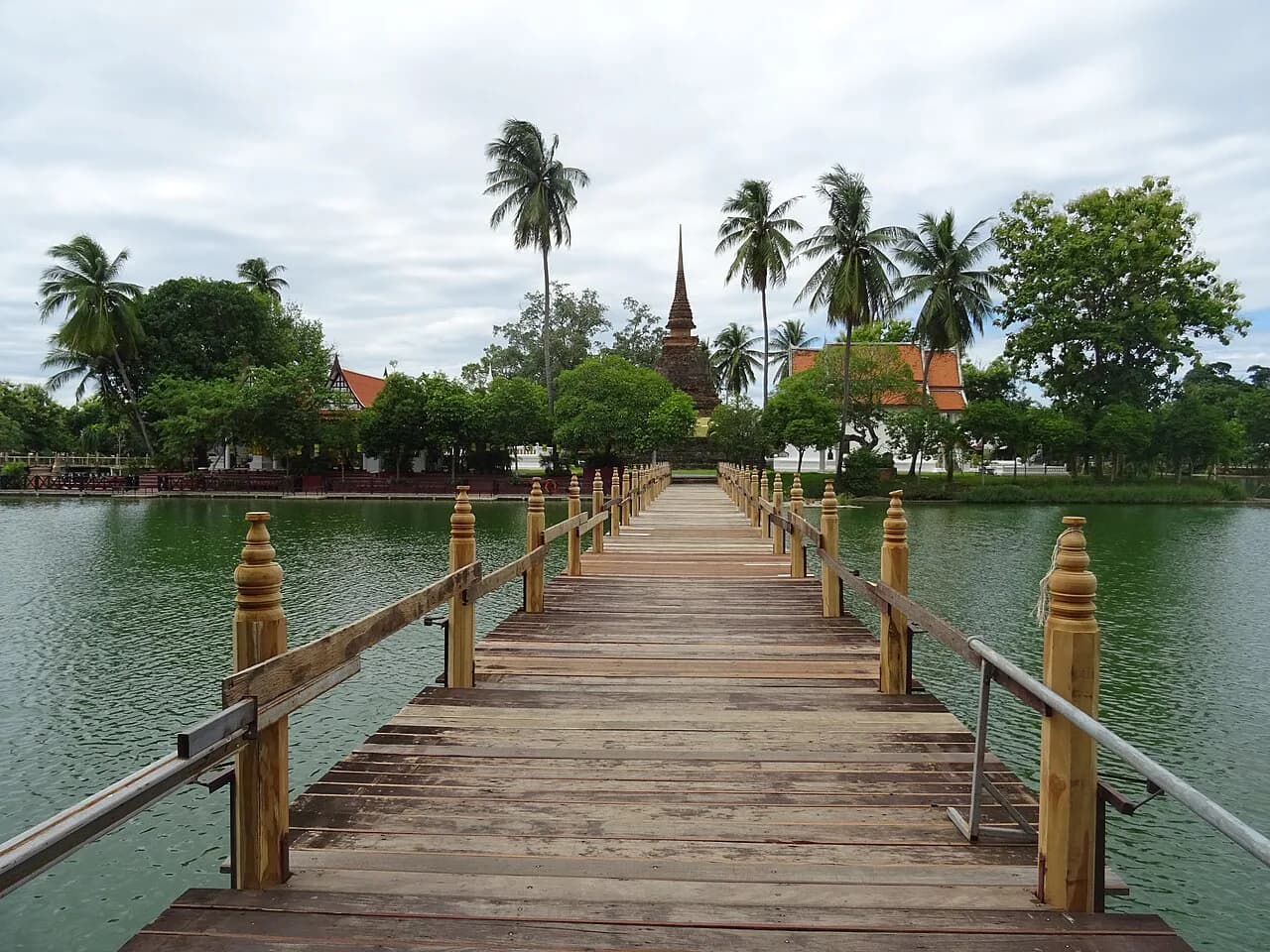
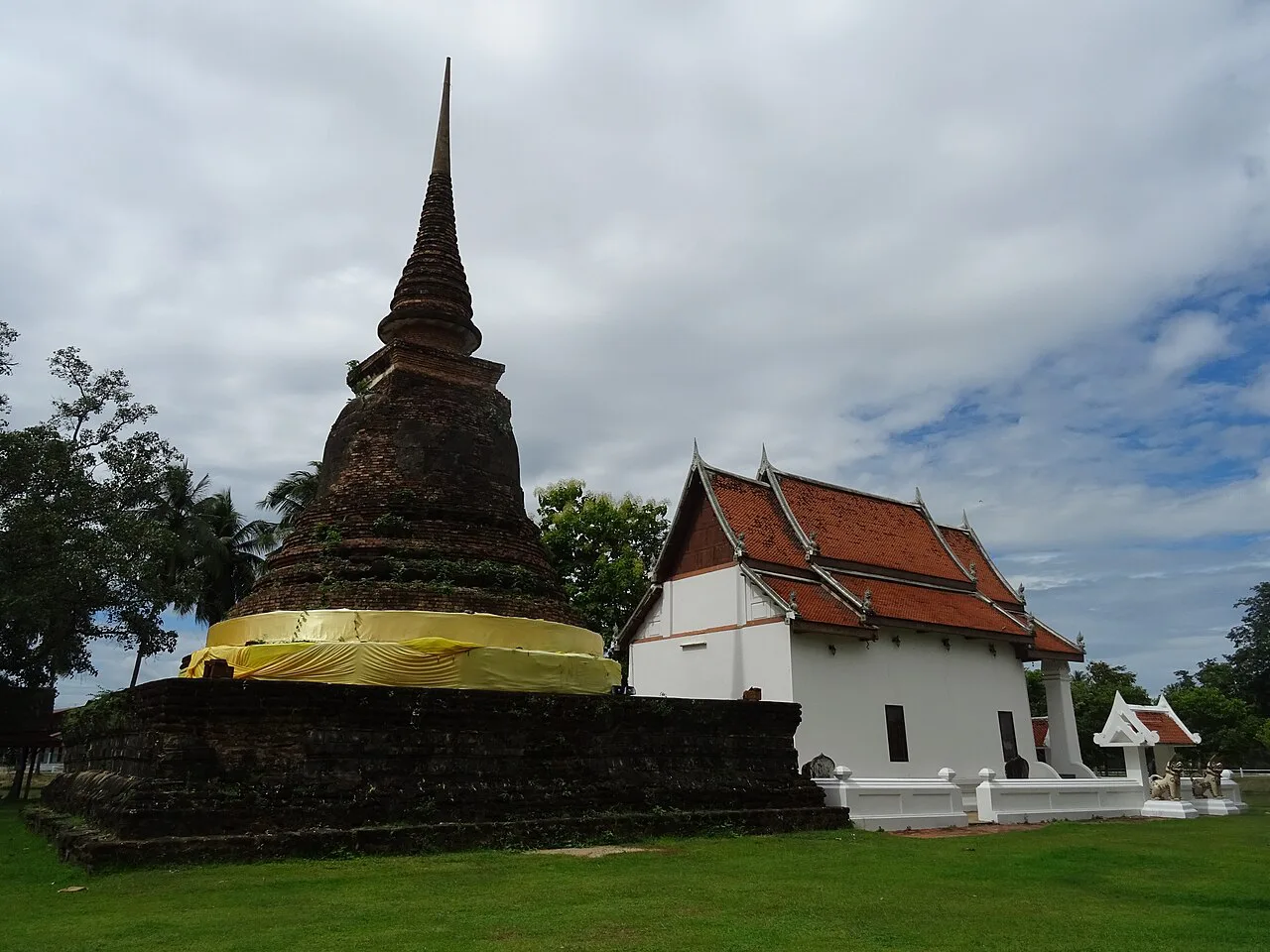
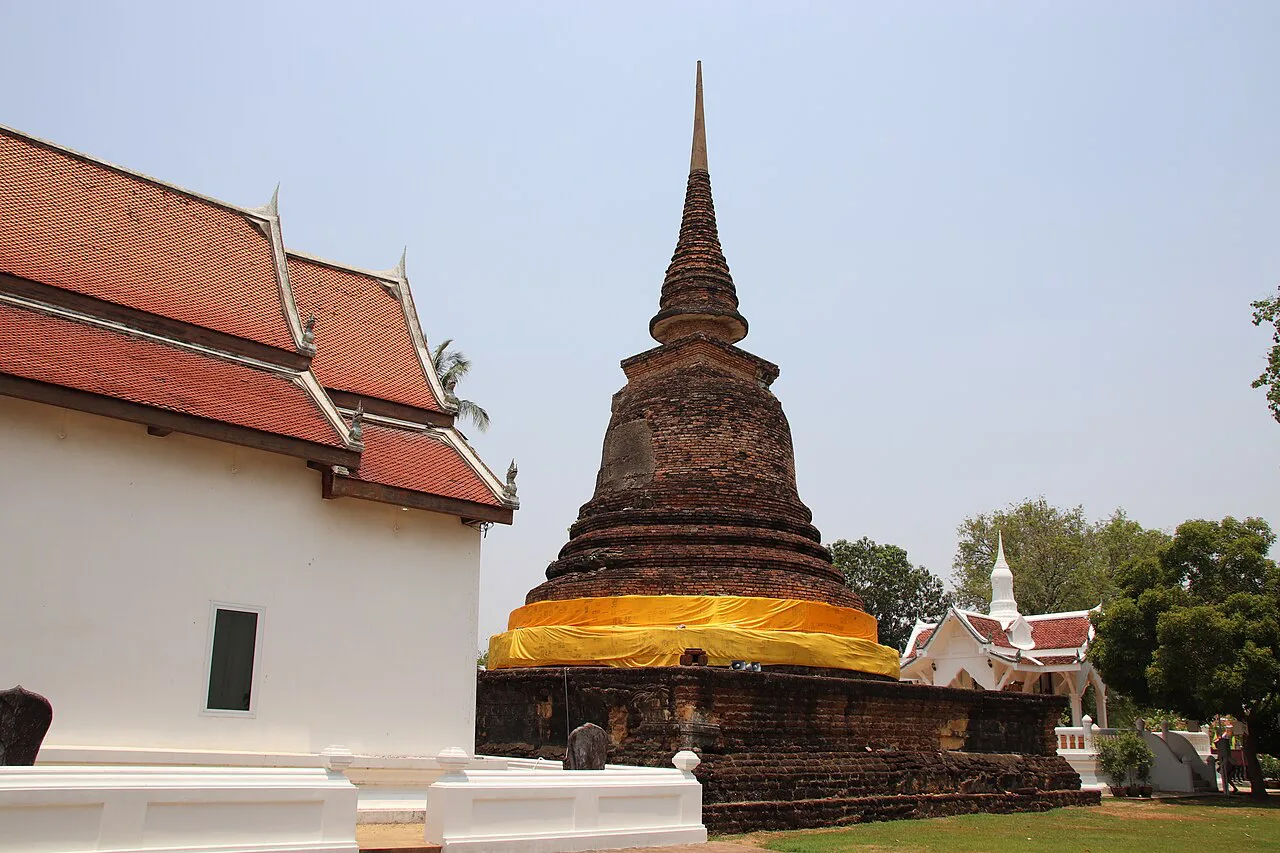
Visitors sometimes expect Wat Traphang Thong to be another brick platform inside the ticketed monument zone. It isn't. It is an active temple compound on its own island pond within the old city walls, with a bell-shaped chedi reflected in the water and shady trees around the edges.
That distinction shapes your visit. There is no long circuit of ruins to walk, so you are not budgeting an afternoon here as you would for the big park. You come for one compact scene, and the pond setting makes it photogenic in low morning light.
For a fuller picture of how the temple fits the old city's layout, browse the wider guide to Sukhothai Attractions when you plan the rest of the day. It helps to see this stop as one short piece of a morning rather than a destination on its own.
The name is often spelled Wat Trapang Thong in older write-ups, so searches may surface both forms. Architectural notes on the Sukhothai-era mondop and stucco work at Wat Traphang Thong Lang describe a separate monument with a similar name, an easy source of confusion when checking maps.

Where it sits in the old city
Wat Traphang Thong stands inside Sukhothai's old city, close to the historical park and just off the main north–south road that threads past the monuments. Guesthouses and small shops cluster nearby, which is why many travelers reach it on foot rather than by vehicle.
The old city area is commonly called Mueang Kao, and the temple sits within the old city near the historical park rather than out among the far northern ruins. If you are staying in that quarter, treat the temple as a first stop before you even buy a park ticket.
Road 1113 is the main artery running north through this part of the old city toward the outlying ruins such as Wat Sorasak and Wat Phra Phai Luang. Knowing that one road is enough to keep your bearings: the temple is in the old city near the park, and the northern monuments lie further along 1113.

Getting there on foot or by bicycle
Most visitors arrive by walking or cycling from their guesthouse or from the historical park's main gates. Distances inside the old city are short, and a bicycle turns the temple, the park and the northern ruins into one loop instead of three separate trips.
If you come by car or a ride-hailing app, ask to be dropped near the temple's entrance rather than at the historical park ticket booth, since the two are separate stops. Tuk-tuks and songthaews in town know the temple by name, though pronunciation varies.
No visitor guidance on dedicated parking at the temple has been published. Drivers should confirm with their accommodation where to leave a car, since the lanes around the old city are narrow and the temple frontage is modest.
What you actually see in ten minutes
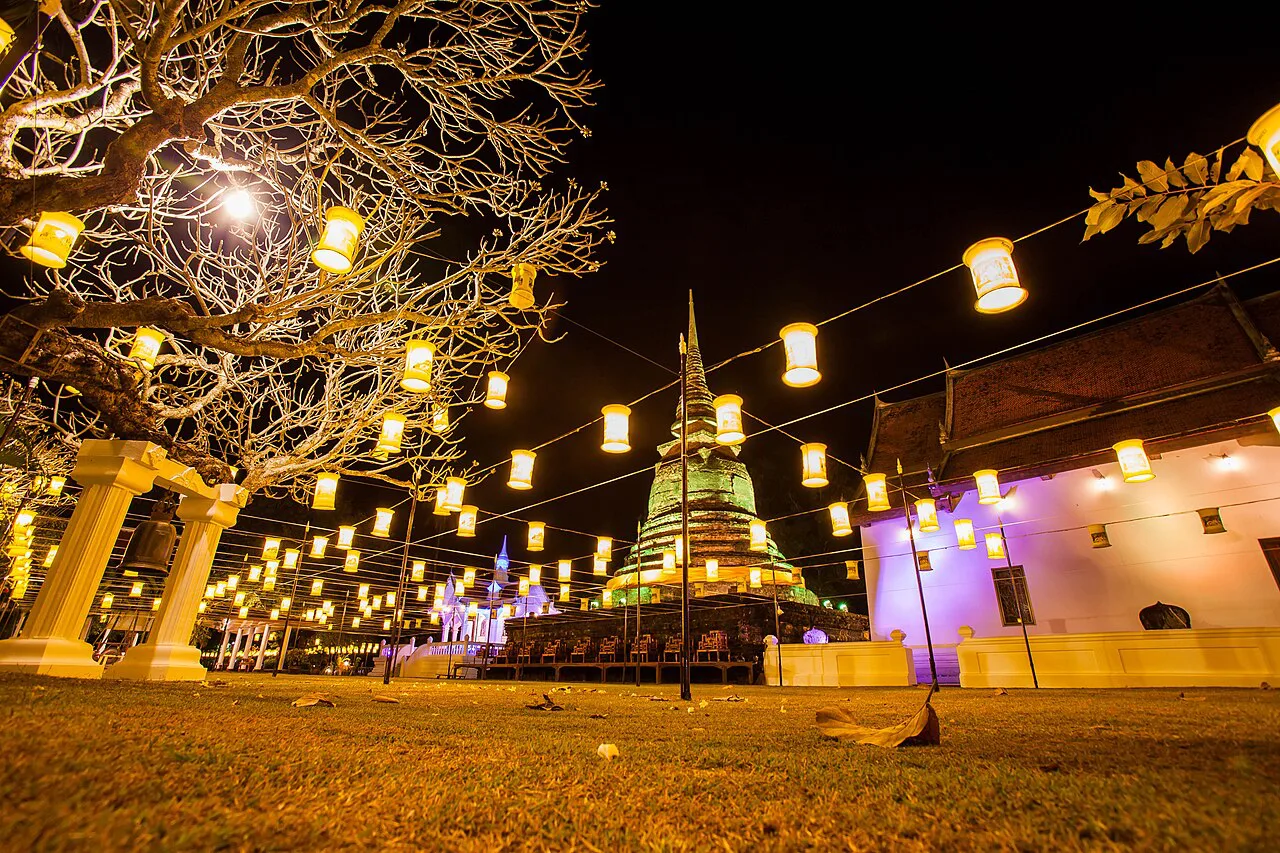
The centerpiece is the bell-shaped chedi rising from the middle of the pond, its reflection filling the water on still mornings. Around it the grounds are shaded and quiet, with enough space to sit and watch the pond rather than rush through.
Ten minutes covers the essentials if you are simply looking. Give it longer for photographs of the reflection or a pause on the bridge, and longer again if you plan to take part in the alms round.
Traveler accounts describe the temple as serene and shady, with traditional Thai architecture and plenty of angles for photography. They also note a local market nearby, a reason to linger rather than treat the stop as a snapshot.
Saphan Bun, the merit bridge
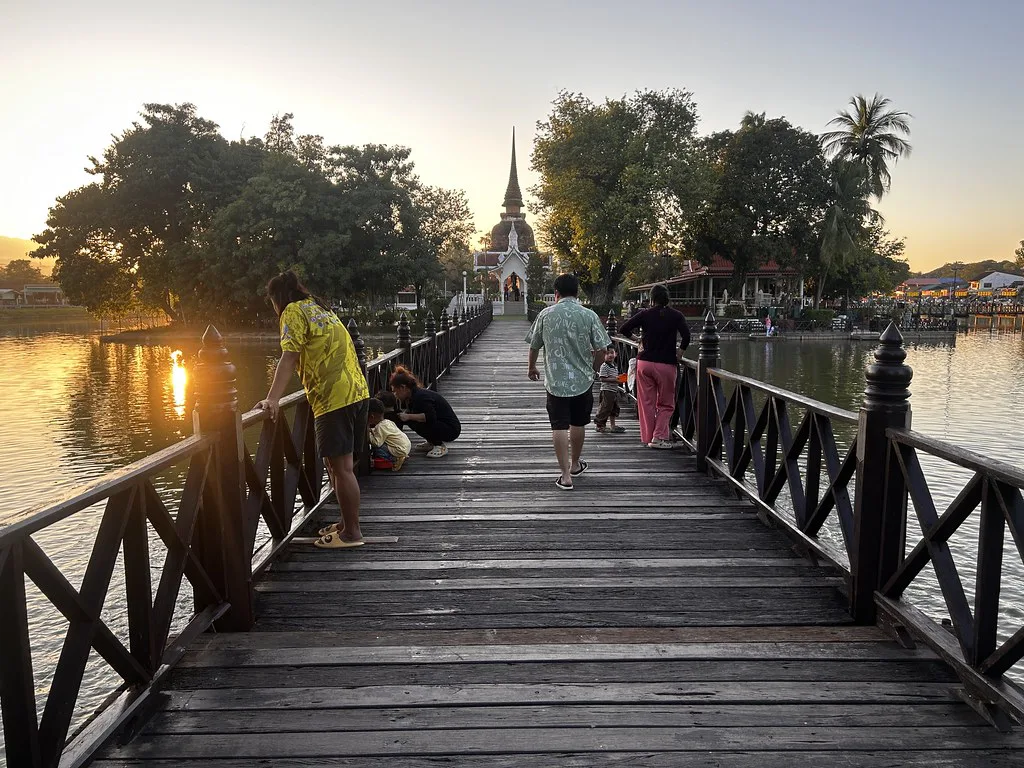
The long wooden bridge crossing the pond is the real focal point of a visit. Known as Saphan Bun, the merit bridge, it is where locals and visitors line up to offer food to monks walking out from the temple in the early morning.
The setting does much of the work: a timber walkway over water, a pagoda reflected below, trees closing in overhead. One traveler's account describes monks crossing in a line to receive alms while bells sound faintly over the water, which is the atmosphere people come for.
Outside the alms hour, the bridge is simply a pleasant place to stand, and it remains the best vantage point for the chedi reflection. Even a mid-morning stop has a purpose.
Timing the alms round
Sources do not agree on the exact hour, so treat any single time as approximate. One longtime Thailand watcher reports the monks from Wat Traphang Thong crossing the bridge at 6:20am every day, while a 2019 travel blog put the daily alms round at 6am.
Another traveler's guide recommends arriving between 6:00 and 7:00 a.m. for the light and the atmosphere, and advises being in place before the monks appear. That range is the safest planning window: early enough for the procession, late enough to be realistic about a dark walk across town.
Because times shift with the season and the temple's own routine, ask your guesthouse the evening before rather than relying on a blog post. It is the one detail worth confirming locally, and a quick question at reception saves a wasted dawn.
How the alms line actually works
You sit along one side of the bridge and the monks walk past from the temple, accepting offerings as they go. First-timers should take a place nearer the road end of the bridge, where you can watch how the offering works before it is your turn.
If you arrive without food, vendors sell offerings in front of the bridge, so an empty-handed start is not a problem. Buying there also keeps your contribution in the local economy rather than requiring a supermarket run the night before.
The monks walk barefoot in saffron robes, and the ritual is a daily part of local life rather than a performance. Keep your distance, keep voices low, and follow the seated line rather than standing in the monks' path.

Fitting it around a historical park visit
The natural plan is to see the alms round first, then move into the historical park as it opens, before the heat and the tour groups arrive. An afternoon circuit becomes slow and sticky, and photographs fill with other visitors within a couple of hours of opening.
If you skip the dawn start, use the temple as an escape instead: leave the park when it gets busy, spend twenty quiet minutes by the pond, then return. That rhythm suits travelers who would rather not set an alarm on holiday.
Either way, keep the two stops separate in your head. The temple is not inside the park's ticketed area, so it does not add to a park circuit and does not need a monument-sized time slot.

What's nearby in the old city
North of the old city walls, Wat Sorasak is a short walk from the park's main north exit and is known for its elephant-buttressed chedi. Continue north on Road 1113 and you reach Wat Phra Phai Luang, whose ruins are larger and usually far quieter than the central monuments.
Back inside the park, Wat Mahathat is the complex most visitors build their circuit around, while the giant seated Buddha makes Wat Si Chum the image most people carry home. Both deserve their own time rather than a rushed add-on to a temple morning.
One caution if you head north: a 2019 account mentions a 100-baht admission fee at Wat Phra Phai Luang and notes that no obvious ticket point was staffed at the time. Treat that figure as dated and be ready to pay whatever the site currently posts.
Checking details before you go
The temple has not published visitor hours, entry rules, or whether offerings are sold on any given morning. Rather than assume it is always open and always free, ask your guesthouse or check locally the day before, especially if the alms round is the reason for your visit.
For the park itself, ticket windows and opening times are a separate question from the temple's. See our Sukhothai Historical Park: Zones, Tickets and Time Needed guide, which sets out the zones and ticketing, rather than carrying over assumptions from one site to the other.
Is the dawn start worth it?
Yes, if you want the scene the temple is known for. The alms round on Saphan Bun is a short, everyday ritual, not a show, and seeing it takes one early alarm and a walk across the old city. Plan on 15 to 30 minutes on the bridge and add the temple grounds at your own pace.
If dawn is not realistic, come anyway for the chedi reflection and the shade, and pair it with Wat Sorasak and Wat Phra Phai Luang to the north. Either way, confirm alms timing locally the evening before and treat any single published hour as a guide rather than a schedule.
Explore more Sukhothai guides
Frequently Asked Questions
Do I need a ticket to visit Wat Traphang Thong?
No ticket is described in the accounts of the temple, and it is a separate site from the ticketed historical park. Visitor rules and any fees are not officially published, so ask at your accommodation before you go.
Can I join the alms round if I have no food to offer?
Yes. According to one traveler's account, vendors sell offerings in front of the bridge in the morning, so you can buy something on arrival and join the seated line along one side of the bridge.
How long should I spend at Wat Traphang Thong?
Ten minutes covers the pond and chedi if you are just looking. Allow 15 to 30 minutes if you plan to stay for the alms round and watch the monks cross the bridge.
Sources
- If you are ever in Sukhothai, it is worth getting up early to witness the monks from Wat Traphang Thong leaving the temple on their morning alms round. They cross the picturesque bridge at 6:20am every day. 📍MAP: https://maps.app.goo.gl/47D2W96LewXHBHk48?g_st=ic #Thailand | Richard Barrow in Thailan
- Wat Traphang Thong Lang, Sukhothai, Thailand
- 🌅 Give alms to monks on the bridge of merit, welcome the Sukhothai dawn at Wat Trapang Thong. | Trip.com Sukhothai
- Three Lesser-Known Sights in Sukhothai — Escape Visa
- If you have the chance to visit Sukhothai, I highly recommend stopping by Wat Traphang Thong! | Trip.com Sukhothai