
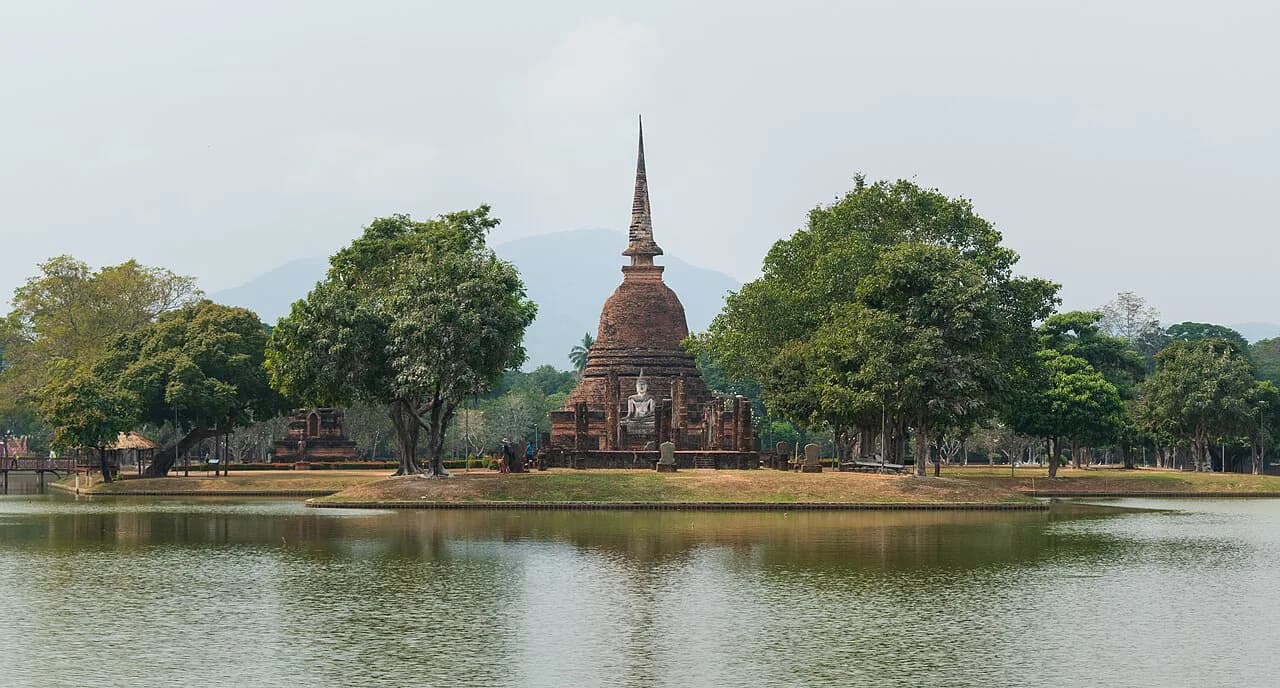
Wat Sa Si: Sukhothai's Walking Buddha Temple on Its Own Island

Wat Sa Si is a compact island temple in the central zone of Sukhothai Historical Park, and it earns a 20 to 30 minute stop rather than a trip of its own. Its draw is the setting: a stupa and the ruins of a pillared hall rising from a small island in a pond, with a walking Buddha image among the monuments. This guide covers where the temple sits, how to reach it on foot or by bicycle, what you actually see there, and how to slot it into a half day among the central monuments.
What and where Wat Sa Si is
Wat Sa Si stands inside the walled central zone of Sukhothai Historical Park, the section of the old city where the densest cluster of monuments sits. The temple is built on a small island in a pond, which is why it reads as a water setting rather than a dry ruin field. Treat it as one stop on a loop through the center, not as a separate excursion from town.
The surrounding area is flat and open, so the practical unit of planning is distance between monuments rather than elevation gain. Wat Sa Si sits close enough to the central monuments that you can walk between them without a vehicle, though a bicycle makes the wider zone far quicker to cover. If you are based just outside the park gates, the temple is a short ride or walk from your guesthouse.

How to reach Wat Sa Si
The simplest approach is to enter the central zone, park or lock your bicycle near the main monuments, and walk the loop that includes Wat Mahathat and Wat Sa Si. Wat Mahathat is the large temple complex at the heart of the central zone, and from there the island temple is an easy addition to the same walk. Cycling lets you extend to the outer monuments without backtracking to a car.
If you arrive by chartered car or songthaew from New Sukhothai, agree on a meeting point at the park entrance rather than inside the monument area, where vehicles are limited. Bring water and expect to cover the central zone on foot or two wheels once you are through the gate.

What you actually see at Wat Sa Si
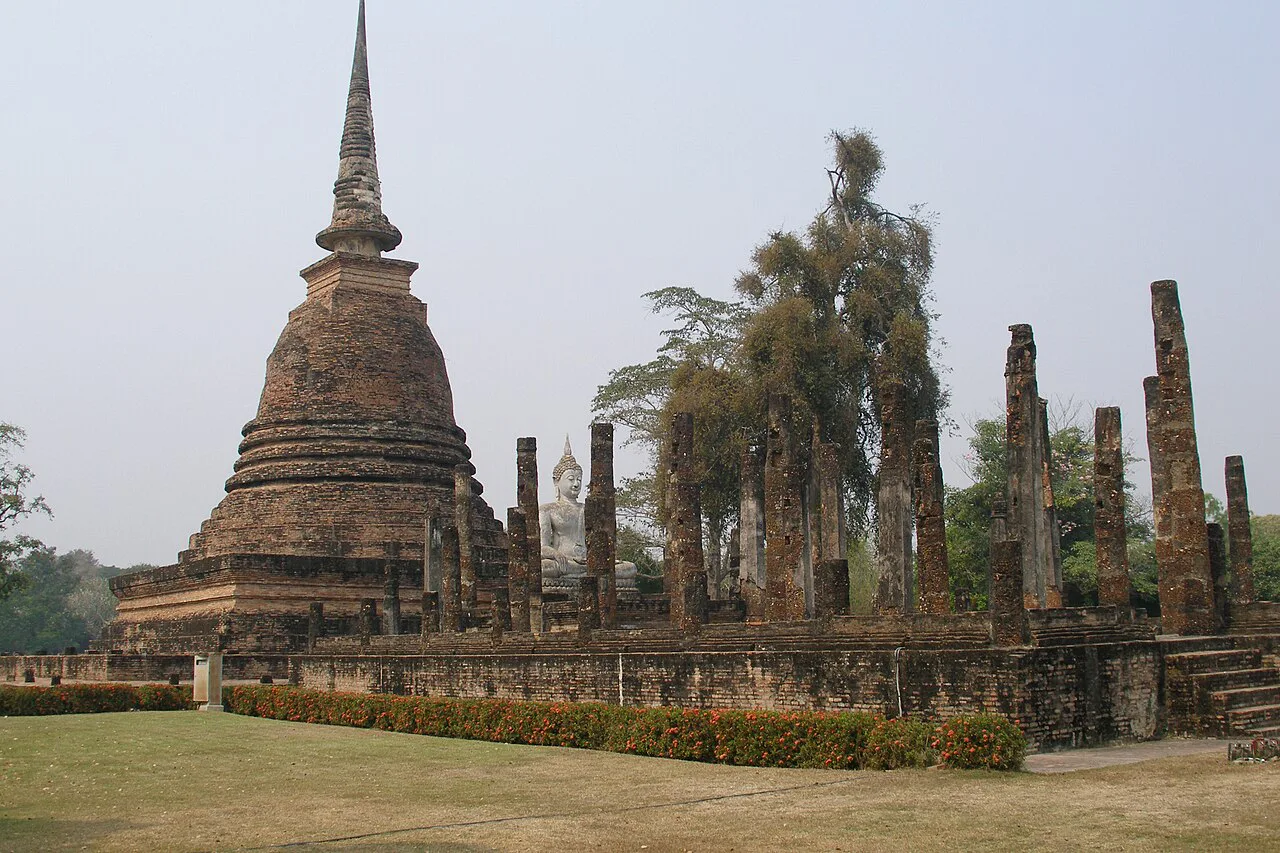
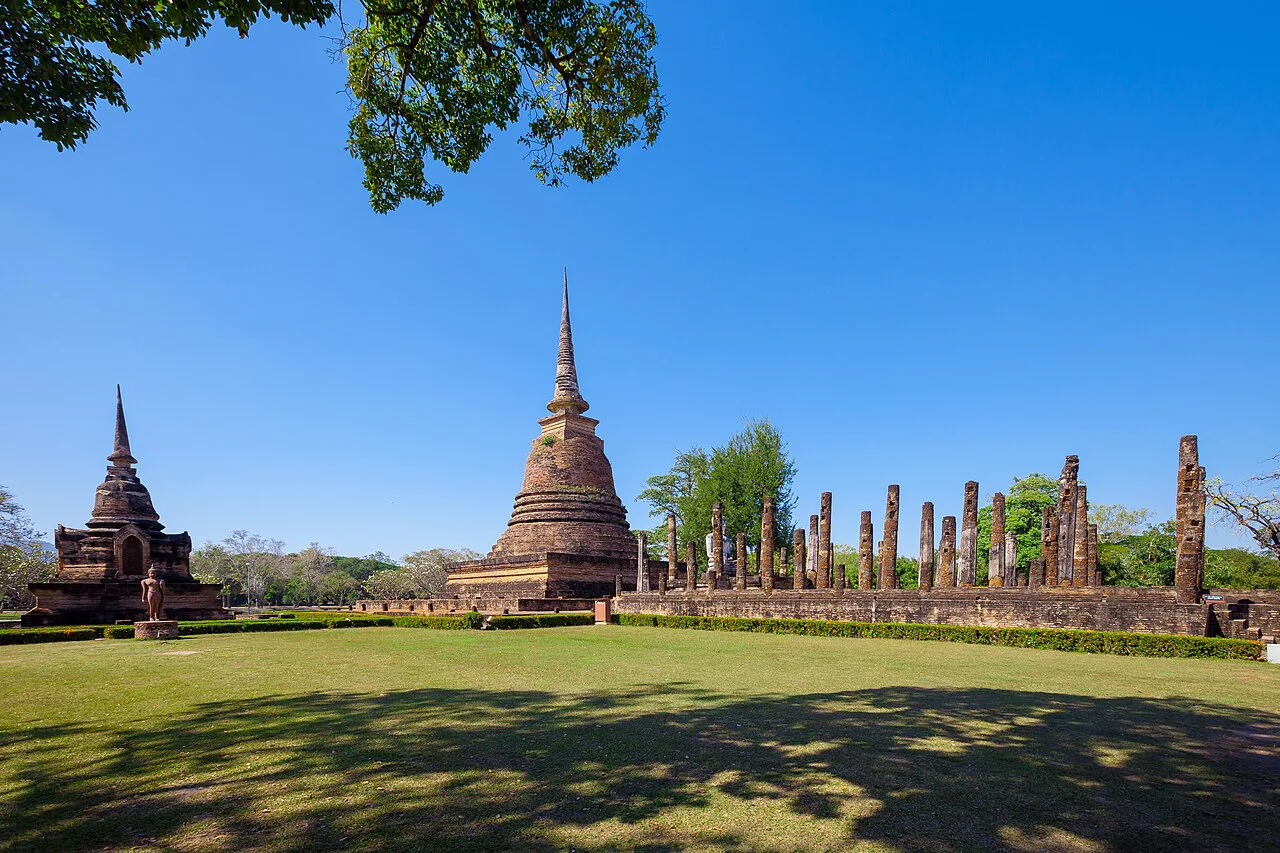
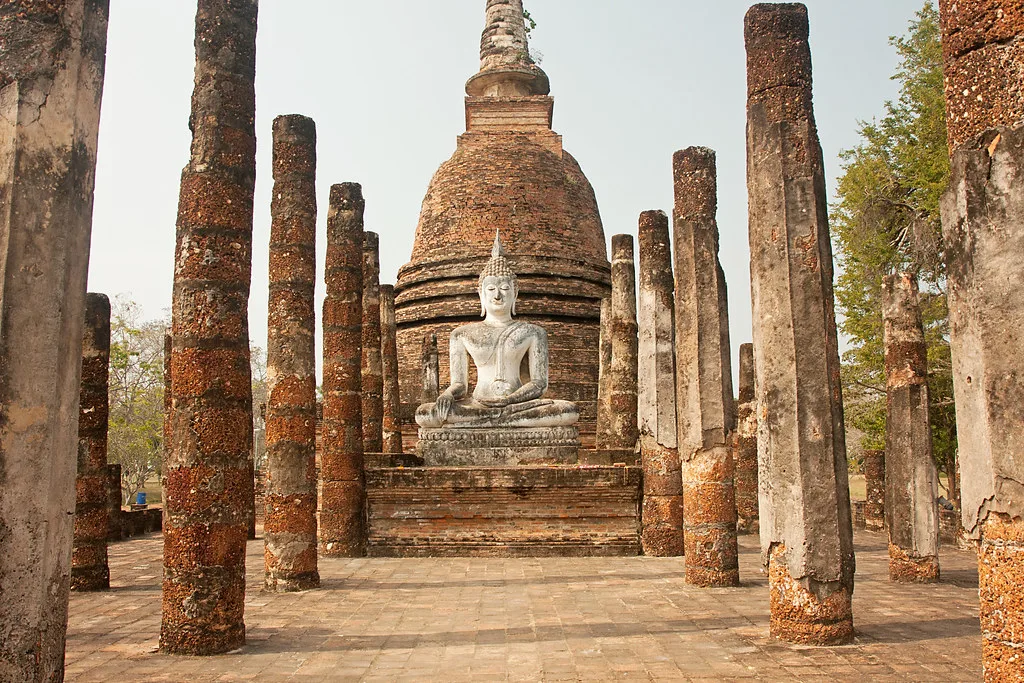
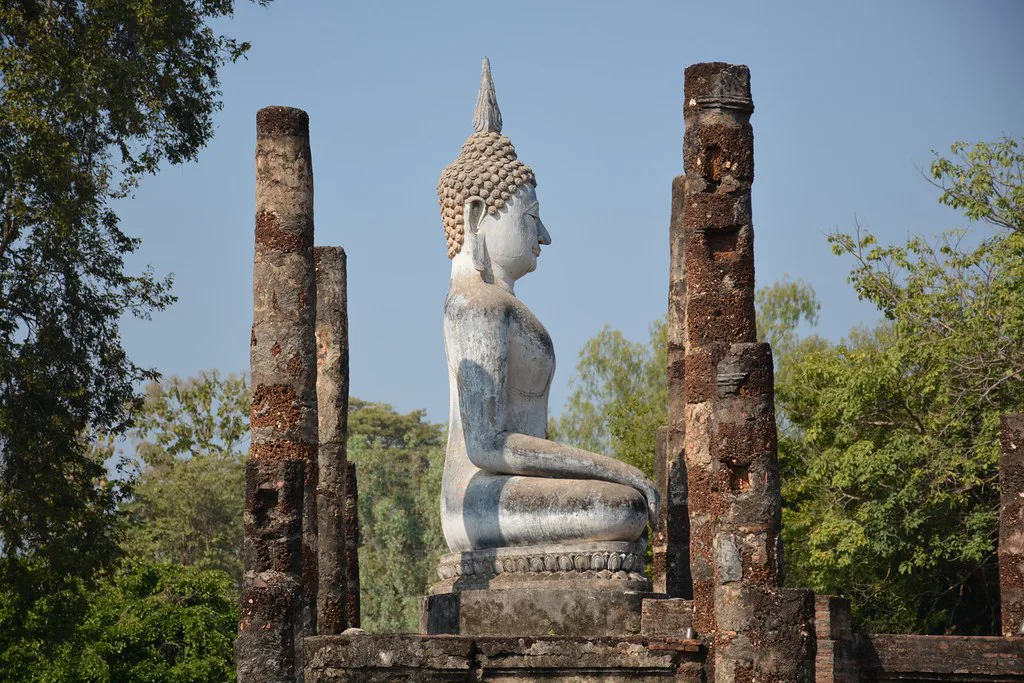
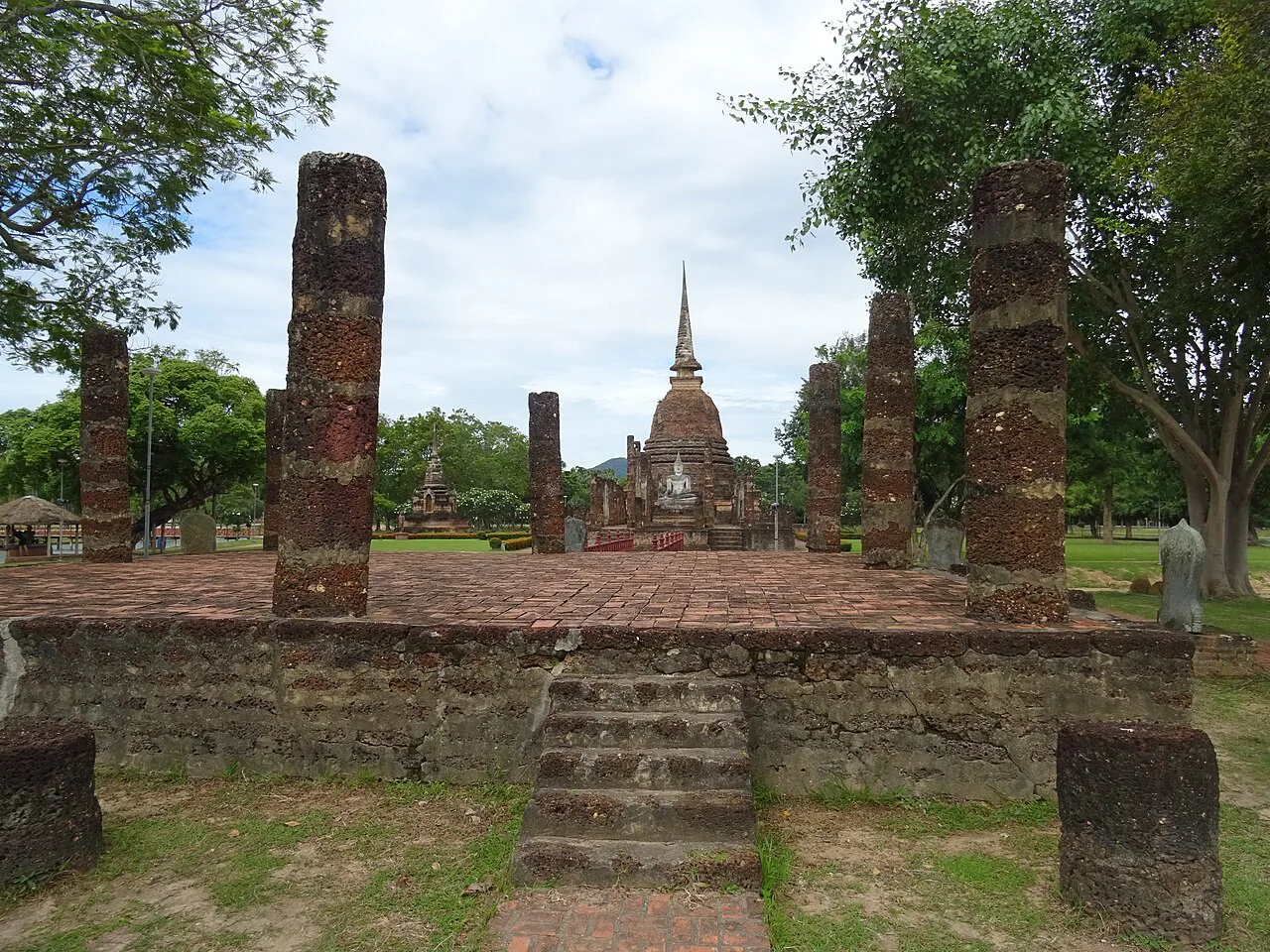
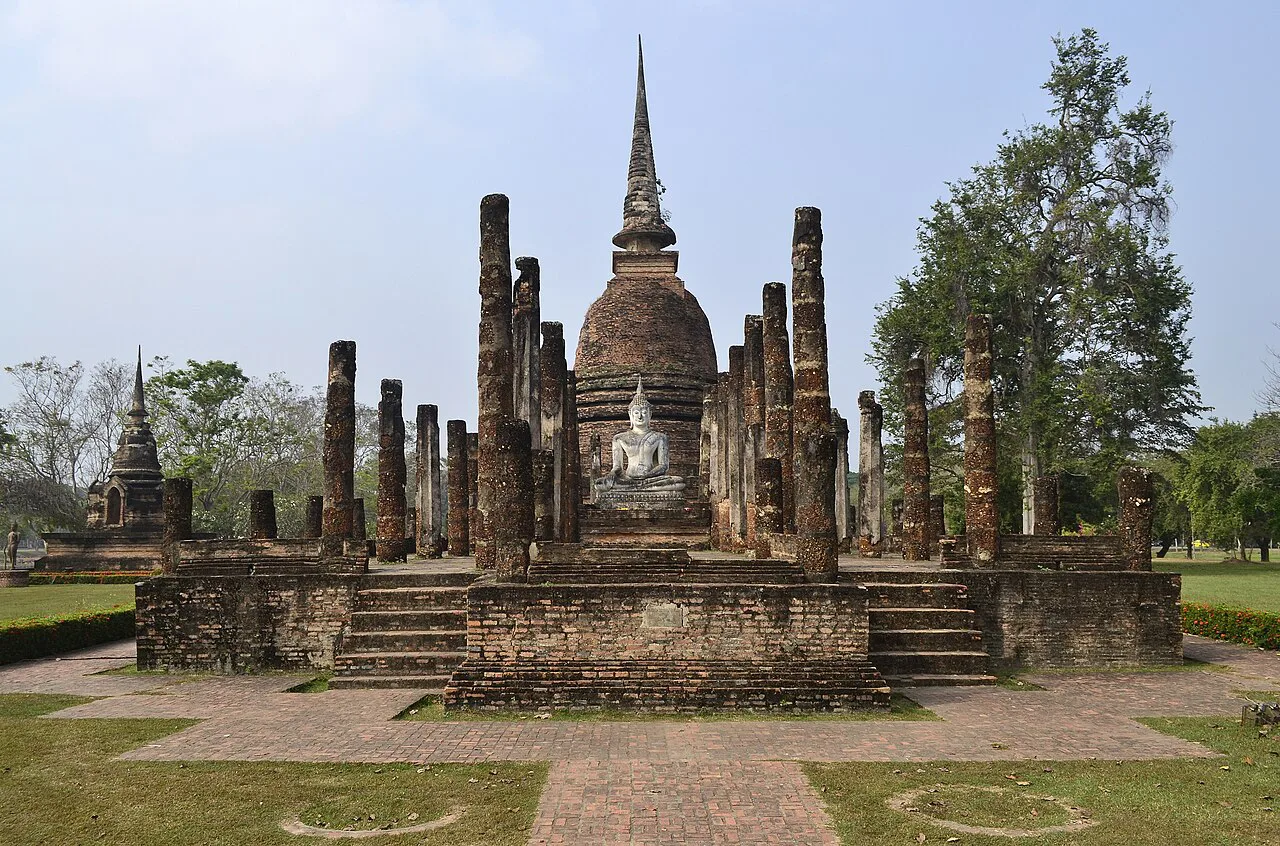
The temple is a modest ruin rather than a grand complex. Visitors describe it as one of the smaller temples on the site, made up of two chedis and the remains of a pillared hall, all grouped tightly together. That compactness is the point: you can read the whole layout in a few minutes and then spend longer with the details.
The walking Buddha is the element most often photographed here, a figure shown mid-stride rather than seated or standing still. A widely shared photo of the walking Buddha at Wat Sa Si is the reference point many travelers use before visiting. Look for it as you move between the chedis and the hall ruins rather than expecting a single monumental image housed in a building.
The chedis are the other anchor of the visit, with at least one described as well preserved and set prominently within the group. Because the ruins are low and open, there is no interior to tour and no long circuit inside a walled building. You circle the monuments at ground level, which keeps the stop short and the photography straightforward.
The pond setting and why photographers linger
The island-in-a-pond layout gives Wat Sa Si a reflective foreground that most Sukhothai monuments lack. Photographers tend to linger because the water doubles the chedis and the ruins, and the flat ground makes it easy to shift position for a cleaner frame. Early morning and late afternoon light are the usual choices, with softer angles and thinner crowds than the middle of the day.
Do not expect a lotus-covered pond in every season or a guaranteed mirror surface; water levels and plant growth shift through the year. The park does not publish a viewing calendar for the pond, so judge it on arrival and adjust your loop if the reflection is the shot you came for. If the water is low, the chedis and hall ruins still justify the stop on their own.
How long to allow and how it fits a half day
Budget 20 to 30 minutes at Wat Sa Si itself, plus walking time to and from the neighboring monuments. In practice the temple works best as the second or third stop on a central-zone loop that starts at Wat Mahathat, so you are not making a special trip for a small ruin. A half day on a bicycle covers the central zone comfortably if you keep each stop compact.
Sequence matters more than speed. The central monuments sit close together, so a loop of the big complexes and the pond-side temples nearby avoids backtracking and repeated ticket checks. If you only have one afternoon, give the bulk of your time to the larger complexes and treat Wat Sa Si as a short, scenic pause between them.
Practical basics: hours, tickets and where to check
The park charges foreign visitors an admission fee for the central zone, with a separate combined pass covering multiple zones. Published figures vary between sources, and the park does not post a single authoritative rate online that this guide can rely on, so confirm the current price at the ticket booth when you arrive. Keep your ticket handy if you plan to leave and re-enter the zone the same day.
Opening hours are generally daytime, roughly from morning until late afternoon, but exact times can shift and the gate closing time is the one that matters most. Rather than trusting a quoted hour, check the sign at the entrance or ask at the ticket window on the day you visit. Arriving with at least two hours of daylight left gives you room to see the central zone without rushing.

Nearby monuments in the central zone
Wat Mahathat is the largest and most elaborate complex in the central zone, and it is the natural anchor for any loop that includes Wat Sa Si. Wat Traphang Ngoen sits on its own island in a pond nearby, with a main stupa, an assembly hall and an ordination hall, making it a close companion stop with a similar water setting. Pairing the two island temples in one walk saves time and gives you two reflective views instead of one.
Wat Si Sawai is a few hundred meters southwest of Wat Mahathat near the Namo gate, and its three Khmer-style prangs are among the oldest architecture in Sukhothai. That temple was founded as a Hindu sanctuary dedicated to Shiva before being converted to a Buddhist site, and the central prang rises about 15 meters. Adding it to a central-zone walk gives your loop a genuine change of architectural style.
Wat Sorasak and Wat Traphang Thong are other central-zone stops that fit the same walking or cycling route without a detour. If you want a single reference for every monument in the old city, the full attraction list is the place to plan the order.

When to go: heat, light and crowds
Midday heat in Sukhothai is punishing on open ground with little shade, and the central zone offers few places to hide from the sun. Go early or late, when the light is softer and the temperature more manageable, and you will also find thinner crowds at the main monuments. The trade-off is that late afternoon gives you the best reflection light but the least remaining time before the gate closes.
Should Wat Sa Si be on your central-zone loop?
Yes, if you are already walking or cycling the central zone: the island setting, chedis and walking Buddha add variety to a loop anchored by Wat Mahathat, and 20 to 30 minutes is enough. No, if you have only a couple of hours and have not yet seen the larger complexes, or if you are heading north to Wat Si Chum, where the monumental seated Buddha is the bigger draw.
Build your route around the pond-side monuments, confirm the current ticket price and closing time at the entrance, and keep the temple as a pause rather than a destination. For the rest of the old city and how the zones connect, start from the Sukhothai Attractions: 12 Visitor Guides and work outward.
Explore more Sukhothai guides
Frequently Asked Questions
Is Wat Sa Si the same as Wat Si Sawai?
No. Wat Sa Si is the small island temple in the pond within the central zone, known for its chedis, pillared hall ruins and walking Buddha image. Wat Si Sawai is a separate temple a few hundred meters southwest of Wat Mahathat, distinguished by its three Khmer-style prangs. They are close enough to visit on the same walk.
How long does it take to see Wat Sa Si?
Most visitors need about 20 to 30 minutes at the temple itself, plus walking time from the neighboring monuments. Because the ruins are compact and there is no interior to tour, it works best as a short stop between Wat Mahathat and the pond-side temples rather than a stand-alone visit.
Do I need a separate ticket for Wat Sa Si?
It sits inside the paid central zone of Sukhothai Historical Park, so you enter on the park ticket rather than a temple-specific one. Prices and any combined pass options change, so confirm the current arrangement at the ticket booth when you arrive rather than relying on an online figure.