
Wat Mahathat Sukhothai: A Practical Guide to the Park's Centerpiece

Wat Mahathat is worth building a Sukhothai stop around, and a focused walk through it takes roughly 30 to 45 minutes. Give it a half day if you plan to fold it into a loop of the central zone. This guide covers where the temple sits inside the walled old city, how to reach it, what to look at closely, and how much time to budget.
Treat it as one temple with a route through it rather than a checklist sight. The ruins sit in Mueang Kao, the old-city core of Sukhothai, which means the practical questions are about gates, bikes and daylight rather than about picking between competing attractions. The Sukhothai Historical Park guide covers how the zones and gates fit together.
What Wat Mahathat is and where it sits in the park
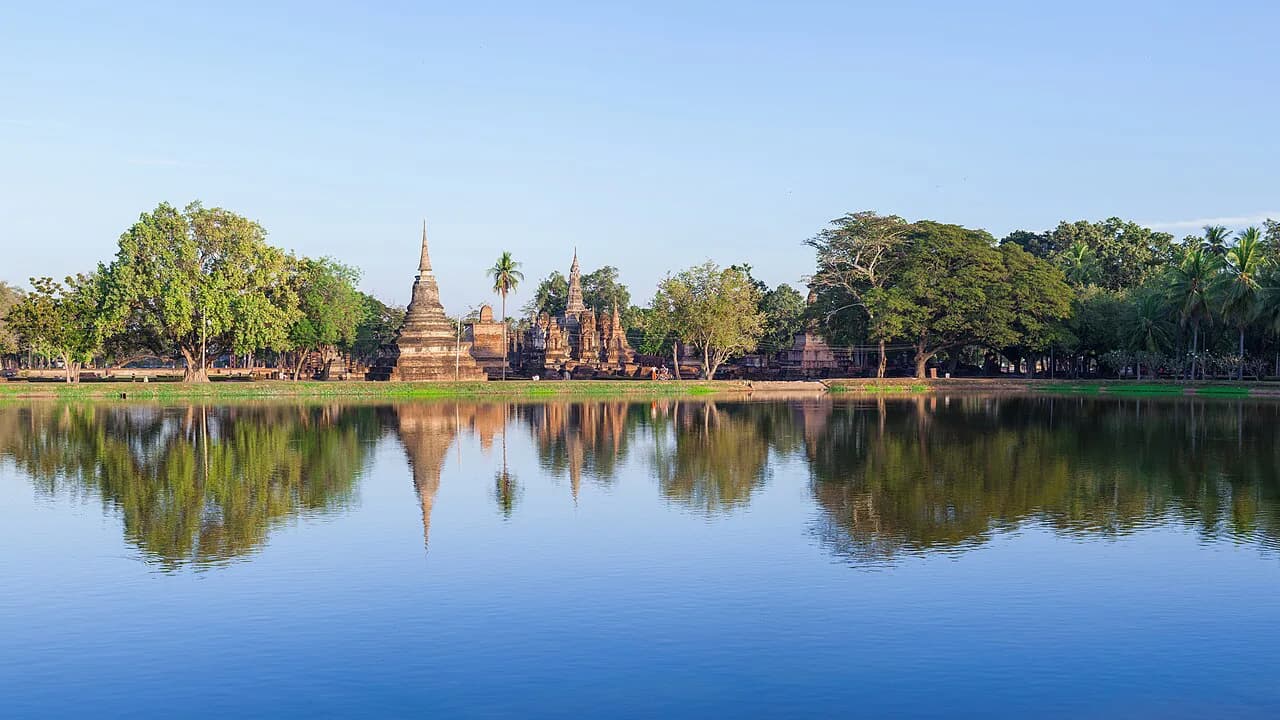
Wat Mahathat was the spiritual and administrative heart of the Sukhothai Kingdom, completed in the 13th century, and it remains the largest ruin cluster in the historical park. It sits in the central zone inside the walled old city, with a moat running along its front. That position makes it the natural first stop when you enter through the main gate area.
The old city is a defined rectangle with gates in the walls, and the central zone holds the royal palace remains as well as the temple. A Tourism Authority of Thailand post describes the wider park as having 193 ruins spread over roughly 70 square kilometers, so the central zone is a compact, walkable slice of a much larger site.
Because the temple is inside the ticketed central zone, your entry to Wat Mahathat is effectively your park entry. The wider Sukhothai Attractions overview helps you see how the central, northern and western zones relate before you commit limited daylight to one area.
How to get there from New Sukhothai and the park gates
Most travelers stay in New Sukhothai, the modern town on the Yom River, and ride out to the old city by songthaew, tuk-tuk, bicycle or rental car. Agree on the fare before you set off, since there is no metered service on this route. Ask your hotel to write the destination in Thai as Wat Mahathat, Mueang Kao. If the giant seated Buddha at Wat Si Chum is also on your list, plan it as a separate northern-zone stop rather than part of this ride.
Inside the central zone, a bicycle is the most efficient way to cover ground. The main road through the park is surfaced, flat and easy to ride, and the northern section lies about 2 kilometers from the central-zone ticket office. That ride is the detail that surprises first-time visitors who assume everything is within a short stroll.
If you arrive on foot, plan to walk in from the gate nearest your drop-off point and orient yourself by the moat. Bicycles can be rented near the park entrance, though one 2015 account reports the rental shops close between 17:30 and 18:00, so confirm the return time when you pay.

The layout, walked
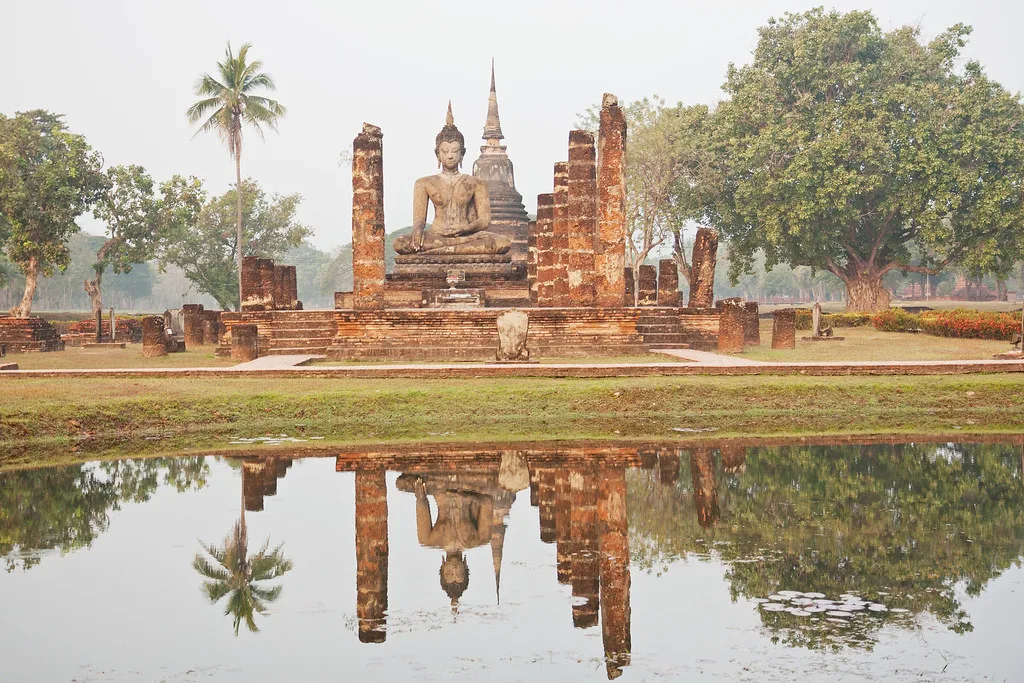
Approach from the front and the still moat water mirrors the ruins behind it, which is the classic first view and the best orientation. In the temple's symbolic scheme, that moat stood for the outer wall of the universe. Walk the edge before you enter so you see the whole silhouette at once.
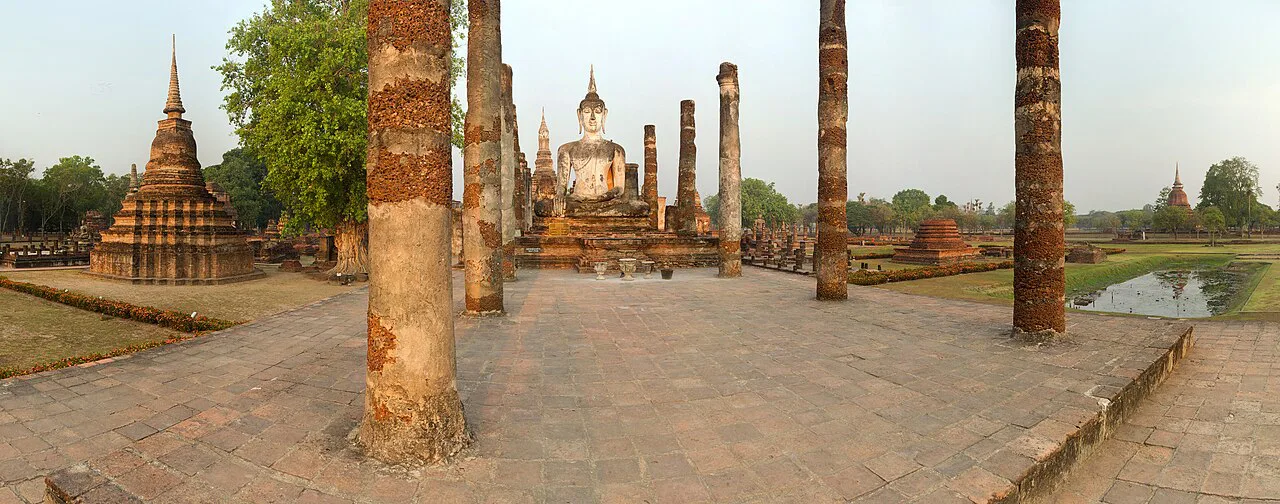
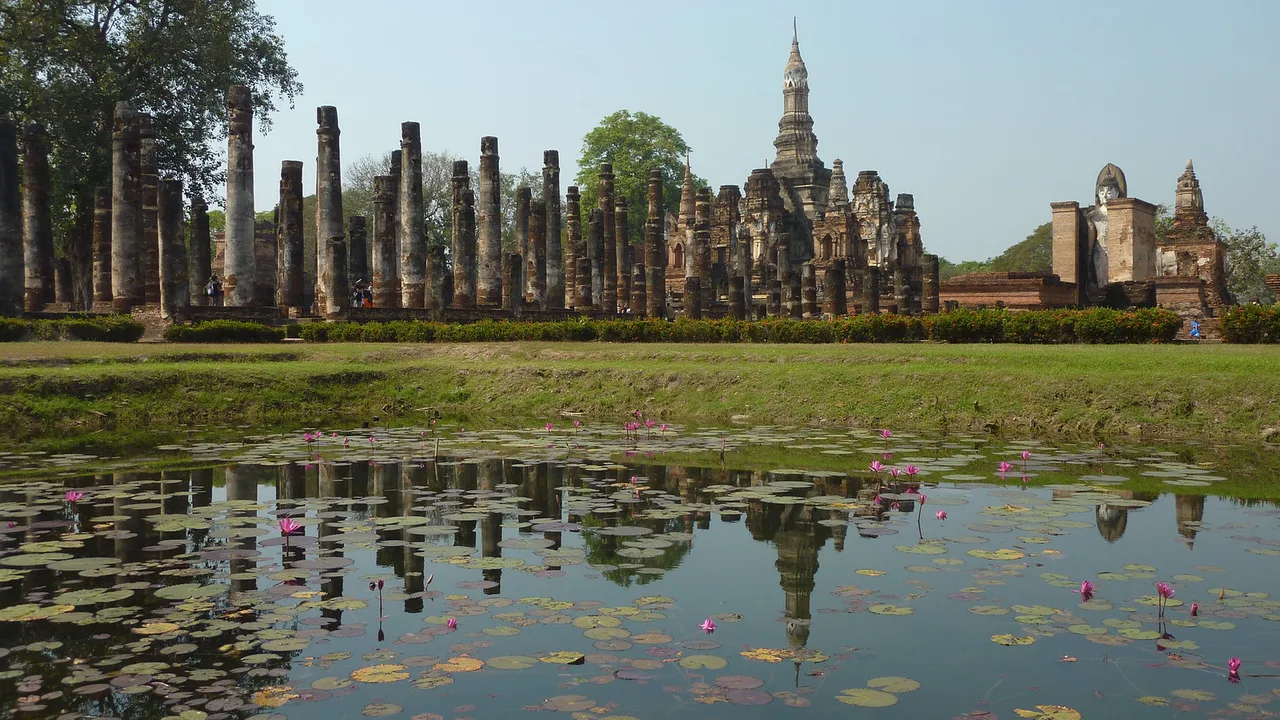
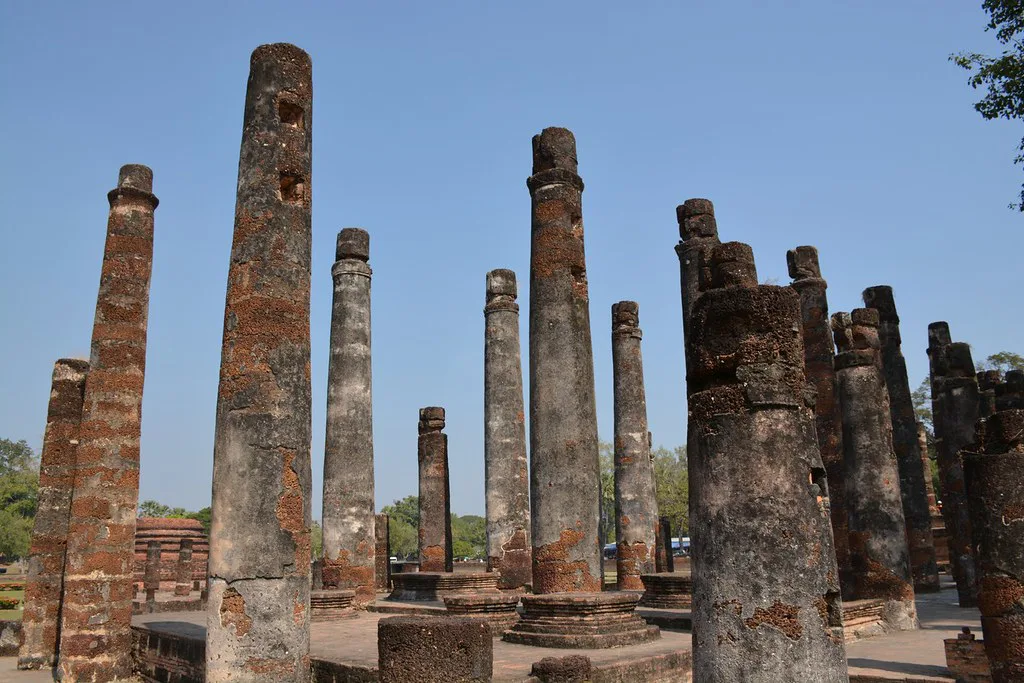
Inside, the main chedi anchors the center, with the remains of a viharn and rows of ancient pillars around it. Smaller chedi bases scatter across the grounds, close to 200 of them, and the assembly hall survives mainly as standing stone columns that frame the main stupa.
Four large chedi mark the corners of the complex, and the tall standing Buddha images sit beside the main chedi on raised platforms. Accounts differ on exact height, with figures cited above 12 meters and one blog putting them at roughly 20 meters; the platforms make them look even taller. Walk a slow circuit so you catch them from several angles rather than one head-on photo.
The ruins are still actively revered, and Thais come to pray and leave incense and small offerings at the Buddha images. Keep your voice low and step around anyone kneeling, and the visit stays respectful without feeling restrictive. Monks are few inside the ruins themselves, since most occupy monasteries on the park's outskirts.
What to look at closely
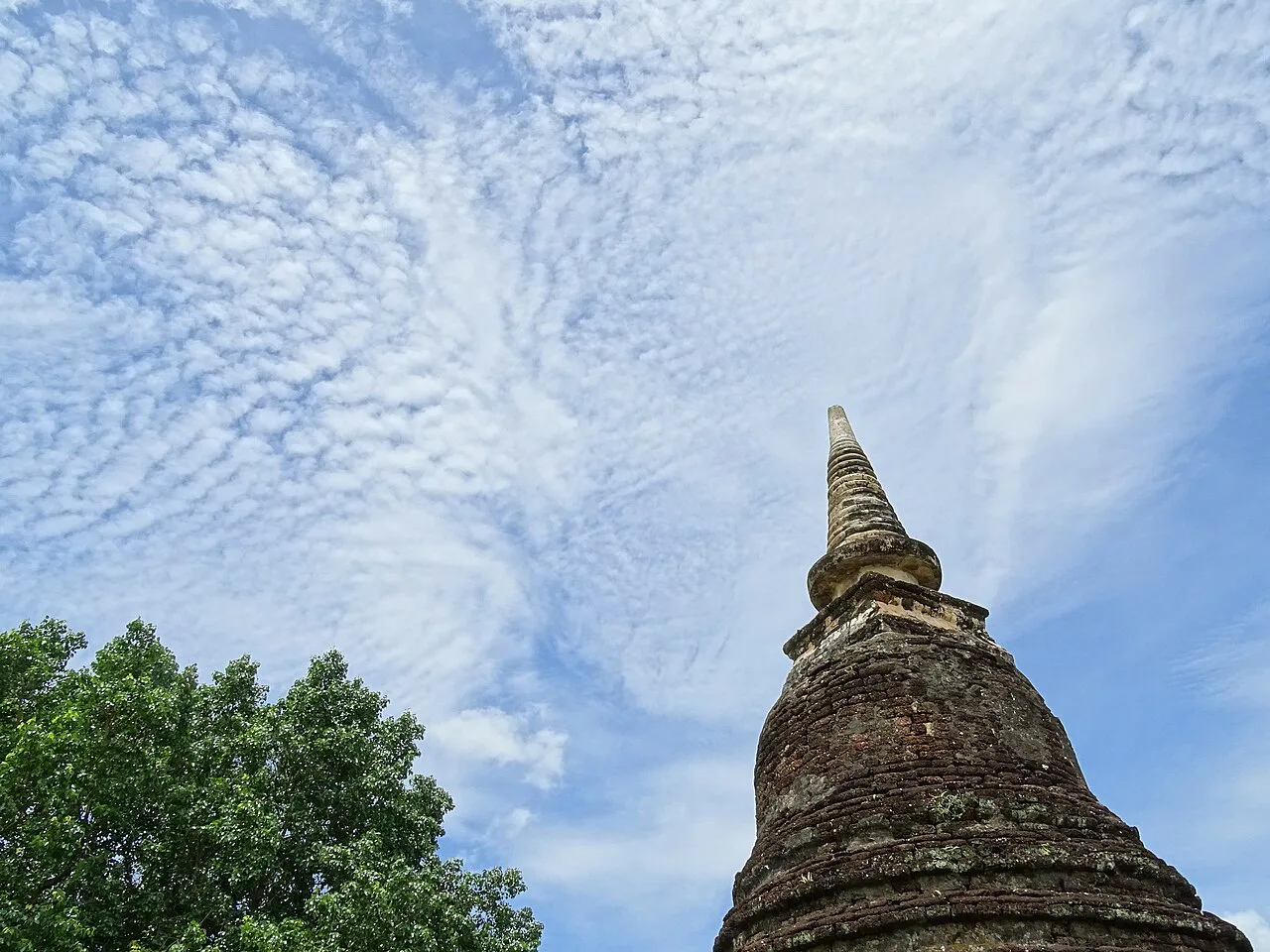
The smaller chedi around the site are described as lotus-bud shaped, while the main chedi's style is described inconsistently in available accounts — one personal blog calls it Khmer prang form, while a recent visitor post calls it Sri Lankan-style. Around its base run about 168 stucco figures of disciples walking with hands pressed together. Bring your eyes down to that frieze rather than only looking up at the spire.
Look for the small enclaves near the standing Buddhas, where hidden and well-preserved Buddha statues sit in shadow. They are easy to miss if you keep to the main path, so detour around the platforms. A slow walk pays off more here than a fast circuit.
In its heyday the assembly hall carried a full roof and the chedi was plastered and likely whitewashed, which is hard to picture from bare brick. Comparing the reconstruction drawings with the surviving pillars is the quickest way to understand how much has been lost and how much survives. For the wider context of the walled city, the Mueang Kao old-city page on Sukhothai Historical Park fills in the gates and zones.
How long to allow
A focused visit to Wat Mahathat takes about 30 to 45 minutes at an unhurried pace, which covers the moat approach, the main chedi circuit and the standing Buddhas. Photography and quiet sitting push it toward an hour. That is the realistic number to plan around.
Combining the temple with the rest of the central zone turns it into a half day, since Wat Si Sawai and Wat Sa Si sit within easy cycling distance and the museum near the gate rewards an hour on its own. If you also want the northern zone, add the roughly 2 kilometers of riding each way.
If your time in Sukhothai is only one afternoon, do Wat Mahathat first and then choose one more stop rather than rushing the whole park. Travelers treating Sukhothai as a single day out of Chiang Mai usually regret trying to cover everything.

Tickets, park hours and the bike surcharge
Sources disagree on current hours and fees, so confirm at the ticket office rather than planning around a number you read online. One 2015 account lists park entry at 100 baht per person, a 10 baht bicycle surcharge and a 350 baht all-zone ticket, with the park open from 6am to 6pm. A more recent visitor post gives 6:30am to 7:30pm. Treat all of it as indicative and check the board on arrival.
The all-zone ticket is worth asking about only if you intend to ride out to the northern and western zones in the same visit. For a central-zone-only day, the standard entry plus the bike surcharge is the simpler choice. Buy at the main ticket office near the central-zone entrance and keep the receipt with your bike.
Food and drink inside the park are limited to a handful of cafes and vendors, and prices sit a little above town rates without being extreme. Carry your own water if you are watching costs. The park publishes no fixed vendor lineup, so expect to sort lunch either before or after your visit.
When to come during the day
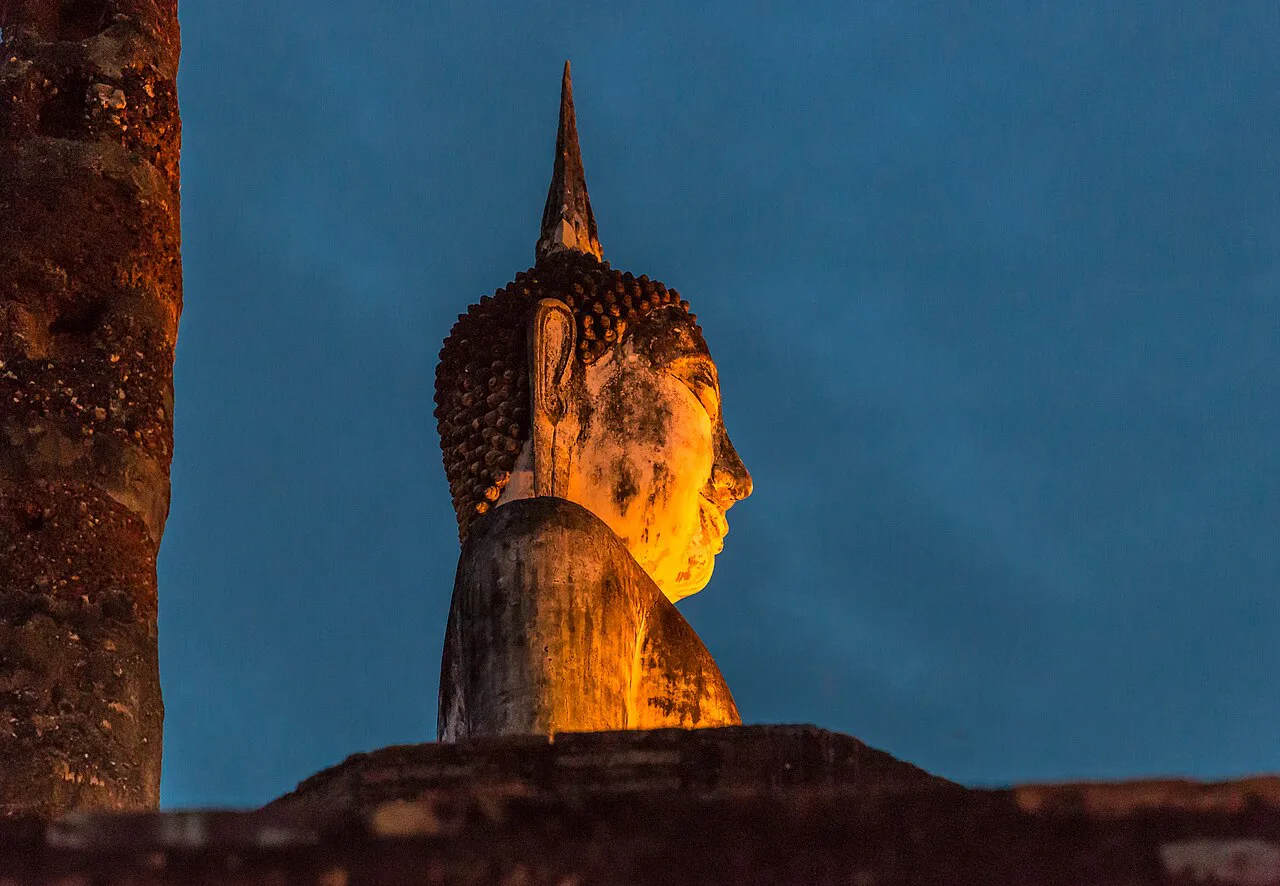
Early morning gives you soft side light on the chedi and cooler walking, while late afternoon light warms the brick and the moat reflection. Midday is the hardest stretch for heat across the open ground, since shade is scarce between the ruins. Plan your circuit around those two windows if you can.
After the gates close, the park is very dark and isolated, so do not linger or assume you can walk back through the ruins. Arrange your ride back to New Sukhothai before sunset. Some operators run evening lighting programs, but confirm with the ticket office rather than counting on one.

Nearby within walking or short cycling distance
Wat Si Sawai sits just south of Wat Mahathat inside the central zone, recognizable by its three Khmer-style prangs, and adds 15 to 20 minutes to your loop. It has its own Wat Si Sawai Sukhothai guide if you want the detail before you go.
Wat Traphang Ngoen sits on an island in its own pond, close enough to reach on foot from the main chedi and a good place to slow down after the busier center. The Ramkhamhaeng National Museum near the gate is the obvious add-on if you want context on the artifacts recovered from these ruins.
Wat Si Chum, north of the old city, holds the large seated Buddha in its narrow brick chamber and is the most common second stop after the center. Wat Chang Lom, with its elephant-buttress base, and Wat Sorasak sit in the northern zone, about 2 kilometers from the central ticket office. A bike turns all three into a manageable half-day add-on.
If you would rather climb for a view, Wat Saphan Hin sits on a hill to the west and takes more effort to reach than the central-zone temples. For a fuller menu of routes and day plans, the things to do in Sukhothai guide maps out how these pieces combine.
Is Wat Mahathat worth the stop on its own?
Yes: if you have one temple's worth of time in Sukhothai, spend it here. The moat approach, the main chedi with its stucco frieze and the standing Buddhas deliver more in 45 minutes than most ruins in Thailand. Pair it with one nearby temple and the museum, and you have a complete central-zone day.
Build your visit around early morning or late afternoon, carry water, rent a bike if you want the northern zone, and settle the fee and closing time at the ticket office rather than trusting an old figure. That is the whole planning problem solved.
Explore more Sukhothai guides
Frequently Asked Questions
Can you walk from New Sukhothai to Wat Mahathat?
It is a long walk of roughly 12 kilometers between New Sukhothai and the old city, so most visitors take a songthaew, tuk-tuk or rented bicycle instead. Once inside the central zone, everything around Wat Mahathat is walkable in minutes. Confirm the return ride before you head in.
Do you need a separate ticket for Wat Mahathat?
No. The temple sits inside the ticketed central zone, so your park entry covers it. Ask at the main ticket office whether a single-zone or all-zone ticket better fits your plan, and check the current fee and opening hours there.